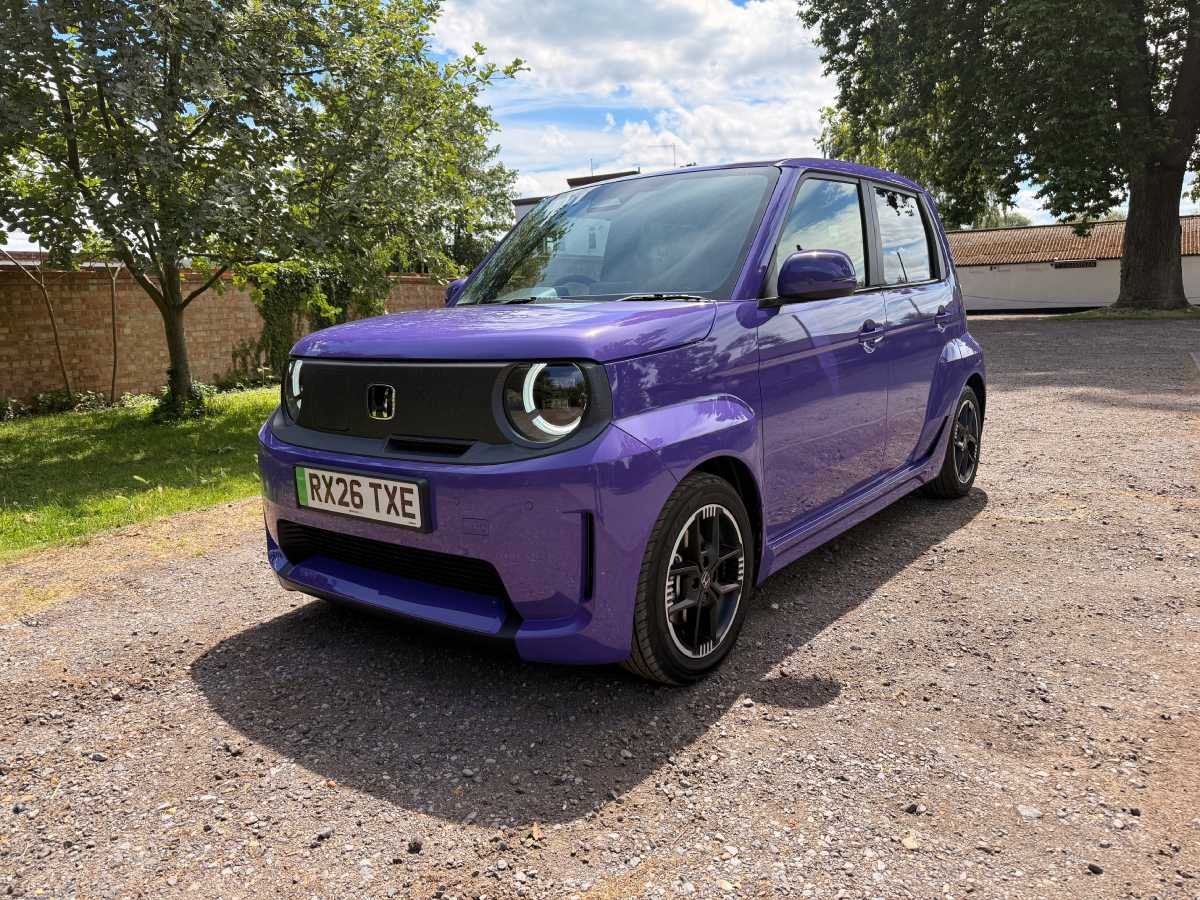
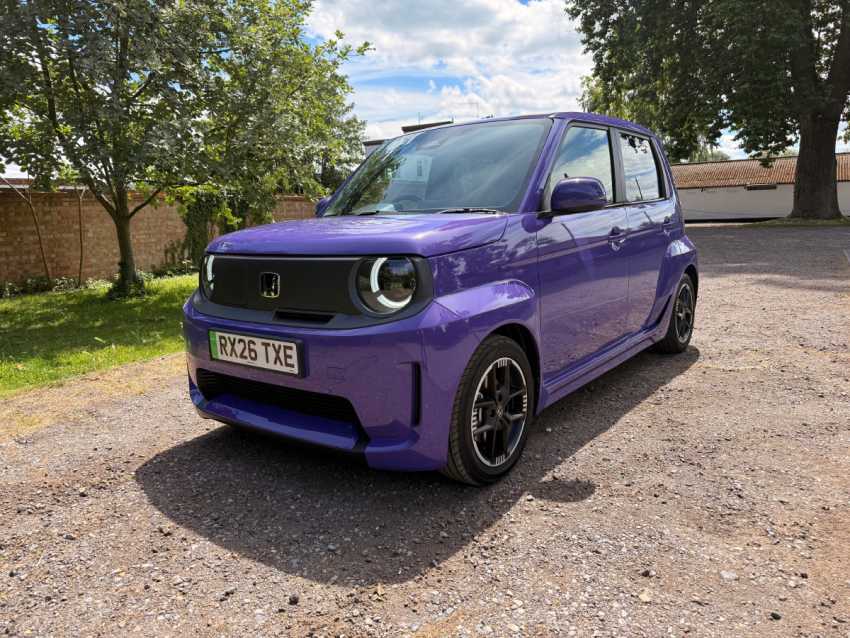
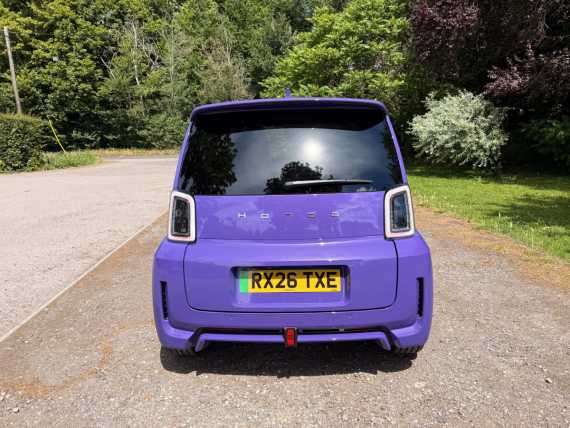
Since the withdrawal of the Honda e and e:Ny1, the Japanese carmaker has been without an electric model in its line-up. But that is changing with the arrival of the all-new Super-N, a tiny five-door city car, that’s big on style, fun and practicality.
With an entry price of £18,995, it will shake up the electric city car sector and we caught up with Andrew Winfield, Product and Business Planning Section Manager for Honda UK at the car’s UK launch near Maidenhead.
Firstly, I just wanted to speak about the prices because Honda is obviously renowned for its quality and its reliability, but always a little bit on the pricier side. Do you think the costs of new models are being driven down by the influx of Chinese models?
I wouldn't say necessarily Chinese models specifically, but I think price is definitely becoming more of a factor for more people, and certainly for a car like this where we are trying to reach a new audience, appeal to a new customer and we don't want the cost to be a barrier.
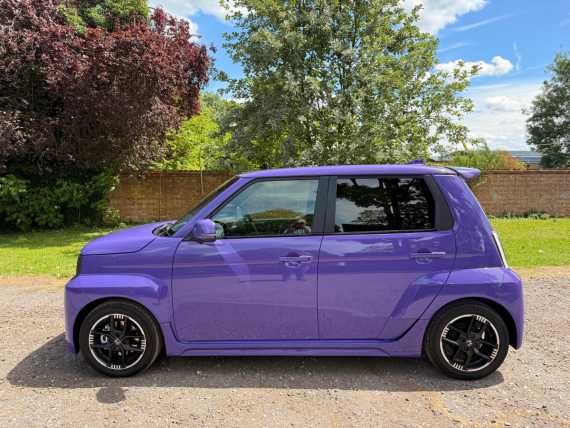
To compete price-wise, it's definitely a challenge for a brand like Honda because like you say, the quality, the things you can't necessarily see all the time, are there. But I think each car is judged on its own merit. So I think we approach Super N pricing in isolation and really it's more about the market, the target audience, the competition, rather than the Honda range.
Who will buy this vehicle?
We are targeting primarily a conquest audience with an aim of 70 per cent for Super N. We recognise that is quite aggressive, particularly for Honda where we do have that loyal fan base and a strong loyalist audience. But for a car like this, this is our first entry into A-Segment for, since probably the larger Logo model, you know 20 years ago, maybe more. So, this is a new part of the market for us.
We think the product, the proposition is unique in the marketplace, so we think we're right to try and reach new customers. We all know as an industry we need to grow EV volume and that's not going to come from corporate channels alone. We have to broaden our appeal to retail customers. We are looking at minimum 70 per cent retail split on this car.
From a conquest perspective, it comes in two camps. We are targeting a younger profile, certainly for a brand like Honda. So primarily, this might even be a first new car. And that's very much down to this price point, as well as the attainable monthly payment, but also the fact that the car is distinctive, it's unique, it is focused on joy, on fun, on engaging dynamics, and we think that's going to appeal to a younger audience.
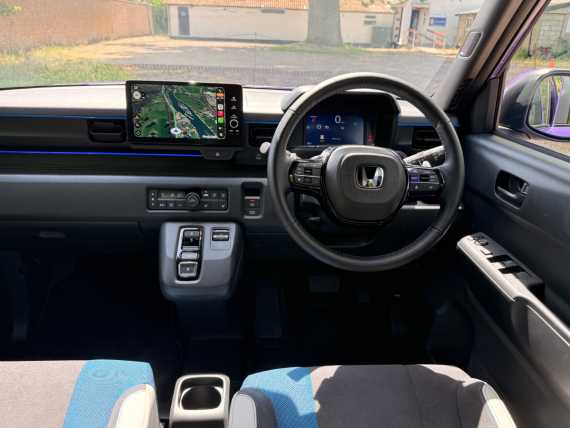
We also recognise that there is an opportunity with loyalists - those people may be currently driving a Jazz, looking to make the switch to EV. Very loyal to Honda and actually will be drawn in by the fact that, yes, it's different and it's sporty and all the rest of it, but actually it's practical. There's still plenty of space in the back, the seats are comfortable, it's nice and easy to drive, light steering. The boot is big for its size, so it's an easy car to live with. So, actually we do accept that there is a loyalist opportunity.
And what would you say this car's unique selling points are? Tell me a little about BOOST mode.
Ah, BOOST mode - so there is very little else like it, certainly at this price point. You know, it's not about performance, it's not about speed, it's about the way it feels. And I think the proof will be in the pudding.
I think when you look at what's available in A-Segment and what's available at this price point, there is very little else that mixes that focus on driving dynamics, on driving enjoyment, on engaging performance, but also specification. You know, where else at £199 a month will you get a Bose premium audio, heated seats, Yokohama tyres, all these other things?
Do you think most of the sales will be PCP deals?
It's a real hard one to judge but because of the strength of the flexible offers we are running, we think the PCP purchases will be high. But actually, because it costs £18,995, that older audience who might be buying it as a second car, can probably either trade in something and they'll have a lot of equity to buy it outright or they might already have money in the bank or be able to arrange a loan. So it's a little bit hard to judge because low interest rates mean people aren't going to be relying on finance quite so much. But that will vary by age group. So the younger audience, we think, will take advantage of the finance.
And as your only current BEV, how important is this car to Honda?
Absolutely massive. You know, we've all read the news about Zero Series (the company’s ambitious line-up of next-generation electric vehicles) and why that's been cancelled. The key thing to note is it was a commercial decision, not an ideological one. So Honda is very committed to EV. You know, we've been very clear about that.
It's just that the transition is going to take perhaps a little bit longer than maybe we thought a few years ago. And so, yeah, obviously in the UK we have ZEV mandate, so it's very clear on what the requirement is. There are different ways around that, obviously with CO2 flexibilities and so on, but, yeah, it's a key part of our product offering.
Is this the replacement to the Honda e?
So in terms of is it a successor to Honda e? Definitely not. This is a very different proposition. Honda e was designed as a halo, as a showcase of our EV future. It has some very high-end features, the independent suspension, the bespoke platform, all the rest of it.
It was a B segment car. It was nearly 30cm bigger, or longer, I should say, than this car. This is different and not a successor to Honda e, but it is, of course, nearly half the price.