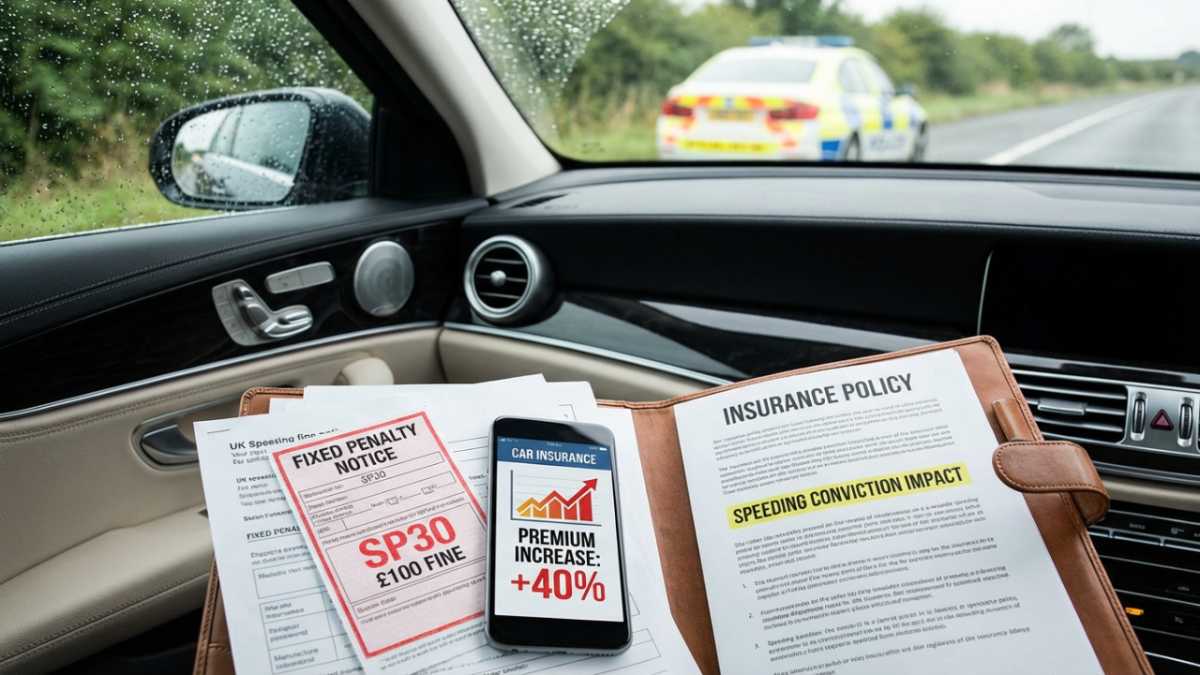
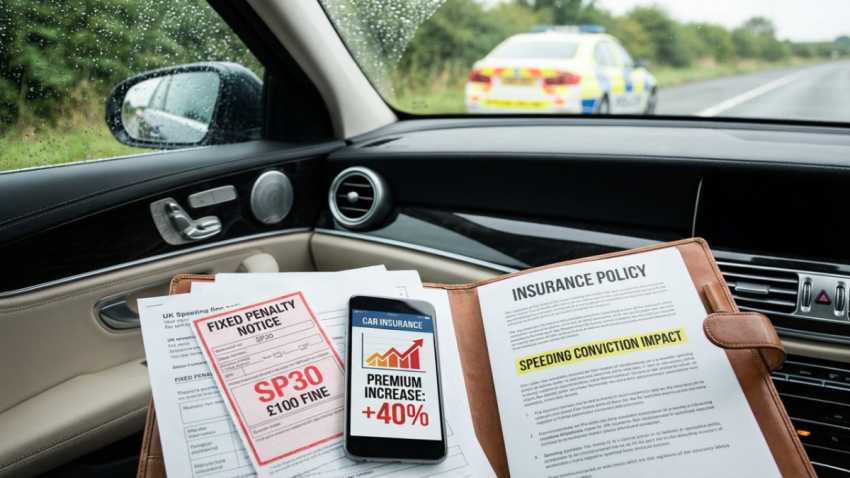
TL;DR: A single UK speeding conviction can increase your car insurance premium by an average of 23%, costing drivers a collective £291 million. This financial penalty lasts for five years, long after the points have been removed from your licence.
UK drivers warned: Speeding fines add 23% to insurance costs
The true cost of speeding for UK motorists has been revealed, and it's far more than the initial fine. Recent data shows that a single speeding ticket is a five-year financial burden, with UK drivers now facing a collective £291 million in additional car insurance costs due to convictions.
As of mid 2026, with enforcement on UK roads at an all-time high, what many drivers don't realise is that the initial £100 fine and three penalty points are just the beginning of a long and expensive journey.
Key Facts
- £291 million is the estimated additional amount UK drivers are paying for car insurance due to speeding convictions.
- 23% is the average car insurance premium increase after a single speeding offence is declared.
- 5 years is the period you must legally declare a speeding conviction to insurers, even though points may only be active for three years.
- 3.6 million penalty points were issued to UK drivers recently, highlighting a significant increase in enforcement.
- SP30 is the most common speeding conviction code, typically resulting in a 10-15% rise in insurance costs.
How a £100 fine becomes a £500+ problem
For many UK motorists, the immediate sting of a £100 fine and three penalty points feels like the end of the matter. However, analysis of the insurance market confirms this is just the tip of the iceberg. The real financial damage unfolds over the next five years.
Recent analysis from industry leaders like GoCompare and Admiral has confirmed a sobering reality for drivers: a speeding conviction is a major red flag for insurance underwriters. The latest data shows that on average, just one conviction increases car insurance premiums by a staggering 23%.
This dramatic car insurance premium increase for speeding isn't just about the points themselves. From an insurer's perspective, it signals a fundamental change in your risk profile. You've moved from a 'clean licence' driver to a 'convicted driver', and the statistics they use to calculate your premium change accordingly.
The penalty points insurance impact: A sliding scale
According to data from Admiral, one of the UK's largest insurers, drivers who receive the most common speeding codes see an immediate financial penalty. An SP30 (speeding on a public road), SP50 (speeding on a motorway), or SP10 (speeding in a goods vehicle) offence with just three points results in an average premium increase of 10%.
But wait, the cost escalates quickly. Further data shared via Yahoo News reveals a non-linear scale. While three points might hike your costs by around 15% with some providers, doubling that to six points doesn't just double the increase. Instead, premiums can soar by as much as 26%.
This is what this means for drivers: the more offences you commit, the more exponentially expensive your insurance becomes. Insurers see a pattern of behaviour, not just isolated incidents.
Why insurers see minor speeding as a major risk
From a driver's perspective, doing 35mph in a 30mph zone can feel like a minor, momentary lapse in concentration. From an insurer's perspective, it's a critical data point that indicates a higher probability of a future, more serious claim.
According to insurance provider Ageas, individuals with speeding convictions are viewed as higher-risk because their internal data shows a direct correlation between speeding and the frequency and severity of accidents. Once that SP30 conviction is on your record, you are statistically more likely to be involved in a high-speed collision.
These types of incidents are the most expensive for insurers, often involving significant personal injury claims and total-loss vehicle write-offs. Your small speeding offence places you in a higher-risk category, and your premium reflects the potential cost of a major future incident.
The five-year financial shadow of a speeding ticket
Here’s the critical detail many drivers miss. As highlighted by insurance experts at WeCovr, the true cost of a speeding offence is an "annuity" you pay to your insurer for half a decade.
While penalty points may only stay active on your driving licence for three years in most cases, you are legally required to disclose the conviction to insurance providers for a full five years from the date of the offence. Failing to do so is a form of insurance fraud and can invalidate your policy entirely.
This is where the speeding penalties impact insurance costs most profoundly. That 23% average increase isn't a one-off hit; it's a financial penalty you could be paying every single year for five years.
How conviction costs vary for different drivers
For an experienced driver with a long, clean record and a maximum No Claims Bonus (NCB), a single three-point penalty might be absorbed with a manageable 10% increase. The insurer may see it as an anomaly against years of safe driving.
However, the situation is drastically different for younger or newer drivers. For a young driver already facing high convicted driver insurance rates of £1,500 per year, a 23% increase adds an extra £345 to their annual bill. Over the five-year declaration period, that one mistake could cost them over £1,725 in additional insurance costs - a sum that massively outweighs the initial £100 speeding fine.
Decoding the conviction: What SP30 vs SP50 means for your wallet
Understanding your specific conviction code is vital for predicting your insurance hike. Here are the most common codes that are dished out and what they mean for your premium:
- SP30: Exceeding statutory speed limit on a public road. This is the most frequent offence. The SP30 conviction insurance cost is typically a 10-15% premium penalty.
- SP50: Exceeding speed limit on a motorway. This is often viewed similarly to an SP30 by insurers, but the increase can be higher if the recorded speed was significantly over the 70mph limit.
- SP60: Undefined speed limit offence. This code can sometimes result in the highest premium jumps due to the ambiguity of the risk it represents to underwriters.
Good news: How convicted drivers can slash insurance rates
Relief for petrol car owners and EV drivers alike: a conviction isn't a life sentence of high premiums. Based on expert advice from specialist insurance brokers, you can take proactive steps to soften the financial blow.
- 1. Take a Speed Awareness Course: If the police offer you this option instead of points, always take it. While you may still have to declare it to some insurers (check your policy wording carefully), most do not increase premiums for attending a course in the same way they do for points and a fine.
- 2. Consider Telematics (Black Box) Insurance: For younger drivers especially, a black box can be a game-changer. It provides real-world data to prove to the insurer that the speeding incident was an anomaly and that your day-to-day driving habits are safe and responsible.
- 3. Increase Your Voluntary Excess: This is a direct lever to lower your premium. By agreeing to pay a larger amount yourself in the event of a claim, you reduce the insurer's risk. Just ensure you can comfortably afford the excess you choose.
- 4. Shop Around Aggressively at Renewal: This is the most important step. Never simply accept your existing provider's renewal quote after a conviction. Some insurers are 'conviction-friendly' and specialise in providing competitive convicted driver insurance rates. Use comparison sites to find them.
The 2026 outlook: More cameras, more fines
Drivers should be aware that avoiding a conviction is getting harder. With 3.6 million penalty points issued recently, the 'UK speeding crisis' reported by Honest John shows that enforcement is at an all-time high. The continued use of SMART motorways and new AI-powered speed cameras means the chances of being caught for even minor infractions are increasing.
A UK speeding fine in 2026 is likely to be just as, if not more, common. The best defence is prevention. In our testing of the latest in-car technology, we've found that using 'Intelligent Speed Assist' (ISA) is one of the most effective ways to avoid these costs. This system, now mandatory on all new cars sold in the UK and EU, actively alerts you when you exceed the speed limit, acting as a digital co-pilot.
Your options for cheaper insurance just got better
While the news that a simple speeding ticket could cost you hundreds, if not thousands, over five years is frustrating, the power is not entirely out of your hands. The key is to understand that insurers see these points as statistical risk markers, not moral judgements.
By taking proactive steps, like opting for a speed awareness course, using telematics to prove your safety, or shopping around with specialist brokers, you can actively manage and reduce the financial impact. Your options just got better because now you know how the system works. Stay informed, use your car's built-in safety features, and remember that the safest and surest way to save on insurance is to keep your licence clean.