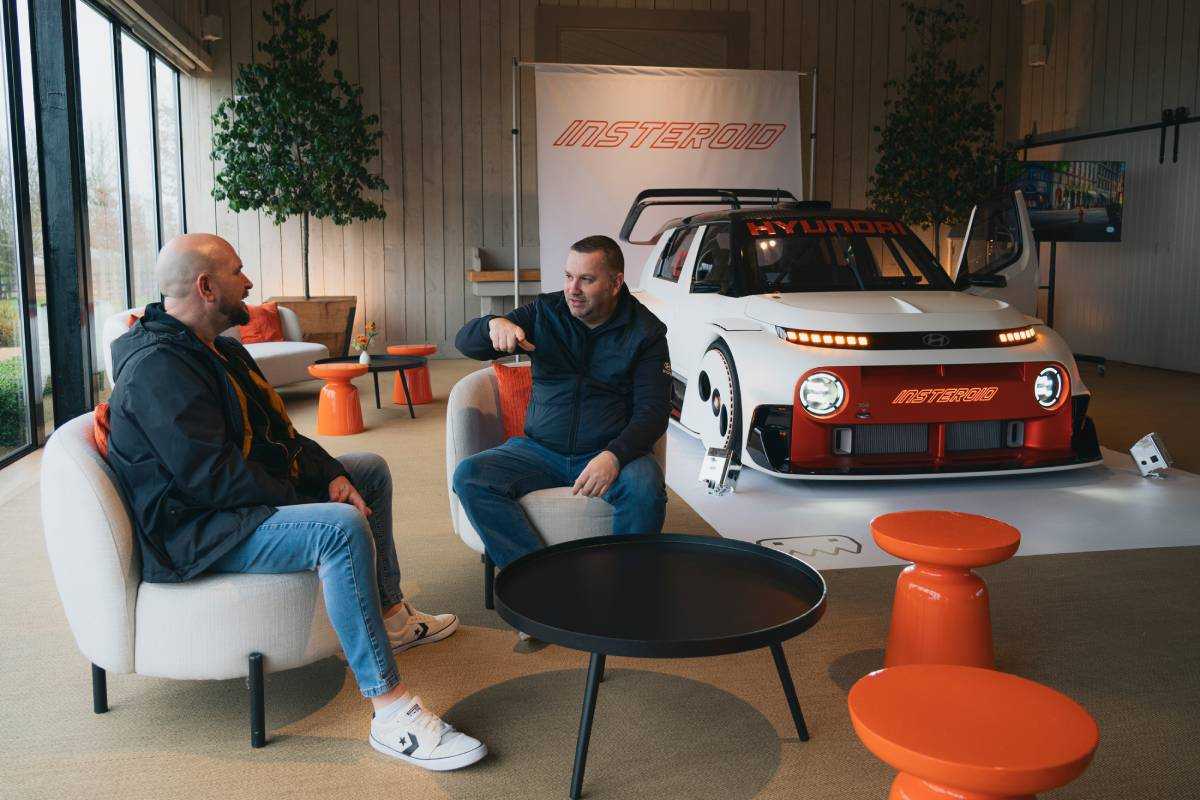
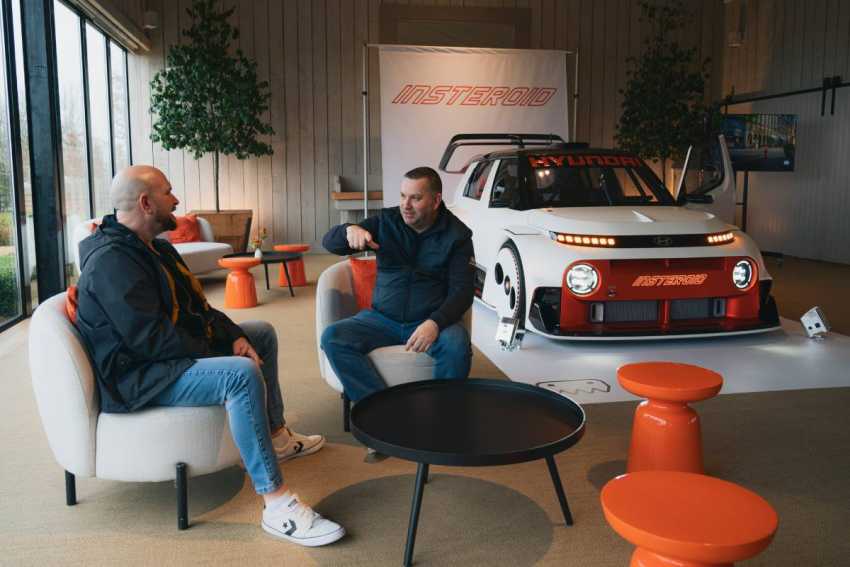
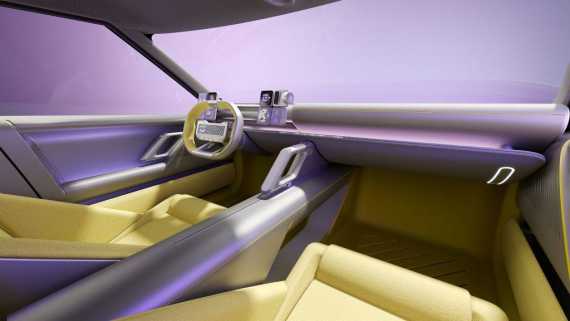
Hyundai Motor Company is still breaking the mould in vehicle design with its concept cars. Take, for instance, the Insteroid, which embodies Hyundai Motor's fearless spirit, combining gaming elements with customisation to appeal to a whole new generation of car buyers. Another example is the Concept Three, a revolutionary compact EV that symbolises the company's future of electrification. Our motoring journalist, Tim Barnes-Clay, spoke with Robin Hayles, Head of Product and Technical PR at Hyundai Motor UK, to learn more about these two exciting concept models.
Q.) Robin, can you tell me about the Insteroid concept and how it came to be?
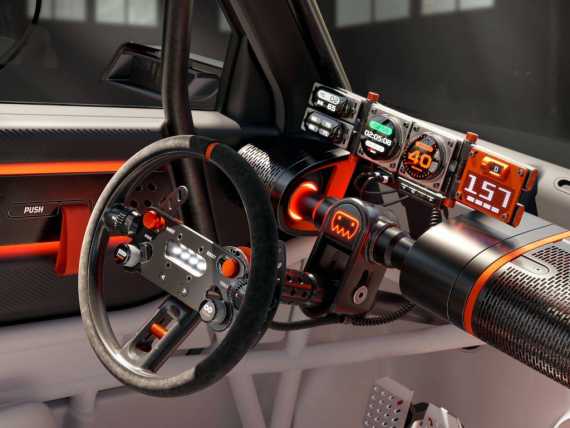
A.) The Insteroid started as a design concept that originated on paper and a computer. Young designers in Korea were inspired by our Inster model and were asked to let their imaginations run wild. They presented their craziest ideas, leaving nothing off the table. A variety of ideas were compiled, and animated films were created to showcase them. When we presented it to our Executive Chair Euisun Chung, a member of the founding family of the Hyundai Motor Group, he was intrigued and said, "I like that, build it." That's how the Insteroid came to life. While it currently lacks a powertrain, it represents an exciting and forward-thinking approach to design, breaking away from traditional car design constraints.
Q.) What was the philosophy behind creating the Insteroid?
A.) Our aim with the Insteroid was to embrace fun and unconventional design elements. Sometimes stepping outside the norm can lead to innovative ideas, and our design team, as well as the Executive Chair, appreciates that edgy concepts can lead to exciting outcomes. Rather than adhering to the typical family theme most manufacturers use - what I refer to as the "Russian doll" approach - we prefer each car to have its own distinct identity.
Q.) For people who aren't particularly into motoring, what's the purpose of a concept car?
A.) That's a great question. Firstly, concept cars attract a broad audience, including non-car people. They can spark interest, prompting people to inquire about the manufacturer and what else they offer. Secondly, and this is very important, if you look at our history, every concept car we've produced has clear links to the production models that follow. While elements, like lighting and wheel sizes, may be toned down for production, the essence of the original concept remains, serving as a preview of what's to come.
Q.) Can you share any insights into your second concept, 'Concept Three'?
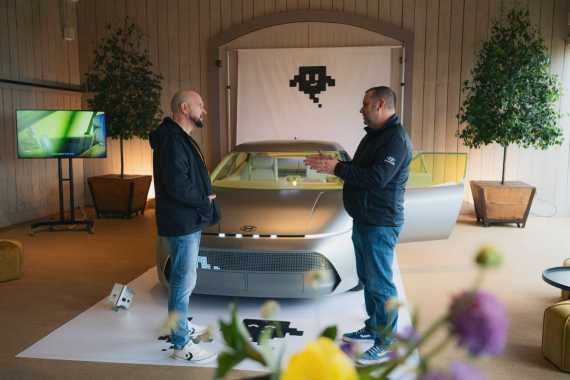
A.) Without formally labelling it as a preview of the Ioniq 3, it does share some aspects that are expected to be reflected in the production model. When the production car is revealed, you'll see a very clear link back to the concept.
Q.) What's the timeline for bringing it to market?
A.) Concept Three was first unveiled in Munich in September last year, and realistically, we're looking at about a ten-month development timeline. That's generally the standard duration, though we've had exceptions like the Ioniq 5, which moved from concept to production in about eight months. We don't showcase concepts unless there's a clear purpose behind them; they lead to tangible results quickly. We're not the type of manufacturer to reveal something and then leave people waiting for two years without follow-up.
Q.) The designs of your concepts have been described as striking. Is that intentional?
A.) Yes, it definitely is. We aim to attract attention, and we want our designs to spark conversations, even, as mentioned, among those who aren't particularly interested in cars. As a relatively young car company, having only been building our own vehicles for 45 years, competing with established manufacturers has its challenges. However, in the EV segment, we've made significant strides. Our sales figures and customer feedback position us competitively alongside our Korean sister company and the American manufacturer.
Q.) How do you view your brand's design evolution?
A.) When it comes to design, that's where I think we're now becoming more of an established brand, and there's a lot more awareness. Some of the designs can be a little bit polarising. The Ioniq 6, for example. I love Ioniq 6 - it's brilliant. Some people don't like it because of the shape. But it's different. It gets people talking. I think that's one of our strengths - we're not afraid to make brave decisions because we want to be different. We want to make an impact. We want to get people's attention.
Q.) The pronunciation of your brand varies significantly. Can you clarify the correct way to say Hyundai?
A.) This has been an ongoing discussion! Back when I joined in 2004, it was already clear that many in the UK pronounced it 'Hy-un-dai'. Regional dialects play a significant role, and people tend to stick with what they know. Now, we officially go with 'Hyun-day', even though some people still pronounce it differently.
Q.) Has there been any effort to change how people pronounce your brand?
A.) A couple of years ago, we ran an advertising campaign to raise awareness of the correct pronunciation. We discovered that this actually boosted brand recognition just from saying, “you call us this”, “we're actually called this”. But it's something I hear all the time. A lot of journalists - I would say 90 per cent of journalists I speak with - still call it 'Hy-un-dai', because they’re just so familiar with that term.