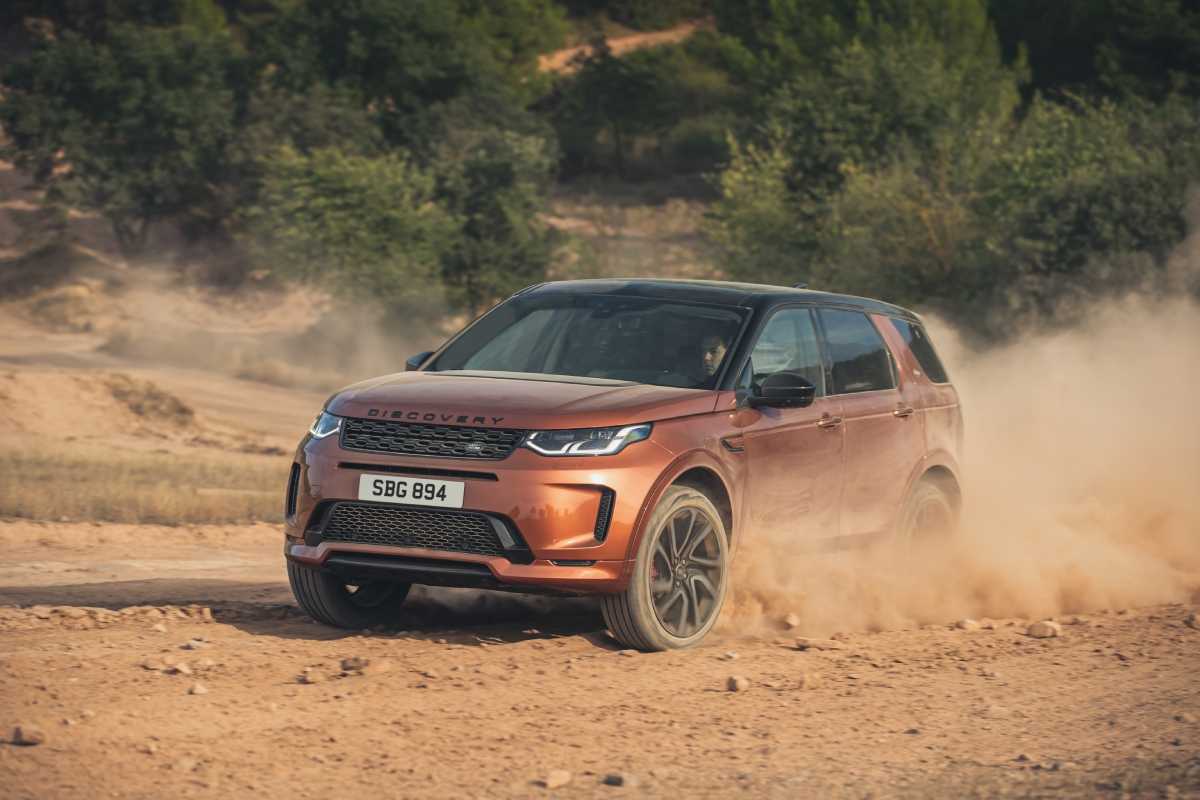
Land Rover has confirmed it will end production of the Discovery Sport in December 2026, bringing the curtain down on its most affordable model after more than a decade on sale.
The Discovery Sport replaced the Freelander in 2015 and has become a familiar sight on UK roads, combining seven-seat practicality, genuine off-road capability and strong towing credentials. However, changing safety regulations, falling demand and Jaguar Land Rover's shift towards electrification have ultimately sealed its fate.
For drivers, the decision raises important questions. Should you buy one while you still can? Will used values hold up? And what does its departure say about the future direction of JLR?
Why is Land Rover ending Discovery Sport production?
JLR says the Discovery Sport is reaching the end of its normal product lifecycle, with production ending at its Halewood plant in Merseyside this December.
While that explanation is technically true, several factors appear to have contributed to the decision.
The biggest is the introduction of the EU's updated General Safety Regulation 2 (GSR2), which requires new vehicles to be fitted with a range of advanced safety technologies, including:
- Intelligent Speed Assistance (ISA)
- Autonomous Emergency Braking (AEB)
- Emergency Lane Keeping Systems (ELKS)
The Discovery Sport's underlying platform dates back more than a decade. Retrofitting these systems would have required extensive engineering work, making a full update difficult to justify for a model with declining sales.
At the same time, Halewood is being reconfigured to build JLR's next generation of electric vehicles, making production capacity increasingly valuable as the company accelerates its EV plans.
Sales have fallen sharply despite early success
When it launched, the Discovery Sport was one of Land Rover's biggest success stories.
In its first full year on sale in 2016, more than 122,000 were sold globally, making it JLR's best-selling vehicle. It appealed to families wanting a premium SUV with genuine off-road ability, something few rivals could match.
That popularity has steadily faded.
Global registrations fell to fewer than 12,200 in 2025, leaving it at the bottom of JLR's sales charts despite more than half a million examples being sold during its lifetime.
The market has changed considerably since 2015. Buyers now expect larger infotainment screens, more sophisticated driver assistance systems, longer electric driving ranges and improved efficiency. While the Discovery Sport received several updates over the years, it increasingly struggled to compete with newer rivals designed around modern platforms.
Its departure also leaves the Range Rover Evoque as the cheapest route into JLR ownership, with prices starting from £44,430.
Should existing owners be worried?
For current owners, the announcement should not be a cause for immediate concern.
JLR will continue supplying parts and servicing support, and dealers are expected to have new stock available into the first half of 2027.
However, there are longer-term considerations.
The Discovery Sport has developed a mixed reputation for reliability. Warrantywise recently ranked it among the UK's most troublesome used cars, reporting that the average warranty repair claim reached £2,002. The largest individual claim exceeded £44,000, highlighting how expensive major faults can become once vehicles are out of warranty.
That doesn't mean every Discovery Sport is unreliable, but prospective used buyers should:
- Look for a full Land Rover service history.
- Check whether software updates and recalls have been completed.
- Consider purchasing an extended warranty.
- Budget for potentially higher maintenance costs than mainstream family SUVs.
Well-maintained examples remain highly capable vehicles, particularly for drivers who regularly tow caravans, horseboxes or trailers.
Is the Discovery Sport still worth buying?
Despite its age, the Discovery Sport still offers strengths that many competitors struggle to match.
Its off-road capability remains among the best in the premium SUV sector, while available seven-seat practicality and impressive towing capacity continue to appeal to family buyers.
For drivers purchasing nearly new or approved used examples, the end of production does not automatically make it a poor choice. In fact, discounts on remaining stock could improve its value proposition.
The bigger question is long-term ownership.
Potential buyers should weigh attractive purchase prices against potentially higher repair costs and the reality that newer competitors offer more modern safety systems, better fuel efficiency and increasingly, fully electric or longer-range plug-in hybrid alternatives.
As always with used premium SUVs, buying on condition and maintenance history is far more important than simply chasing the lowest price.
What does this tell us about JLR's future?
The Discovery Sport's departure reflects the wider transformation taking place across the automotive industry.
Manufacturers are facing increasingly strict safety and emissions regulations while investing billions in electrification. In many cases, ageing models simply cannot be economically updated to meet modern standards.
JLR is clearly prioritising its premium electric future. Over the next two years the company plans to launch the Range Rover Electric, Range Rover Sport Electric and a new electric GT, while Jaguar prepares to relaunch itself as a luxury electric-only brand.
Interestingly, the Freelander name will soon return through JLR's partnership with Chinese manufacturer Chery. Rather than replacing the Discovery Sport directly, the new Freelander brand will produce electrified SUVs built in China, marking a very different chapter for a name once associated with British-built Land Rovers.
For some motorists, that will symbolise how dramatically the industry is changing.
The bottom line
The Discovery Sport leaves behind a mixed legacy.
It succeeded in replacing the much-loved Freelander, delivered genuine all-terrain ability and became one of Land Rover's biggest global successes. Yet it also remained on sale for longer than many rivals, and its age eventually caught up with it as regulations tightened and customer expectations evolved.
For existing owners, support isn't disappearing overnight, but reliability and repair costs remain factors worth considering. For buyers, attractive discounts and strong practicality may still make it an appealing choice, provided expectations are realistic and servicing history is carefully checked.
Ultimately, the Discovery Sport's demise is less about one model reaching the end of the road and more about an industry moving rapidly towards safer, more connected and increasingly electric vehicles. As ever, motorists will bear the cost of that transition, making it all the more important that manufacturers and policymakers ensure drivers are offered genuine value rather than simply fewer choices at higher prices.