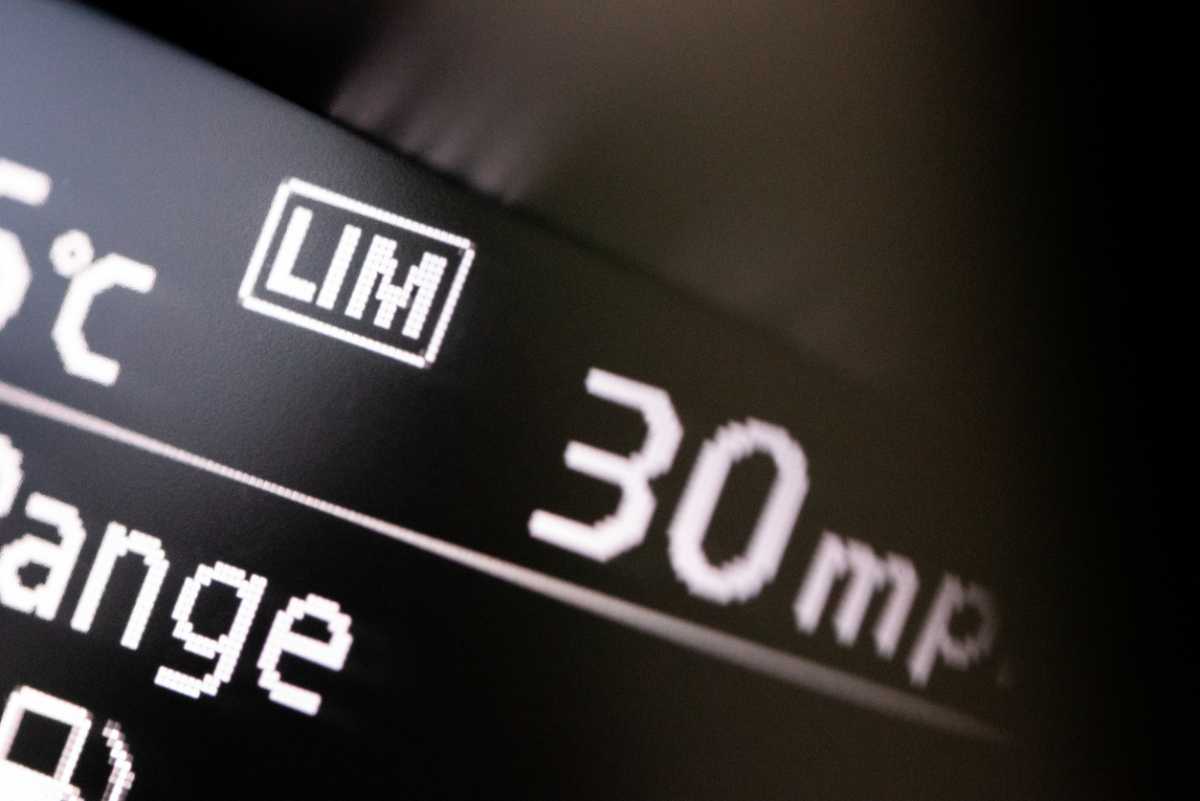
Technology designed to help motorists stick to speed limits could be making mistakes far more often than drivers realise.
New research has found that Intelligent Speed Assistance (ISA) systems, which became mandatory on all new cars sold in the UK and Europe in July 2024, can fail to correctly recognise speed limits in as many as one in four instances.
The findings come from vehicle safety specialist Thatcham Research, which tested ISA systems fitted to a selection of modern vehicles on UK roads. While the systems passed current regulatory requirements, real-world testing revealed significant discrepancies in how accurately they detected changes in speed limits.
What is Intelligent Speed Assistance?
ISA is one of several advanced driver assistance systems (ADAS) now required in all new vehicles. The technology uses a combination of GPS data, digital mapping and traffic sign recognition cameras to determine the current speed limit.
If a driver exceeds the detected limit, the system can issue warnings through dashboard alerts, audible chimes or steering wheel vibrations. In some vehicles, the system can also restrict engine power to encourage compliance with the speed limit.
Unlike adaptive cruise control, ISA does not apply the brakes. Instead, it limits acceleration until the vehicle returns to what the system believes is the legal speed.
Drivers can temporarily override the intervention by pressing firmly on the accelerator, which is useful when overtaking. However, regulations require ISA to reactivate every time the vehicle is started, meaning drivers who do not want to use it must disable it before each journey.
Research reveals accuracy concerns
Current European approval rules require ISA systems to achieve at least 90% accuracy over a 250-mile test route featuring different road types and speed limits.
However, Thatcham Research argues that this testing method does not properly assess how systems perform at the moments that matter most – when speed limits change.
The organisation tested three different vehicles using a stricter assessment that measured whether the systems correctly identified each speed limit transition.
The biggest concern came from the MG ZS. While the vehicle met official approval requirements with an accuracy score of 91.3%, Thatcham's testing found it correctly identified speed limits only 74.3% of the time during speed limit changes.
In practical terms, that means the system displayed the wrong speed limit in roughly one out of every four speed zone transitions.
The best-performing vehicle in the study, the BMW i5, achieved a much higher score but still identified speed limits incorrectly in almost 10% of instances.
Could drivers face fines?
Although drivers remain legally responsible for obeying speed limits, incorrect information displayed by ISA systems could create confusion.
If a vehicle incorrectly shows a higher speed limit than the one in force, a driver relying on the technology could unintentionally exceed the legal limit and face penalty points or fines.
Safety experts are also concerned that repeated errors could reduce trust in the technology, prompting motorists to switch it off altogether.
Calls for tougher testing standards
Thatcham Research is urging regulators to update the approval process for ISA systems to better reflect real-world driving conditions.
According to the organisation, testing should focus on how accurately systems respond when speed limits change, rather than measuring performance across long journeys where occasional mistakes can be diluted by overall accuracy scores.
The organisation warns that the long-term success of driver assistance technologies depends on motorists having confidence that the systems work consistently and accurately.
Why ISA was introduced
The European Transport Safety Council has previously estimated that ISA could reduce road collisions by up to 30% and cut casualties by around 20%.
The technology forms part of a wider road safety strategy aimed at significantly reducing fatalities across Europe by 2050.
ISA first became mandatory on newly launched vehicle models in July 2022. Since July 2024, every new car sold in the UK and Europe must be fitted with the technology as standard, regardless of when the model was originally introduced.
Other mandatory safety technologies now fitted to new cars include driver drowsiness monitoring systems and preparations for future alcohol interlock devices, which could require drivers to provide a breath sample before starting their vehicle if legislation is introduced.