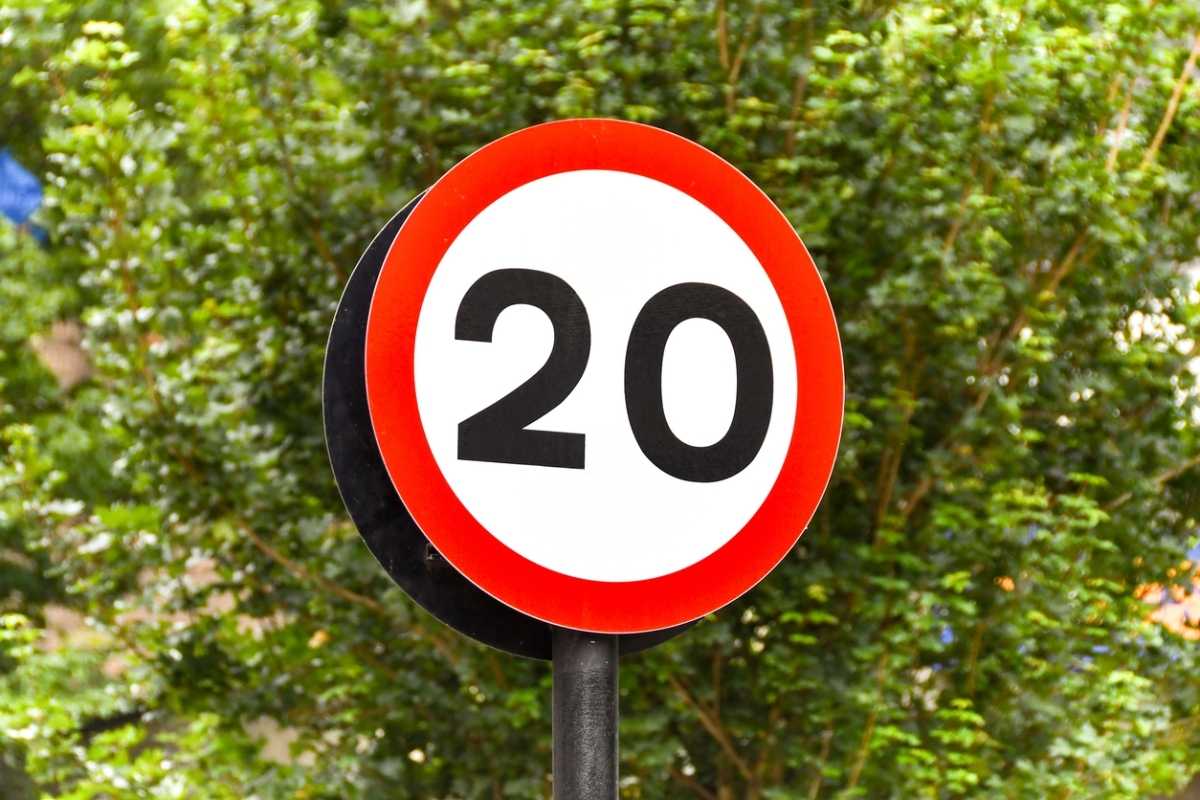
MPs have been urged to make 20mph the default speed limit on built-up roads across England, while also considering tougher rules that would prevent drivers from switching off speed limiter technology in their cars.
Road safety experts told the Transport Select Committee on Wednesday that the Government's Road Safety Strategy, announced in January, does not go far enough to meet its target of reducing road deaths in Britain by 65 per cent over the next decade.
The panel said the measures proposed in the strategy "could and should have gone further", particularly by reducing vehicle speeds in towns and cities.
The aim, they said, should be to create urban areas where people feel safer walking, cycling and spending time outdoors.
England still has no blanket 20mph law
Despite claims that England is moving towards a nationwide 20mph limit, the current road safety strategy does not create a legal framework for a blanket 20mph limit.
Instead, local authorities remain responsible for setting speed limits on residential roads, with the Government providing guidance.
Campaigners are therefore calling for that guidance to be changed so that councils are strongly encouraged to make 20mph the standard limit on built-up roads, rather than 30mph.
The approach would bring England closer to Wales, Scotland and the Republic of Ireland, where lower urban speed limits are being introduced more widely.
As of September 2024, 20mph became the default speed limit on restricted roads across Wales. Scotland has also introduced 20mph limits in built-up areas where authorities consider them appropriate.
The Republic of Ireland is carrying out a national speed limit overhaul that will reduce default limits in urban cores, town centres and housing estates from 50kmh (31mph) to 30kmh (19mph).
TfL says 20mph limits have already made a difference
Lilli Matson, chief safety, health and environment officer at Transport for London, described the Government's strategy as a "missed opportunity" because it did not introduce a blanket 20mph limit across England.
She urged MPs to follow London's example and encourage local authorities to make 20mph the default limit on urban roads.
Matson said reducing speed limits was the "first and most important systemic change" governments could make to improve road safety.
She pointed to Central London, where 20mph became the default speed limit on the main road network in 2020.
According to Matson, the change was followed by a reduction of around 24 per cent in the number of people killed or seriously injured. She also said the lower limits had changed how the roads felt and behaved for pedestrians and other road users.
Across England, 68 of 154 local authorities have committed to reducing speed limits on some built-up roads from 30mph to 20mph. Campaigners argue that this does not go far enough.
Adrian Berendt, director of the 20's Plenty for Us campaign, told MPs that around one in five people killed or seriously injured in road collisions are involved in incidents on 30mph roads.
He said the Government would struggle to achieve its target of a 65 per cent reduction in casualties without lowering speed limits.
Berendt said modelling by the campaign suggested that introducing more 20mph limits could reduce deaths and serious injuries by between 10 and 20 per cent.
He also argued that lower speeds could change the relationship between drivers, cyclists and pedestrians.
At 20mph, he said, drivers have a wider field of vision and more time to anticipate potential hazards.
Doctor says 20mph limits are a "moral duty"
Rob Török, a doctor specialising in pre-hospital emergency medicine with Dorset and Somerset Air Ambulance, told the committee that national 20mph limits should be treated as a "moral duty".
He said lower speeds would help protect pedestrians, children, older people, cyclists and other vulnerable road users.
"20mph limits nationally, set or prioritised urgently, would save countless numbers of people from injury, harm and cost," he said.
Experts call for cars that cannot speed
The panel also called for greater use of technology to prevent speeding.
Phil Jones, former chairman of the Welsh Government's 20mph Task Force Group, suggested introducing so-called "pace cars" that would be permanently restricted to 20mph.
The vehicles could include cars and vans operated by councils and other public bodies, as well as privately owned vehicles whose drivers voluntarily opted into the scheme.
Jones said it would not be necessary for every vehicle to obey the limit for the system to influence overall traffic speeds.
The proposal could also complement the Government's plans to make Intelligent Speed Assistance (ISA) technology mandatory in new cars.
ISA has been a legal requirement for new car models sold in the European Union since 2022, and most manufacturers already fit the technology to UK-specification vehicles.
The system uses GPS data, digital maps, speed-sign recognition and cameras to determine the applicable speed limit.
If a vehicle is travelling too quickly, the system can warn the driver with audible alerts, dashboard warnings and, in some cars, steering-wheel vibrations.
Some systems can also intervene directly by reducing engine power.
However, drivers can generally override the system by pressing harder on the accelerator. They can also switch it off at the start of a journey.
The road safety experts told MPs they should go further and make ISA permanently active.
London buses already use non-deactivatable ISA
Matson said Transport for London had already retrofitted ISA technology to its fleet and recorded a 63 per cent reduction in speeding incidents.
She argued that making the technology mandatory across vehicles could deliver similar benefits nationally.
New buses in London are already fitted with ISA systems that cannot be deactivated, while older vehicles are being retrofitted.
Matson said there was no reason a similar requirement could not eventually apply to vehicles across the country.
Road design could also be used to slow traffic
Jones also called for simple changes to road design to encourage drivers to reduce their speed.
These include narrower traffic lanes, more cycle lanes and removing centre lines from some roads.
He said the standard traffic lane in Britain is around 3.65 metres wide, but evidence shows that narrower lanes can carry similar amounts of traffic while encouraging lower speeds.
Removing a centre line can also reduce average speeds by around 1 to 2mph, he claimed.
The Government is already considering a range of new vehicle safety requirements.
On Thursday, it published its response to a consultation on mandating 18 safety systems for new vehicle models sold in Britain, including Intelligent Speed Assistance.
The debate over 20mph limits and speed-limiter technology is therefore likely to continue as ministers decide how far they are prepared to go to meet their target of reducing road deaths and serious injuries.