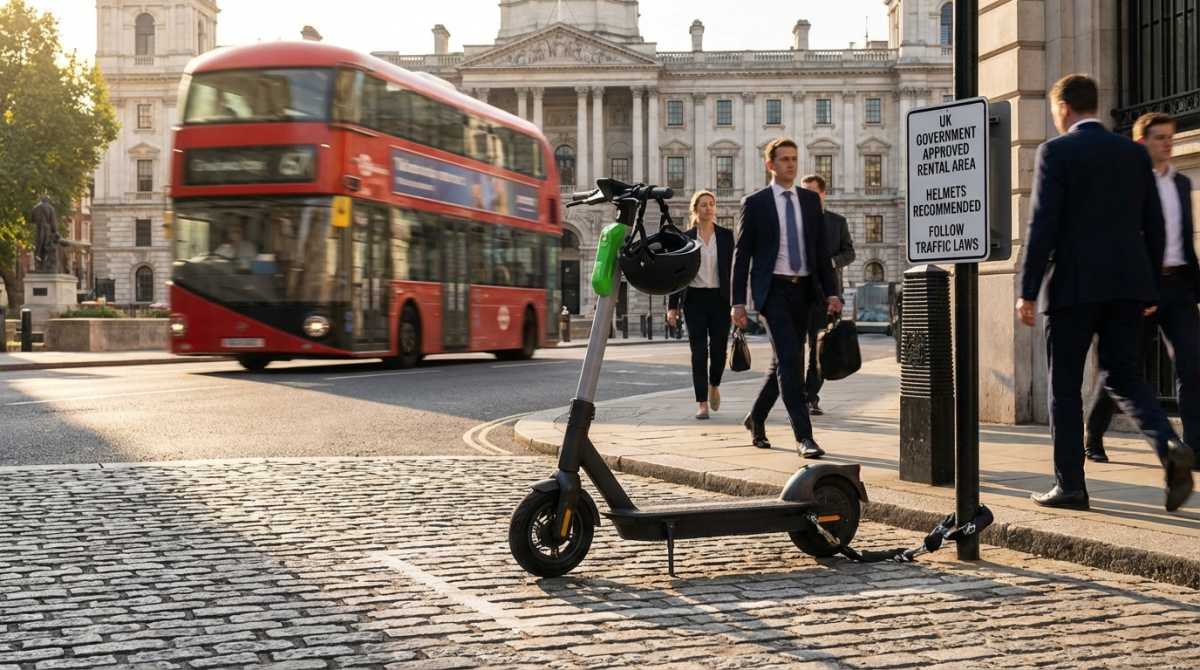
TL;DR: The UK government has confirmed plans to legalise private e-scooters on public roads by introducing new national safety regulations. The upcoming e-scooter legislation will enforce speed limits, mandate specific safety hardware, and implement a strict ban on riding on pavements.
The UK government is officially moving to legalise the use of private e-scooters on public roads, a significant shift in transport policy confirmed. The new rules are set to address the thousands of unregulated scooters already in use across Britain's towns and cities.
Transport Minister Heidi Alexander announced that the upcoming e-scooter legislation in the UK is designed to bring much-needed control and safety standards to the rapidly growing market. This marks a major change from the current law, where private e-scooters are only legally permitted on private land.
New government rules will soon allow them on public roads and in cycle lanes. But what will this actually look like? The proposed e-scooter UK law requirements are reportedly stringent, aiming to standardise the vehicles flooding the market. We're looking at mandatory lights for visibility, specific braking systems, and hardware that physically limits top speeds.
This move aims to bring private ownership in line with the official e-scooter rental trial schemes active since 2020. Those trials already enforce controls, such as requiring users to have a driving licence for e-scooters. The government now wants to apply a similar level of regulation to the currently chaotic private market.
Will this new framework actually make our streets safer?
The push for new e-scooter safety standards in the UK comes amid growing alarm from medical professionals. Doctors at Alder Hey Children's Hospital, for instance, have sounded the alarm over a significant increase in serious injuries since 2019.
The core of the new plan is simple: keep e-scooters off pavements. Once the bill passes, riders will be restricted to roads and cycle paths. This e-scooter pavement ban in the UK is intended to protect pedestrians, particularly vulnerable groups, from the risk of collisions.
Speaking to the BBC recently, Heidi Alexander acknowledged the reality of the situation, stating that the "the genie’s out of the bottle when it comes to e-scooters." She noted that many people are already using private e-scooters for their daily commutes, despite it being technically illegal. These new Heidi Alexander e-scooter regulations are a classic case of the law playing catch-up with public behaviour.
The minister was unequivocal that e-scooters should never be allowed on pavements, a sentiment widely supported by walking and disability advocacy groups.
To make the devices roadworthy, the Department for Transport is developing the technical specifications. These include fixed speed caps and ensuring every scooter is equipped with adequate lighting for night-time use. It's a similar approach to how regulators are tackling other modern transport safety issues, such as the debate over ultra-bright car headlights.
But the delay in creating a legal framework has had a real human cost. Dr Charlotte Durand, an A&E consultant at Alder Hey, highlighted the growing number of children being treated for nasty injuries. She explained, “Public engagement work has shown most families are unaware of the law around e-scooters, nor of the significant dangers of children riding them despite their vulnerability both physically due to their size and their understanding of risk.”
So, what happens next?
The government must find parliamentary time for the bill to be debated and voted into law. Until the new e-scooter law is officially passed, the current rules remain in place. This means private e-scooters must be kept on private property. For anyone wanting to ride legally, the advice is to use the government-approved rental schemes.