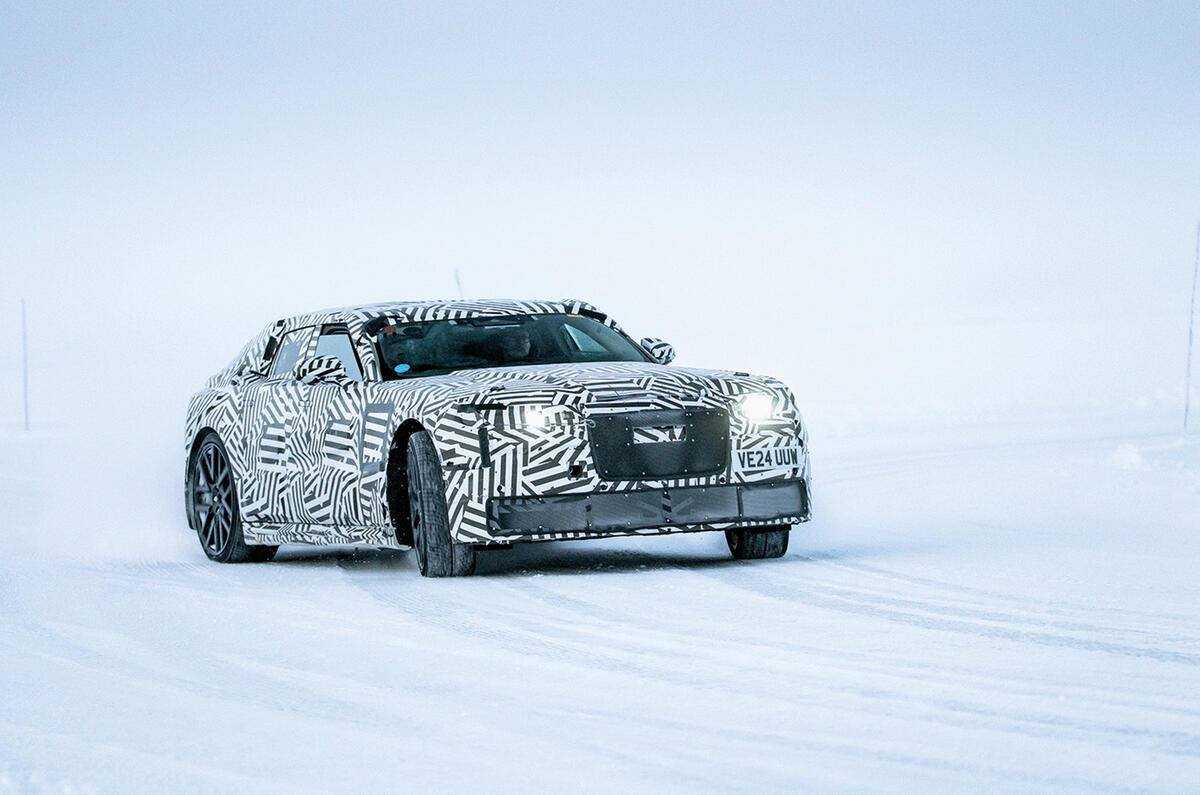
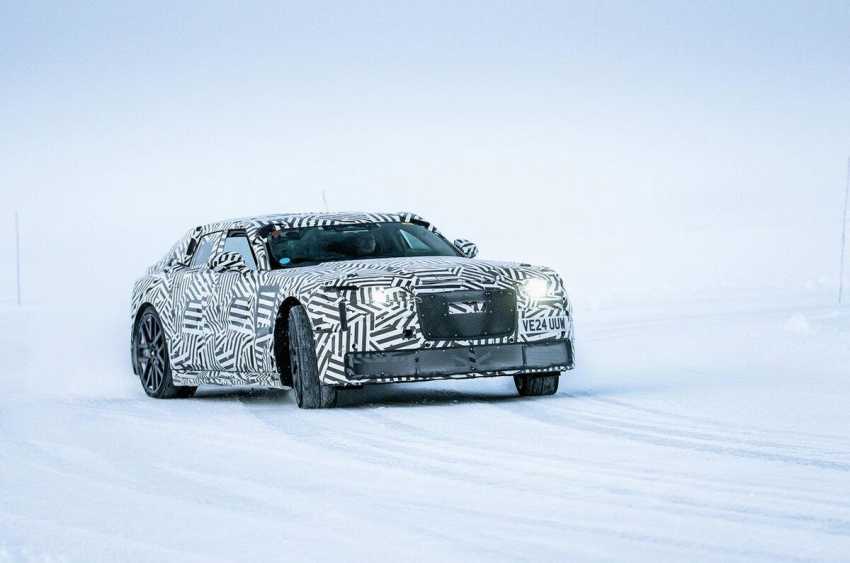
For a while, it seemed Jaguar’s leadership didn’t care about its past. The message was all about the new: old designs were gone, old logos gone, production stopped. Everything familiar was discarded in favour of a futuristic vision.
But Jaguar’s engineers saw it differently. They knew change was needed – though if the company had been selling 100,000+ cars a year, maybe less so – but creating this new electric luxury car didn’t mean abandoning everything from the past.
By the time the adverts appeared, the car’s design was already final. Out of 17 full-size clay models, one had been chosen. The next step was defining its character. Senior designers and engineers studied previous Jaguars from their own collections and the Jaguar Daimler Heritage Trust. They examined not just the looks, but the driving dynamics, to decide how a modern Jaguar should feel on the road.
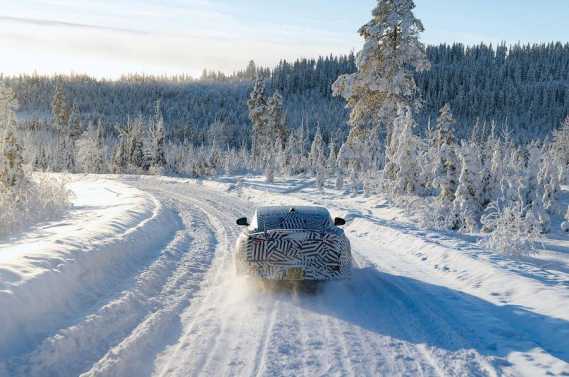
Fast forward to Revi in northern Sweden, near the Arctic Circle, where JLR tests cars on frozen lakes. Around 60 miles from the circle, 150 prototypes, including the Type 00, are being tested alongside Land Rovers by 80–90 engineers. The area has been used for winter testing by the European car industry for over 40 years because it provides consistent conditions.
Jaguar gave approximate numbers: the final car won’t be revealed until late summer, orders open in autumn, and deliveries begin next spring. But we can already drive it in extreme winter conditions.
What is the Type 00?
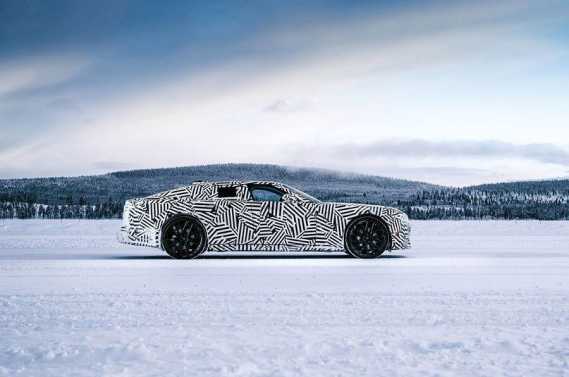
In short: a four-door GT. At 5.2m long and less than 1.4m tall, it’s long and low. It has a long bonnet, a short 877mm front overhang, a 3.2m wheelbase, and a 1,158mm rear overhang. Width hasn’t been confirmed, but it feels wide.
Chief engineer Jon Darlington and head of propulsion James Matthews showed the prototype on a lift. It sits on JLR’s new Jaguar Electric Architecture (JEA), a bespoke EV platform. “No existing architecture could handle this car,” says Darlington.
The interior layout gives a huge 903mm distance between the front axle and the driver’s footwell. The driver sits far back, at the junction of the doors. Doors are conventional with B-pillars for safety. The centre of gravity is very low, and the car’s weight is split 50:50 front to rear.
Suspension is sophisticated: double wishbones at the front, integral-link at the rear, Bilstein DT Sky adaptive dampers, two-chamber air springs, and relatively thin anti-roll bars. Active bars aren’t needed thanks to the low centre of gravity.
Power comes from three permanent magnet motors. One 350bhp motor is at the front, two at the rear delivering 950bhp total. Torque is 959lb ft, monitored 1,000 times a second. There are three drive modes adjusting suspension, steering, and torque distribution. Rear bias varies from 50–75% in rain and ice, to 65–98% in dynamic mode.
The 120kWh battery gives around 400 miles (EPA) or 430 miles (WLTP). Unlike typical EV layouts, the battery is split into multiple stacks, keeping the floor low and passengers comfortable. The car is stiffest Jaguar to date (50,000Nm/degree torsional rigidity) and highly aerodynamic (Cd < 0.25). Crash safety is enhanced with aluminium castings and stressed battery packs.
There’s no engine; this is fully electric. Wheels are 23in standard, with summer, all-season, and winter tyres designed for this car. Optional 21in wheels are available for rough roads.
Driving the Type 00
The car is low and coupé-like, closer to an Aston Martin Rapide than a BMW 7 Series. Rear doors are tight, but the driving position is excellent, with a clear view down the long bonnet. The frozen lake track is uneven, but the Type 00 smothers bumps well.
Steering is precise, light to medium, with variable ratio and 43° front lock, 6° rear, giving an 11.5m turning circle. Rear-steer integration is seamless. Traction and stability systems are excellent: rear motors meter power smoothly, front uses mechanical braking. The car handles slippery surfaces and mixed terrain impressively.
On a handling pad, suspension in comfort mode allows a touch of body roll, showing the car is balanced yet playful. Extreme conditions are handled without the car feeling intrusive.
In its balance, compliance, and feel, the Type 00 is unmistakably Jaguar. Drive it without knowing the backstory, and it would feel like a direct successor to the XJ. While headlines and adverts focus on the future, Jaguar’s engineers have delivered a car that honours its past.