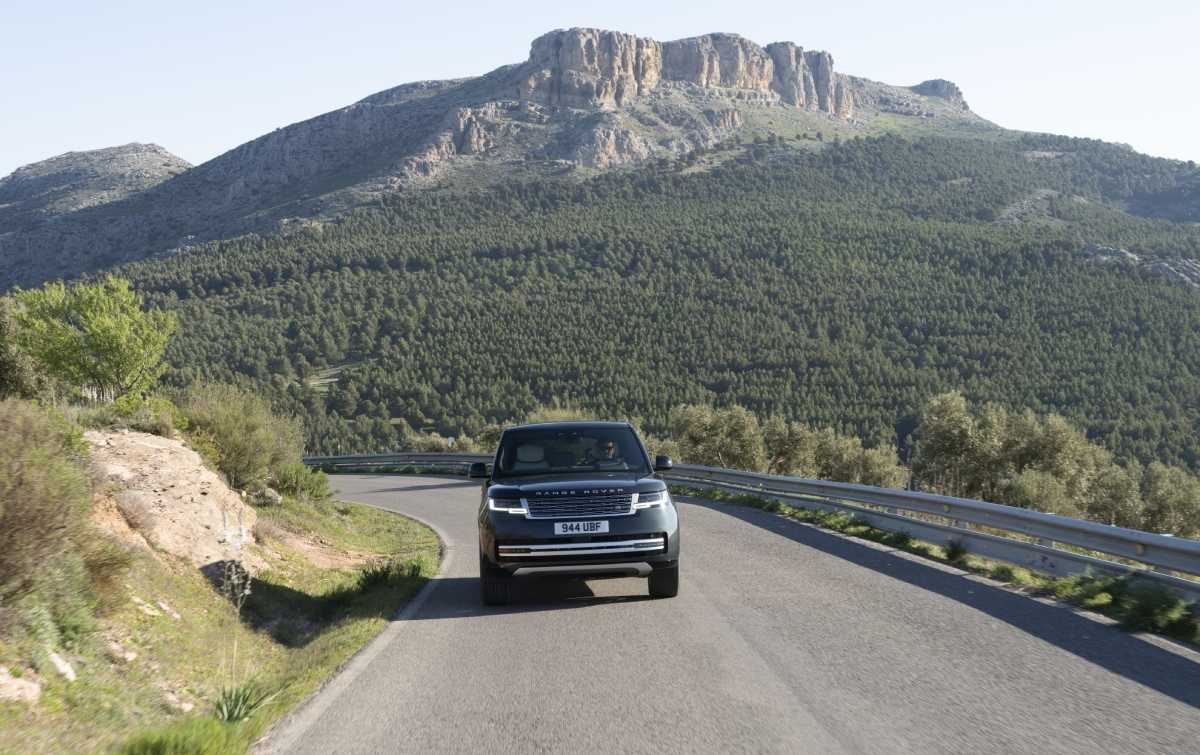
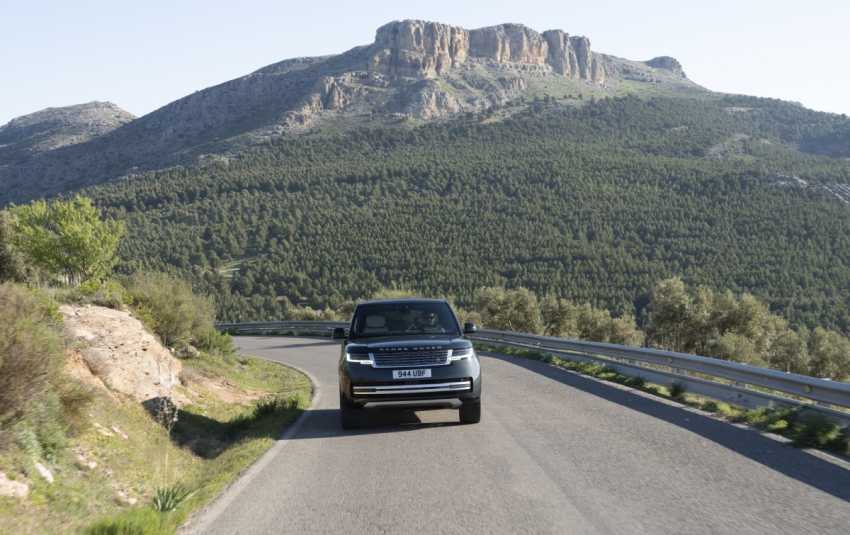
The Range Rover Electric is an unusual proposition. It costs from around £154,000 in the UK, weighs more than two tonnes and offers the sort of luxury and off-road ability traditionally associated with a large petrol or diesel 4x4. Yet underneath it is a fully electric powertrain.
That raises an obvious question for potential buyers: can an electric Range Rover really deliver the refinement, range and off-road capability expected of the badge?
On paper, the answer is yes. The electric model has a 118.5kWh battery, a claimed WLTP range of up to 372 miles, 550bhp and the ability to wade through up to 900mm of water. It can also accept charging at up to 350kW.
The more interesting story, however, is how Land Rover has engineered the car to behave like a Range Rover rather than simply turning an existing luxury 4x4 into an EV.
How far can the Range Rover Electric travel?
The headline figure is 372 miles on the WLTP test cycle.
As with every electric vehicle, real-world range will depend on speed, temperature, road conditions, driving style and use of heating or air conditioning. For a vehicle of this size and weight, a real-world figure somewhere around 300 miles could be a more useful expectation for longer journeys, although individual results will vary.
The battery's 118.5kWh capacity is substantial. That gives the Range Rover Electric the energy reserves expected of a luxury vehicle designed to cover long distances without frequent stops.
For UK drivers, the important point is that the car is not relying on a small battery and ultra-efficient body to achieve its range. It is carrying a large amount of energy to move a very large vehicle.
That comes with an obvious trade-off: charging costs and electricity consumption are likely to be significant, particularly if the car is regularly charged away from home on rapid public networks.
350kW charging could make long journeys easier
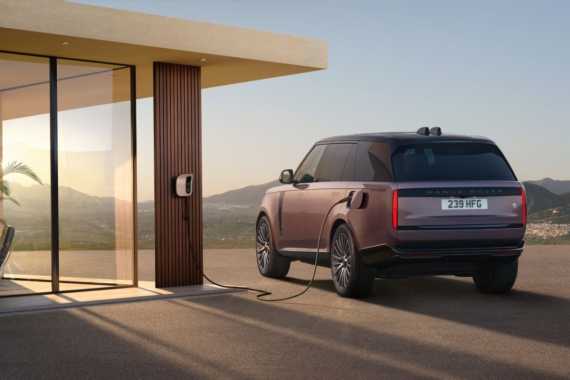
The Range Rover Electric uses an 800-volt electrical architecture and can charge at up to 350kW under suitable conditions.
Land Rover quotes around 22 minutes to charge from 10% to 80% when the necessary charging conditions are available.
That's useful for motorway journeys, although UK drivers should remember that a 350kW charger does not automatically mean the car will receive 350kW throughout the charging session. Charging power varies according to the battery's state of charge, temperature and the capability of the charging point.
The car also supports 22kW AC charging, which could be particularly useful for owners with access to an appropriate three-phase home or workplace charging installation.
There is another practical consideration. The Range Rover Electric can use older 400-volt charging infrastructure, although charging performance may be lower. That gives owners more flexibility across Britain's increasingly varied public charging network.
Can an electric Range Rover really go off-road?
This is where the Range Rover Electric becomes more interesting than its specification sheet initially suggests.
Electric motors can deliver maximum torque from virtually zero motor speed. That means the car does not need a conventional low-range transfer box to produce controlled, high levels of wheel torque.
The result is particularly noticeable at low speeds and on difficult surfaces.
Land Rover has retained familiar terrain modes covering conditions including:
- Sand
- Rock crawl
- Mud and ruts
- Grass, gravel and snow
- An automatic mode that can adapt to conditions
The electric motors also allow much finer control over torque at each axle. When a wheel begins to lose traction, the system can respond extremely quickly and precisely.
For an off-road vehicle, that matters. Traditional traction-control systems can sometimes intervene with noticeable braking and power fluctuations. An electric motor can adjust its torque output much more directly.
The car can also wade through up to 900mm of water. That means the battery, electric motors and high-voltage components have been engineered to cope with conditions that would make many EV owners understandably nervous.
Of course, a 900mm wading capability does not mean drivers should attempt to cross floodwater on public roads. In Britain, the safest advice remains to avoid driving through flooded roads wherever possible. Water depth can change rapidly, and hidden obstacles or flowing water can make apparently manageable crossings extremely dangerous.
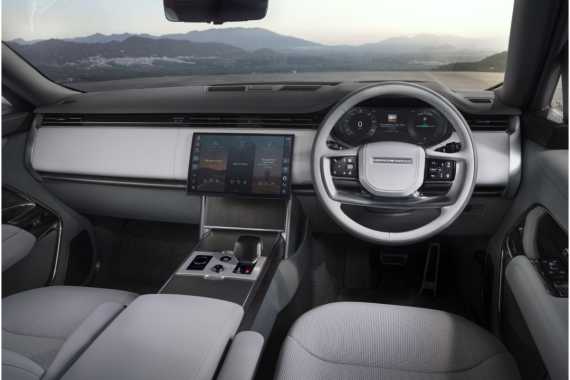
What does all this technology mean for buyers?
The Range Rover Electric has been engineered around the same basic platform as other Range Rover powertrains, allowing electric, plug-in hybrid and combustion versions to share production infrastructure.
Underneath, however, there is a considerable amount of dedicated EV technology.
The battery uses a cell-to-pack design to maximise energy density, while sophisticated thermal management moves heat between the battery, motors, electronics and cabin as required.
There is also extensive attention to refinement. Removing an engine makes an EV quieter, but it does not eliminate noise. Tyres, wind and the electric motors themselves become more noticeable when there is no combustion engine masking them.
Land Rover has therefore worked on reducing those noises, while higher-specification versions can use sophisticated active noise cancellation.
That engineering should make the Range Rover Electric particularly well suited to its intended role. Quiet, smooth and effortless acceleration fits the character of a luxury SUV extremely well.
At more than £150,000 before options, this is not an affordable route into electric motoring. Buyers also need to consider insurance, tyres, servicing, home charging installation and public charging costs alongside the purchase price.
For company-car users, tax treatment and Benefit-in-Kind rates will also be important considerations, although the financial advantages of choosing an EV depend heavily on how the vehicle is acquired and used.
Should UK drivers consider the Range Rover Electric?
For most motorists, probably not. The sheer price puts it firmly into a different category from mainstream electric cars.
But for someone who already wants a Range Rover, the electric version makes a compelling technical case.
It offers:
- A claimed 372-mile WLTP range
- A 118.5kWh battery
- 550bhp and 0-62mph in around 4.5 seconds
- Up to 350kW DC charging
- Around 22 minutes for a 10-80% charge in suitable conditions
- Up to 900mm wading depth
- Genuine off-road terrain modes
- Four-wheel steering and air suspension
- The quietness and smooth torque delivery associated with an EV
The bigger question is whether luxury SUV buyers are ready to make the switch to electric.
The Range Rover Electric itself appears to have been given enough engineering attention to make that transition credible. Its ability to combine luxury-car refinement with serious off-road technology is more convincing than simply putting a large battery into a conventional SUV.
For UK motorists, however, the decision ultimately comes down to usage. If most journeys are short, home charging is available and the budget stretches to a six-figure luxury SUV, the electric powertrain makes considerable sense.
If long-distance towing, remote travel or limited access to charging are priorities, the choice becomes more complicated.
The technology may have caught up with the Range Rover name. Whether the buying public has caught up with electric Range Rovers is the part that remains to be proved.