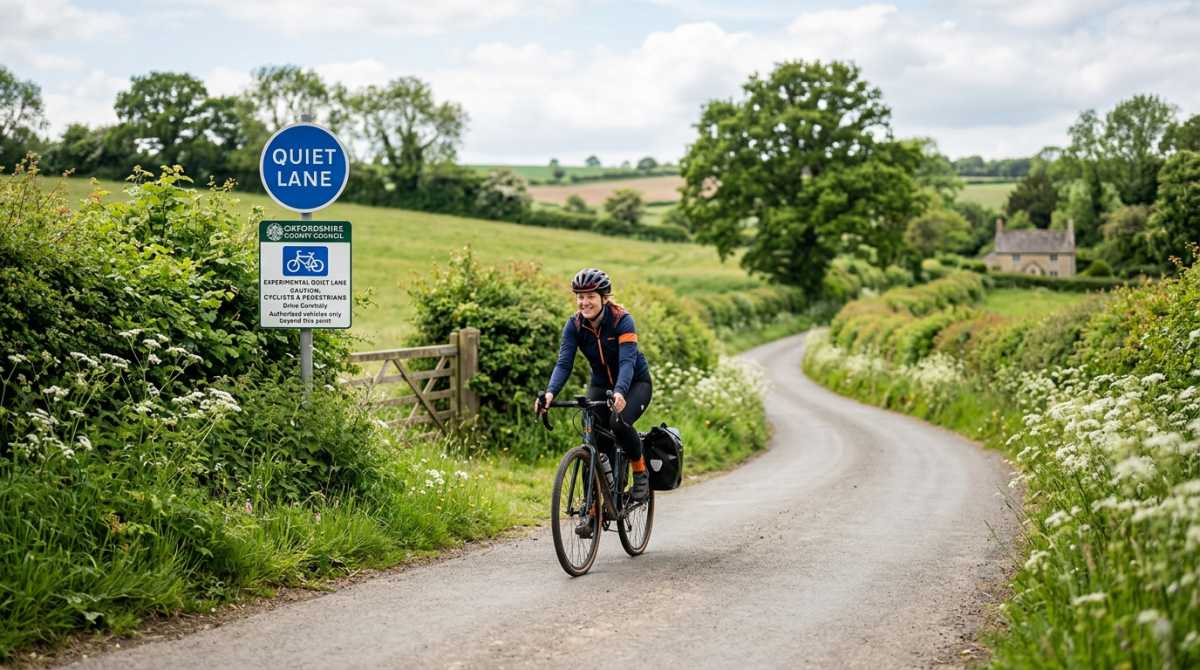
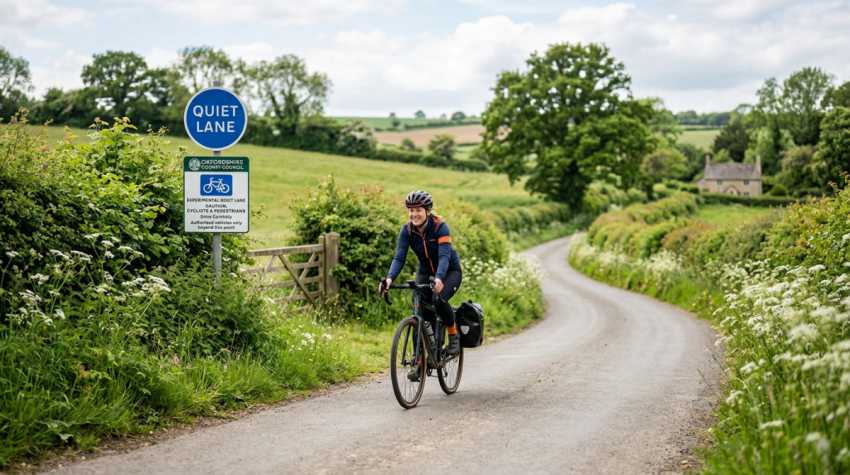
TL;DR: Oxfordshire County Council has revealed a new 'quiet lanes' pilot scheme, planning to close some rural roads to through-traffic to create safer routes for cyclists and walkers. The controversial proposal has sparked immediate backlash from local farmers and residents who fear major disruption and isolation.
Key Facts
- Oxfordshire County Council is launching the controversial 'quiet lanes pilot scheme'.
- Shepards Pit Lane in Stanton Saint John is the first location proposed for the new road closures.
- Physical barriers like bollards or gates will be used to block all through-traffic.
- Local farmers have labelled the plan 'madness', warning of the severe impact of road closures on UK farming logistics.
- The council insists only roads with a 'decent alternative route' will be considered for closure.
Oxfordshire County Council recently ignited a fierce debate after announcing its new Oxfordshire quiet lanes pilot scheme, a plan designed to close select countryside roads to most vehicles. The stated goal is to promote active travel by making lanes safer for cyclists, walkers, and horse riders.
What this means for drivers is that certain rural routes could soon be blocked by physical barriers, such as bollards or traffic gates, preventing them from being used as through-routes or shortcuts. The latest announcement confirms that Shepards Pit Lane in Stanton Saint John is the first area to be considered for these new restrictions, marking a significant shift in British rural transport policy.
While the council promises that residents and businesses located on these lanes will retain access, the proposals have been met with immediate concern. For many, these plans feel like the controversial low traffic neighbourhoods (LTNs) seen in Oxford city, but now extended into the rural landscape.
This is where the plan gets complicated. Council leader Tim Bearder has stated that closures will only be implemented where a viable alternative route exists for cars. However, local villagers are worried about the practicalities. Nicola Mallows, a resident, highlighted the reality of rural life, pointing out that villagers depend on their cars for essential journeys and that Shepards Pit Lane is a vital connection, not just a scenic drive.
Perhaps the strongest opposition comes from the local farming community. The impact of road closures on UK farming could be significant, creating logistical nightmares for moving large agricultural machinery and managing deliveries.
Steve, a local farmer, minced no words when speaking to BBC Radio Oxford, calling the plan 'madness'. He raised serious concerns about how Heavy Goods Vehicles (HGVs) would manage collections and deliveries if their standard routes are suddenly blocked. Moving a combine harvester is challenging at the best of times; forcing it onto longer, potentially unsuitable roads could create new dangers.
In response, the council has tried to offer reassurance. Officials have confirmed that agricultural workers will be granted access through the barriers. The strategy appears to be to encourage HGVs onto larger A and B roads while still permitting essential farm access. But for farmers, the question remains: will this system work smoothly in the real world?
The debate over these rural traffic calming measures in the UK is now underway. The council is currently in consultation with parish and town councils to identify other potential roads for the scheme. In Stanton Saint John, opinion is sharply divided. Some, like Councillor David Polgreen, welcome the idea of creating safe rural cycling routes in the UK where people can walk without fear of traffic.
However, others see only more bureaucracy and disruption. The success of the Oxfordshire quiet lanes pilot scheme will ultimately depend on a delicate balancing act. Can the council's vision for active travel coexist with the practical, day-to-day needs of a working rural economy? For thousands of drivers and workers in the county, the answer is far from clear.