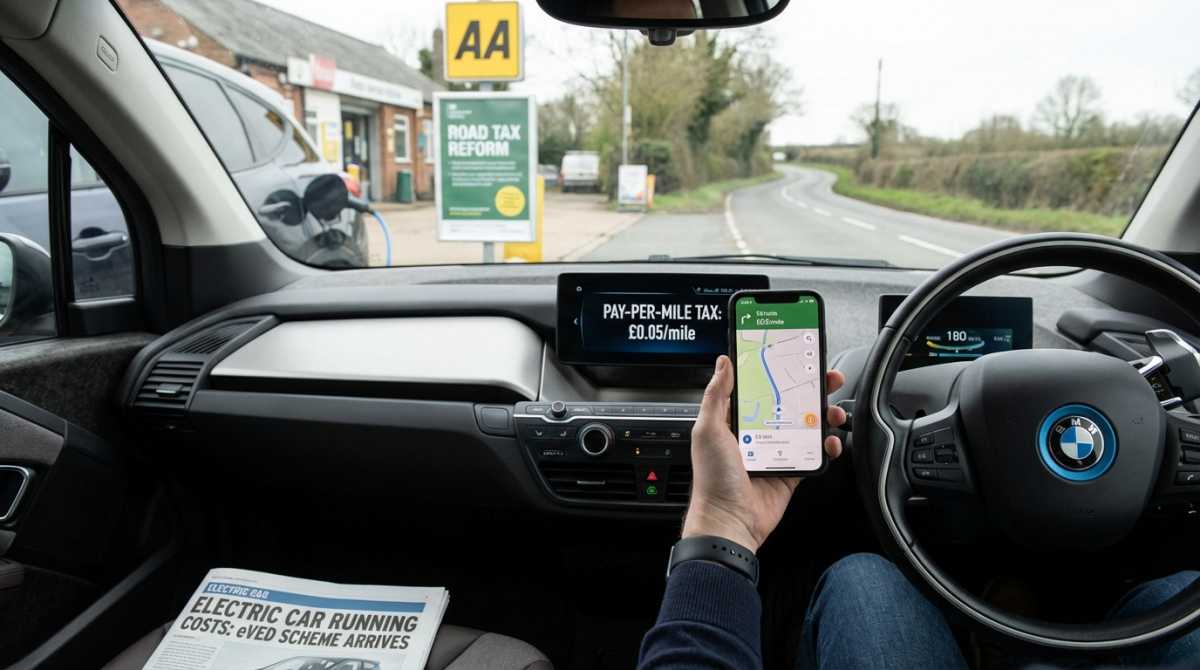
TL;DR: New research from the AA shows a major shift in driver attitudes, with 55% of UK motorists now having second thoughts about switching to an electric car. The biggest reason? The proposed pay-per-mile road tax for EVs, which is raising concerns about costs and slowing the UK’s move away from petrol and diesel.
Key Facts
- 55% of UK drivers are reconsidering the switch to an EV (AA survey)
- The proposed ‘eVED’ tax could charge drivers around 3p per mile
- Only 3% of motorists would feel confident buying a used electric car due to rapid depreciation
- The UK currently has around 118,000 public chargers, well short of the 300,000 target set for 2030
Pay-per-mile road tax worries make drivers hesitate
The tide seems to be turning for electric cars in the UK. According to new data from the AA, more than half of drivers are now rethinking their plans to swap petrol or diesel for electric. The main concern is the proposed pay-per-mile tax for EVs – a move many fear could erase one of the biggest financial advantages of going electric.
This new insight from the AA’s EV Readiness Index suggests that while progress has been made, many UK motorists are starting to question whether the road to an all-electric future is as smooth as once promised.
What is the proposed EV road tax?
The proposed ‘eVED’ (electric Vehicle Excise Duty) scheme aims to fill the government’s growing fuel duty shortfall as drivers go electric. The plan under discussion would charge EV owners around 3p for every mile driven.
For drivers, that signals a big change. The idea of low-cost, zero-fuel motoring could be replaced by a system that monitors and bills you for every journey – whether that’s the daily commute, a quick shop, or a trip to see family. For many early EV adopters, it feels like a step backwards.
How it could affect EV running costs
Until now, one of the strongest selling points of electric cars has been their economical running costs. But with this new pay-per-mile proposal, that key advantage starts to fade.
On top of that, the AA found that only one in five drivers feels confident using the UK’s public charging network. Combine that with the financial uncertainty, and it’s easy to see why some drivers are hitting the brakes on their EV plans.
Used EV prices add to the anxiety
The second-hand EV market is another major sticking point. The AA’s research shows that just 3% of drivers would feel comfortable buying a pre-owned electric car, largely due to steep depreciation and concerns over battery life.
When used EVs lose value quickly, it affects new car purchases, too. Leasing becomes more expensive, and finance deals dry up. All of this makes it harder for everyday motorists to justify the switch.
Is the UK still on track for 2030?
It’s not all doom and gloom. The UK’s overall EV readiness score did improve slightly this year, climbing to 53.8 out of 100. And infrastructure is gradually improving – there are now around 118,000 public chargers across the country.
However, it’s still a long way from the 300,000 units promised by 2030. The progress is real but fragile. Without clear decisions on the proposed pay-per-mile tax, the UK’s journey toward mass electric adoption risks losing its charge, both figuratively and literally.