TL;DR
Councils across the UK are now introducing rural low traffic neighbourhoods (LTNs) in the countryside, using 20mph speed limits and physical barriers to restrict through-traffic. While aimed at improving safety for cyclists and walkers, the schemes are causing significant disruption for local drivers and farmers who rely on these routes for access.
Rural Low Traffic Neighbourhoods Spark Backlash Across UK
What was once a headache reserved for city drivers is now a reality in the British countryside. Rural low traffic neighbourhoods are being actively rolled out across the UK, as local councils begin swapping 60mph national speed limit stretches for 20mph zones and, in some cases, physical blockades. The latest data shows a growing conflict between the push for safer, active travel and the practical needs of those who live and work in these areas.
Key Facts
- 2006: The Quiet Lanes and Home Zones (England) Regulations 2006 provide the legal power for councils to implement these schemes.
- 6: At least six UK counties, including Kent, Norfolk, and North Yorkshire, are now using physical barriers to enforce rural LTNs.
- 20mph: Councils are slashing speed limits from the national 60mph down to just 20mph on many key countryside routes.
- Oxfordshire County Council: This council is at the forefront of the changes, recently proposing some of the most extensive rural road closures and speed reductions.
Oxfordshire Leads the Charge on Countryside 20mph Speed Limits
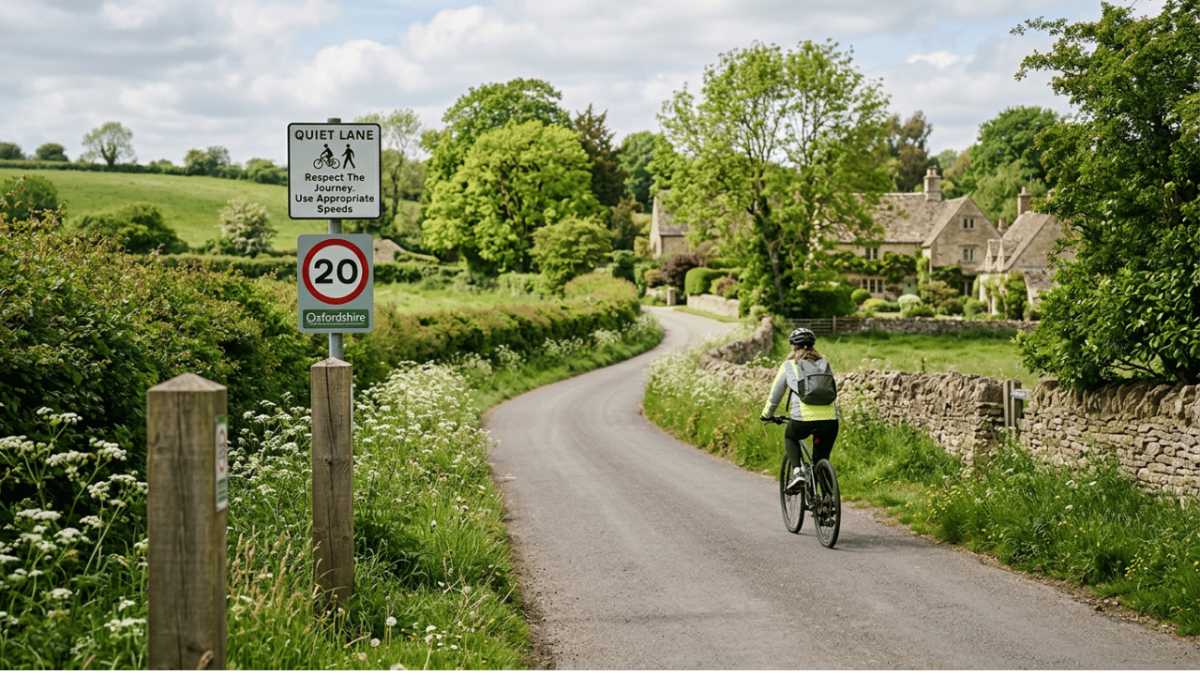
Oxfordshire County Council's transport management plans are causing the biggest stir. The council is currently proposing to slash speed limits on several routes that have traditionally been national speed limit zones, creating a network of 'Quiet Lanes'.
The goal is to encourage more active travel in the British countryside, making lanes safer for horse riders, walkers, and cyclists. However, the proposals have created significant tension with the local farming community and residents who depend on these roads for daily access, not just for leisure.
How Quiet Lanes Regulations 2006 Are Being Reinterpreted
Now, here's the thing: the legal framework for this isn't new. The Quiet Lanes and Home Zones (England) Regulations 2006 have been on the books for nearly two decades. For most of that time, designating a 'Quiet Lane' simply meant a few extra signs asking drivers to be considerate.
What's changed is the interpretation. Authorities in at least six counties are now taking a much more aggressive approach. Instead of just signs, we’re seeing the introduction of gates, bollards, and even large planters used as physical obstructions to enforce rural road closures through traffic. It’s a massive leap from a simple 'slow down' warning to a literal blockade.
The LTN Impact on UK Farmers: A Logistical Nightmare?
For the UK's agricultural community, these new measures present a logistical nightmare. Farmers have voiced deep frustration, with some calling the Oxfordshire quiet lanes scheme 'madness'. They argue that Heavy Goods Vehicles (HGVs) require access to farmyards every single day for essential deliveries and collections.
You can’t simply tell a lorry driver to 'find another way' when the only alternative is a five-mile detour down another narrow B-road. While councils claim HGVs won't be completely cut off, the reality on the ground often means added fuel costs, wasted time, and significant operational disruption. This is the direct LTN impact on UK farmers.
Rural LTNs vs Urban Schemes: What's the Difference for Drivers?
So what’s the real difference for drivers compared to the urban LTNs many are familiar with? While city schemes rely heavily on ANPR cameras and hefty fines to penalise drivers who enter restricted zones, the rural version is leaning into physical barriers to change driver behaviour directly.
The Department for Transport quiet lanes policy originally envisioned these as shared spaces where all users could coexist. But it seems some councils are now using the 2006 Act to its absolute limit, prioritising certain users over others by physically preventing access.
Experts Divided: A Tug-of-War Between Safety and Access
This has created a classic tug-of-war. Edmund King, President of the AA, notes that while he cycles and walks as much as he drives, he feels some councils might be overstepping. He believes most drivers respect sensibly implemented quiet lanes but warns against disproportionate measures.
Conversely, Tim Bearder, a cabinet member at Oxfordshire County Council, argues that action is essential. He states that many people are currently 'terrified' to use these roads and that space must be 'reallocated' so everyone can enjoy the countryside safely. For drivers, the message is clear: whether you're a local or just passing through, it’s vital to check your local council’s website. The era of using rural lanes as high-speed shortcuts is officially coming to a close.