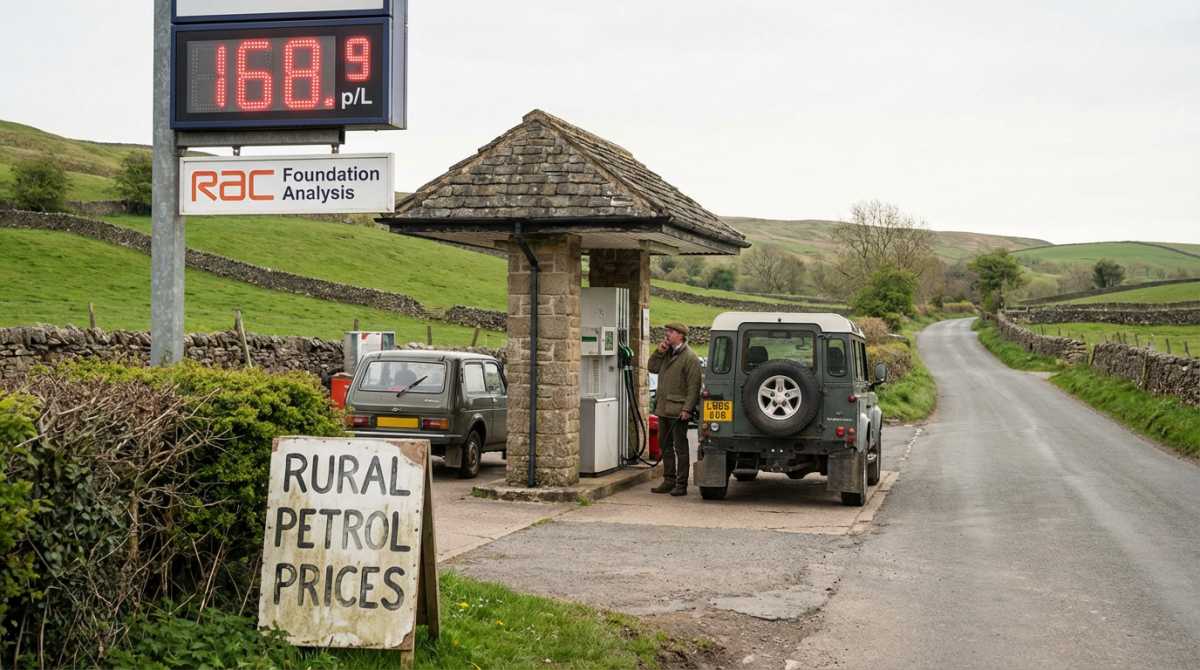
Rural drivers are now paying around 2p more per litre for petrol than urban motorists, adding £1.10 every time they fill a standard family car. Despite this growing divide, the Treasury has already pocketed an extra £100 million in VAT from rising pump prices, and a further 5p fuel duty hike is still on the way.
Rural petrol price crisis: countryside drivers paying a 2p‑per‑litre ‘penalty’
Key Facts
- 156.15p: Average rural petrol price per litre, according to the RAC Foundation.
- £1.10: Extra cost per 55‑litre family car fill‑up compared with urban drivers.
- £100 Million: Extra VAT revenue gained by the Treasury under Chancellor Rachel Reeves.
- 5p: Planned fuel duty rise this September – adding roughly £3 to a tank.
- 40p: Diesel prices rose by 40p per litre in March, adding about £22 per tank.
Rural drivers left paying more at the pump
Drivers across the UK’s countryside are being hit hardest by rising fuel costs. New analysis reveals they’re paying an average of 2p more per litre than drivers in towns and cities – a small number that quickly becomes costly.
That extra 2p might sound minor, but it means around £1.10 more every time a driver fills a typical 55‑litre tank. For motorists who rely on their cars daily for work, school runs, and essentials, it’s an unavoidable hit on already tight household budgets.
At rural forecourts, the cost difference is starting to feel less like a price gap and more like a postcode penalty.
Diesel drivers suffer an even bigger blow
The situation is even worse for diesel owners. March saw diesel prices surge by 40p per litre, adding a staggering £22 to the cost of filling up in a single month. Such spikes have left many van drivers, farmers, and commuters questioning how much longer they can absorb the increases.
Why are rural fuel prices higher?
There’s no single cause, but supply and geography play huge roles.
- Low turnover: Rural petrol stations sell lower volumes than busy city pumps, so they need to charge slightly higher prices to stay viable.
- Delivery costs: Fuel tankers travelling to remote areas face longer routes and higher logistics costs.
- Market volatility: Global tensions, particularly over the Strait of Hormuz, have disrupted oil supply routes and pushed up wholesale prices.
These pressures have combined to leave rural drivers consistently paying more despite using the same fuel.
The treasury’s £100 million windfall
While motorists shoulder rising costs, the Treasury is quietly benefiting. Since VAT is calculated as a percentage of the sale price, higher pump prices automatically mean higher VAT receipts. The Chancellor’s coffers are estimated to have swelled by roughly £100 million as a result.
Instead of passing that windfall back to drivers, the government is still planning a 5p‑per‑litre fuel duty rise this September. That’s equivalent to an extra £3 per full tank, further widening the gap between rural and urban motorists.
Why this matters more in the countryside
For rural households, cars aren’t a luxury – they're essential. With few buses, no trains, and long distances between key services, many families simply can’t cut back on driving. The extra £1 here and £3 there soon builds into a serious financial strain.
Some campaigners are now urging ministers to reinvest part of the VAT windfall into rural fuel grants or support for independent garages. Without help, smaller forecourts, already operating on thin margins, could close altogether, leaving rural communities even more isolated.