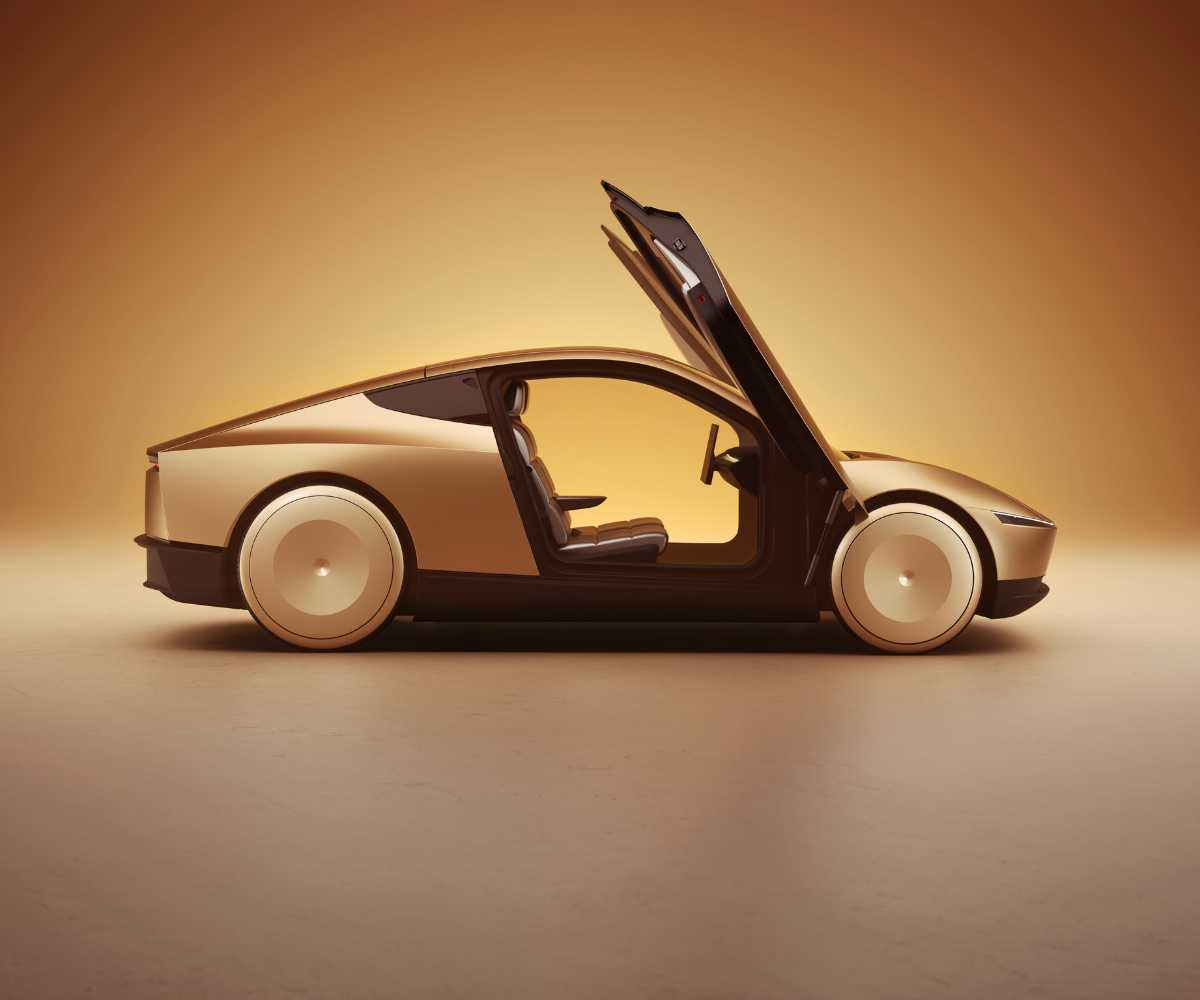
Tesla has finally unveiled its long-awaited "Robotaxi" – a sleek, self-driving coupé that showcases the company's vision for a global fleet of autonomous vehicles. At an event in the US, Elon Musk introduced the futuristic Cybercab concept, alongside a larger, 20-seat self-driving van called the Robovan.
Both vehicles are fully autonomous, lacking steering wheels and pedals, and rely on artificial intelligence and cameras, rather than Lidar and traditional mapping tech used by other self-driving cars. Musk also revealed that these models would charge wirelessly, doing away with conventional charging ports.
Speaking at the exclusive "We Robot" event in California, Musk emphasised how self-driving cars will give people back hours of their lives. "Think about the cumulative time that people spend in a car, and the time they will get back that they can now spend on their books or watching a movie or doing work or whatever.”
Tesla hopes to have the Cybercab in production by 2027, with a price tag around $30,000 (£23,000), but no timeline was given for the Robovan. Before that, the company plans to get “unsupervised” Full Self-Driving (FSD) certified for the Model 3 and Model Y by 2025. Currently, Tesla’s FSD software is considered “supervised,” meaning a driver must stay attentive, as regulators have raised concerns about its ability to handle unexpected situations.
Musk teased the future potential of fully autonomous driving, saying, “We’ll move from supervised Full Self-Driving to unsupervised Full Self-Driving. where you can fall asleep and wake up at your destination,” Musk said. "It’s going to be a glorious future.”
The Cybercab and Robovan are designed to function like ride-sharing services such as Uber, with an app for summoning vehicles. Owners could also rent them out when not in use. While the Cybercab has been in development for years, Tesla’s launch lags behind competitors like Mate Rimac’s Verne robotaxi and firms like Waymo and Cruise, which already operate driverless taxis in several cities.
Musk didn’t give a firm release date for the Cybercab or Robovan, acknowledging Tesla's history of delays. "I tend to be a little optimistic with time frames," he joked. Though technical details of the Cybercab remain under wraps, it’s rumored to use the architecture originally planned for the now-canceled "Model 2," a lower-cost EV that was intended to fill out Tesla’s lineup before the company shifted its focus to robotaxis.