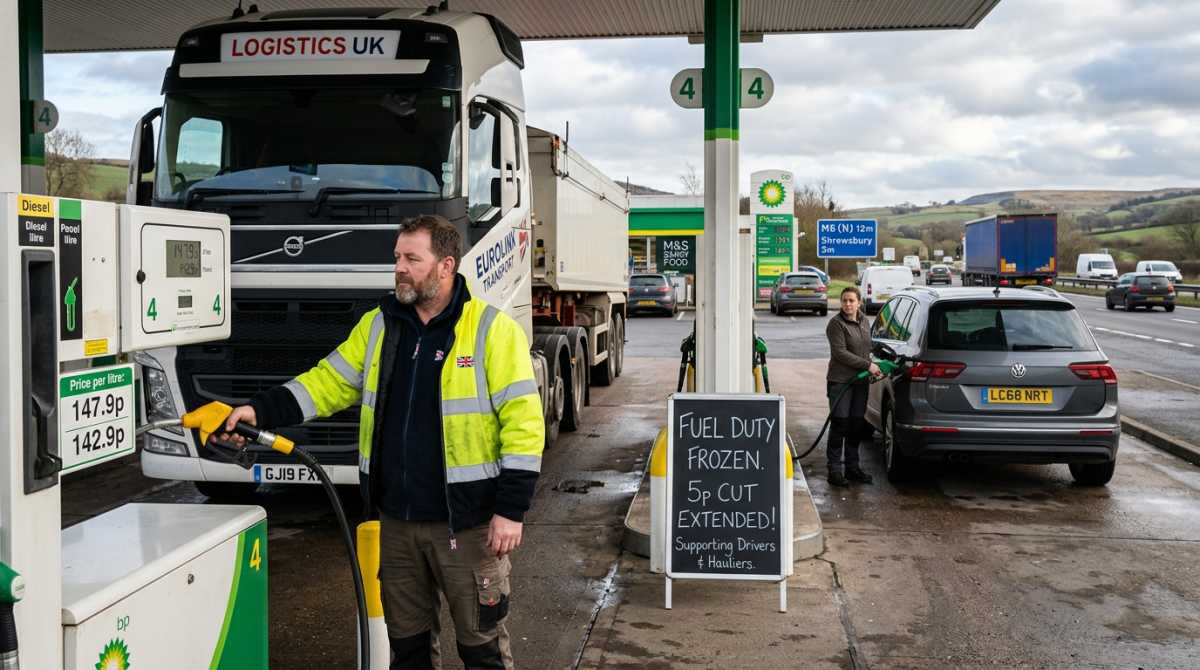
TL;DR: The UK government has confirmed the fuel duty freeze will continue, extending the existing 5p per litre cut until at least the end of 2026. This move scraps planned tax hikes and aims to prevent UK petrol and diesel prices from rising further, providing crucial relief for drivers and businesses facing high costs.
In a significant move for UK drivers, the government has confirmed an extension of the UK fuel duty freeze, locking in the 5p per litre discount until the end of 2026. The announcement offers motorists welcome relief from the pressure of soaring costs at the pump.
Key Facts
- 5p per litre fuel duty cut has been officially extended until the end of 2026.
- £3 billion is the estimated 'war premium' cost to British drivers since February, following a 26p per litre jump in petrol prices.
- £912 is the maximum saving per vehicle for hauliers, thanks to a new 12-month road tax holiday.
- 15 June is the start date for a reduction in red diesel duty, which will be cut from 10.18p to 6.48p.
- 53p per litre is the current fuel duty rate being maintained to shield drivers from further price shocks.
What the UK fuel duty freeze means for drivers
The decision to maintain the 5p fuel duty cut extension provides a vital buffer for millions of households. Without this intervention, drivers would have faced a nasty series of planned tax hikes that could have pushed pump prices towards 160p per litre.
By holding the duty rate at 53p per litre, the Treasury has effectively shielded motorists from a 1p increase that was scheduled for September, along with further 2p jumps planned for later in the year. While it won't single-handedly reverse high fuel costs, what this means for drivers is a crucial bit of breathing room in their monthly budgets.
Why this U-turn on fuel tax was needed
The government's U-turn on planned tax rises comes as global oil markets experience extreme volatility, largely driven by geopolitical instability in regions like Iran. This has had a direct and painful impact on UK petrol and diesel prices.
Recent data shows petrol has already climbed by 26p per litre since February. Experts have labelled this a staggering 'war premium', which has added an estimated £3 billion to the collective fuel bill for British drivers. The freeze is a targeted measure to prevent the economy from stalling under this pressure.
Hauliers win big with road tax holiday
It isn't just everyday car owners who benefit from the latest announcements. The UK's haulage industry, responsible for keeping supermarket shelves stocked, has been granted a massive 12-month road tax holiday.
This means operators will pay a token fee of just £1 when renewing their heavy goods vehicle (HGV) tax. For a company running a fleet of large lorries, this translates into a significant saving of up to £912 per vehicle. The good news for everyone is that by keeping transport costs down, it reduces the likelihood of these expenses being passed on to consumers in the weekly food shop.
Farmers and rail freight also get relief
The government's package to tackle inflation extends beyond the roads. From 15 June, the duty on red diesel, which is used by farmers and for rail freight, is being slashed from 10.18p down to 6.48p per litre.
This specific red diesel duty rate reduction is part of a wider £455 million package. It signals that the Treasury is attempting to combat rising inflation across multiple sectors of the economy, not just for passenger car drivers.
What happens after the freeze ends?
The big question for drivers remains: what happens after New Year’s Eve 2026? While this UK fuel duty freeze buys valuable time, the long-term strategy for fuel taxation is still unclear.
For now, the best advice for motorists is to maximise savings wherever possible. Using a tool like the government's Fuel Finder scheme will be a solid way to compare local forecourts and ensure you're getting a fair price. With a tough winter potentially ahead, every single penny saved at the pump is a win for UK families.