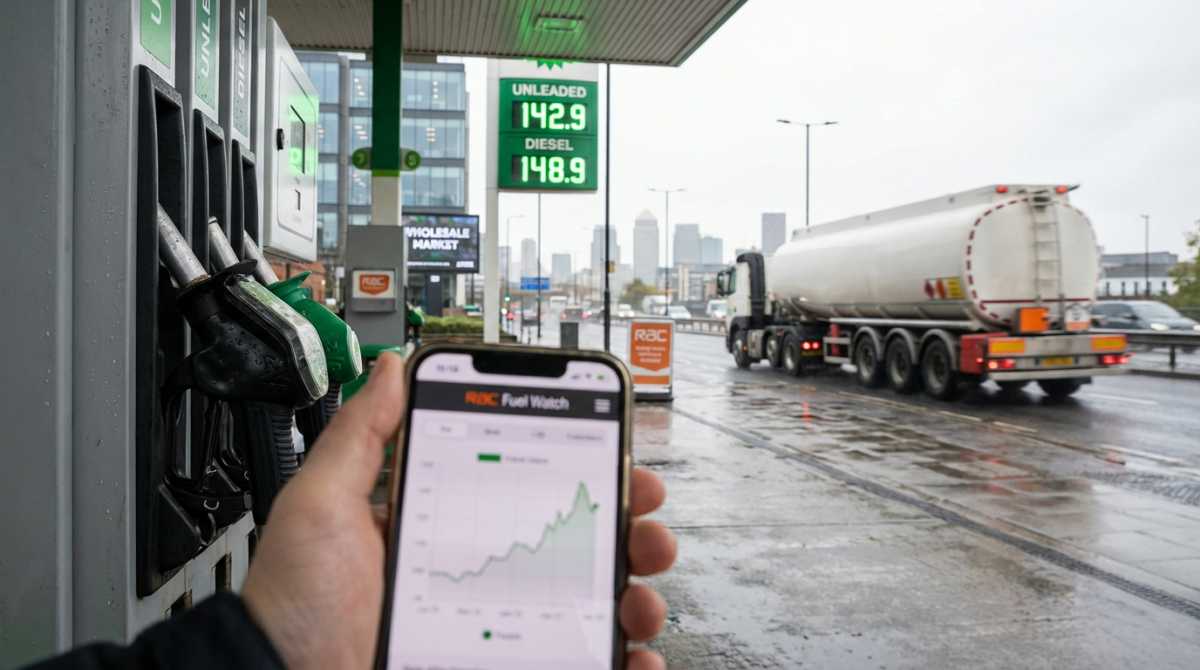
UK fuel price rises have finally stopped after a relentless 43 consecutive days of increases, the RAC has confirmed. While the average cost of petrol in the UK is now around 158p, falling wholesale fuel market fluctuations mean drivers could see welcome relief at the pumps within a week.
Key Facts
- 43 days: The streak of daily UK fuel price rises that has now officially ended.
- £27: The staggering extra cost to fill a typical
- 55-litre family car with diesel compared to February.
- 192p: The current average UK price for a litre of diesel, according to the latest RAC petrol and diesel prices data.
- CMA: The Competition and Markets Authority is actively investigating retailers over “rocket and feather pricing” tactics.
UK drivers have finally been given a bit of breathing space after 43 straight days of fuel price rises came to an end, according to the RAC. It’s the first real sign of relief for motorists who’ve been watching petrol and diesel prices creep up day after day.
The pause in rising prices comes as tensions in the Gulf have eased, helping calm global oil markets. That’s good news for drivers, because the pressure pushing petrol and diesel higher has started to weaken.
What is the average cost of petrol in the UK now?
The latest data puts the average cost of petrol in the UK at around 158p per litre. Diesel remains much pricier, sitting at roughly 192p per litre.
For a typical 55-litre family car, that means a full tank of unleaded now costs about £14 more than it did in February. Diesel drivers have been hit even harder, with the same fill-up costing around £27 more. That said, prices are still below the record highs seen in summer 2022.
Why is diesel more expensive than petrol?
It’s a question many drivers are asking, especially when the gap between petrol and diesel feels bigger than ever. The short answer is that diesel is more expensive to refine and the UK depends heavily on imports.
Roughly half of the diesel used in the UK is imported, which leaves prices more exposed to global demand. Diesel is also a crucial fuel for shipping, haulage and other industries, so international market shifts can push the price up more sharply than petrol.
If rising running costs are making you rethink your car, you can also explore how much your car is worth before deciding whether to keep it or switch.
Diesel price forecast UK: When will prices drop?
There is some encouraging news. Simon Williams, fuel spokesperson for the RAC, says wholesale petrol and diesel costs have fallen recently, which should feed through to forecourt prices soon.
In other words, drivers could see prices drop by several pence within the next week. It’s not instant relief, but it is a step in the right direction.
Drivers warned of ‘pump-price postcode lottery’
Even with wholesale prices falling, the AA has warned that not every driver will see savings at the same time. This so-called “pump-price postcode lottery” means some forecourts may reduce prices quickly, while others hold back.
That delay is often linked to “rocket and feather pricing" – when prices rise fast but fall slowly. The Competition and Markets Authority is already investigating whether some retailers are taking unfair advantage of that pattern.
For drivers trying to stretch every mile, this is also a good reminder to compare running costs. If you’re thinking about changing your car, our car running cost checker can help you make a smarter choice.