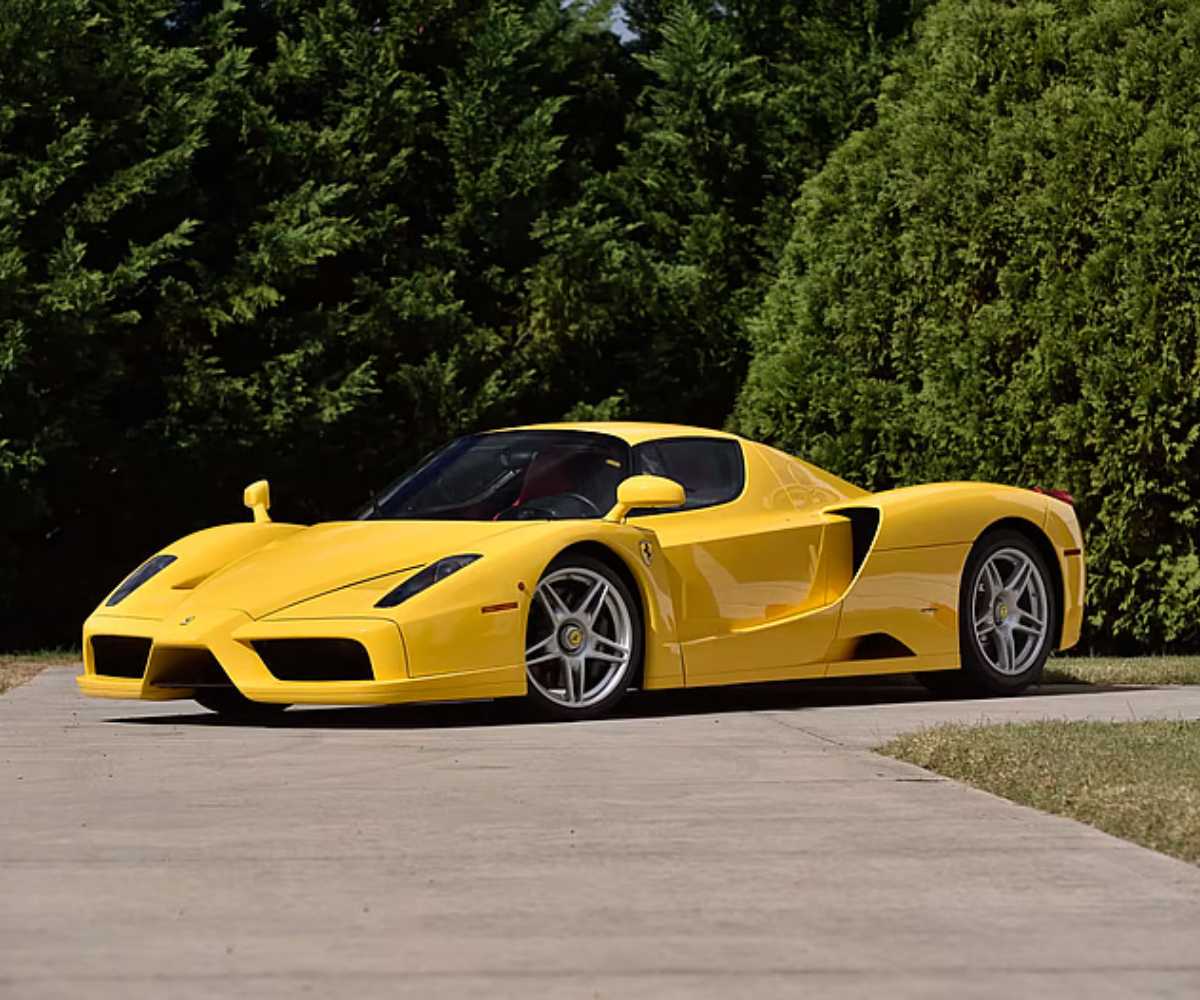
TL;DR: Modern-classic Ferrari values reached unprecedented heights at the Mecum Kissimmee 2026 auction, led by the Phil Bachman collection. A Giallo yellow 2003 Ferrari Enzo set a world record price of £13.4 million ($17.8m), nearly tripling previous benchmarks. The event signalled a definitive market shift as 'analogue-era' supercars like the F50, F40, and 288 GTO outperformed traditional 1960s classics, driven by younger collectors prioritising emotional connection and technical provenance.
The landscape of the collector car market just shifted on its axis. If you've been tracking modern-classic Ferrari values, you'll know the market has been simmering for years, but the Mecum Kissimmee 2026 auction results have officially turned that simmer into a full-blown boil. We aren't just talking about a slight uptick; we're seeing world records shattered by the 'analogue-era' icons of the 80s, 90s, and early 2000s.
While the 1960s legends used to be the undisputed kings of the auction block, today’s high-net-worth buyers are looking for something they can actually relate to. It's a generational pivot. The posters that lived on bedroom walls in the 90s are now the cars commanding eight-figure sums.
The Phil Bachman Ferrari Collection: A Giallo Goldmine
Much of the frenzy centred around the Phil Bachman Ferrari collection. Phil and his wife Martha were legendary in the US for their curated stable of 46 Ferraris, famously finished in Phil’s signature Giallo yellow. When these went under the hammer with no reserve, it triggered a bidding war that felt more like a sporting event than a car sale.
| Model | Sale Price (GBP) | Sale Price (USD) | Key Highlight |
|---|---|---|---|
| Ferrari Enzo (2003) | £13.4 Million | $17.8 Million | Ferrari Enzo world record price; Giallo Yellow |
| Ferrari F50 (1995) | £9.1 Million | $12.2 Million | Ex-Ian Poulter; 1 of 349 |
| LaFerrari Aperta (2017) | £8.2 Million | $11.0 Million | Only 96 miles from new |
| Ferrari 288 GTO (1985)* | £6.1 Million | $8.5 Million | The Group B homologation icon |
| Ferrari F40 (1992) | £4.9 Million | $6.6 Million | Record for a late-model F40 |
Why the £13.4m Enzo Changed Everything
The standout was undoubtedly the 2003 Enzo. Setting a new Ferrari Enzo world record price, this wasn't just any Enzo. It was one of only 11 US-spec cars finished in Giallo yellow. With just 649 miles on the clock, its provenance was impeccable. It featured bespoke touches like custom-ordered seats and chrome badging—details that send 'long-tail' collectors into a frenzy. It’s these specific, high-quality nuances that are driving analogue-era Ferrari investment to new heights.
The Shift: Analogue vs. Digital
Interestingly, the 1962 Ferrari 250 GTO, once the untouchable peak of the market, sold for £28.6 million. While that sounds like a lot (and it is), it actually fell short of previous record-breaking heights. This suggests a fascinating trend in collector car market trends in 2026: the 'old guard' classics are stabilising, while the raw, manual, and visceral supercars of the late 20th century are skyrocketing.
Why? Because an F40 or an F50 offers a driving experience that modern, paddle-shift hybrids can't replicate. They represent the peak of mechanical purity. For buyers in their 40s and 50s, these are the ultimate trophies.
What This Means for You
You might not have £13 million sitting in the bank, but this shift trickles down. As the 'Big Five' (288 GTO, F40, F50, Enzo, LaFerrari) move into a new price bracket, they pull the rest of the market with them. If you're looking for car advice on where to put your money, the 'modern classic' segment is clearly where the heat is.
One thing is certain: the era of the analogue Ferrari has truly arrived. The Mecum Kissimmee results haven't just broken records; they've rewritten the rulebook for what makes a car valuable in the 21st century.