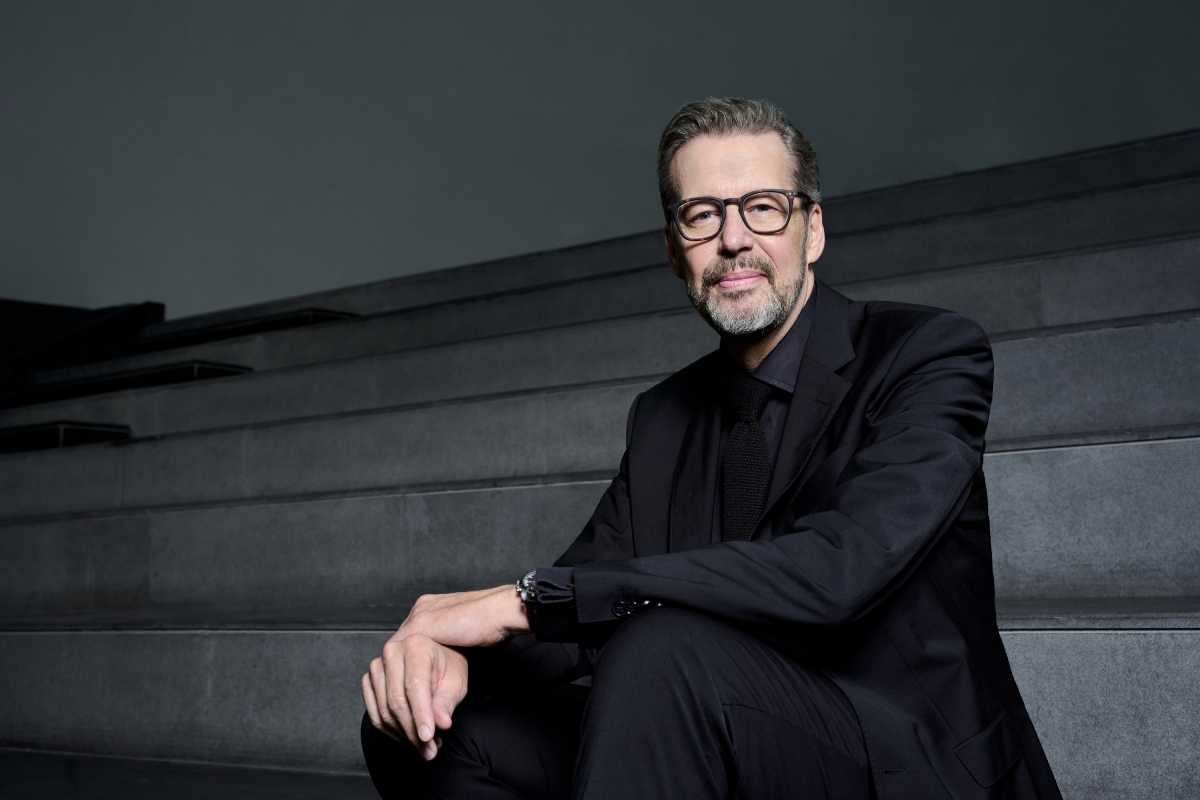
Stefan Sielaff is the visionary behind Zeekr’s bold and award-winning design language, serving as Vice President of Global Design for Zeekr Group and Head of Zeekr Design.
Since joining in 2021, he has played a pivotal role in shaping the brand’s distinctive identity, blending luxury with cutting-edge innovation.
Under Stefan’s leadership, Zeekr has launched a series of groundbreaking vehicles, including the Red Dot Award-winning Zeekr 007 and the iF Design Award-recognized Zeekr Mix and Zeekr 7X. Most recently, the debut of the all-new Zeekr 9X marked a milestone moment capturing the attention of tens of thousands with over 48,000 pre-orders within the first hour alone.
With a distinguished 36-year career in automotive design, including key roles at Audi, Bentley, Volkswagen, and Mercedes-Benz, Stefan brings global expertise and a refined design philosophy to every project. Based at Zeekr’s state-of-the-art Design Center in Gothenburg, Sweden, he leads a world-class team driving the future of premium electric mobility.
When he’s not shaping the next generation of electric vehicles, Stefan finds inspiration in painting and travel, passions that fuel his creative energy and define his unique approach to automotive design.
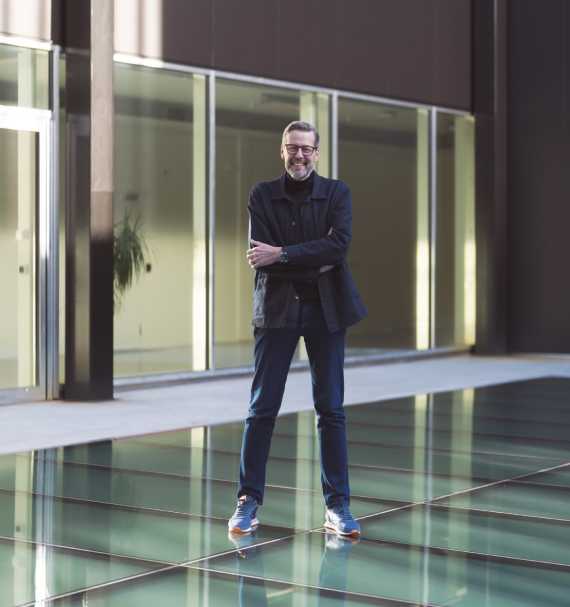
We caught up with Stefan at the Paris motor Show to discover more about Zeekr, the luxury brand that’s heading to UK shores very soon.
Q: You established yourself at three global giants in the premium sector, in the shape of Audi, Mercedes and Bentley. Has working with a Chinese manufacturer given you more freedom to express yourself?
Stefan: It's a little bit light and shadow. I mean, on the one hand, you have a blank canvas, which is great for a designer. A blank canvas on behalf of a design heritage, also a blank canvas on behalf of a brand heritage. On the other side, it's of course a bit difficult because you have nothing to hold on. When I worked for Bentley, for Audi, for Mercedes, I always had a rich history.
It's great for creative output, but you need one day, sooner or later, to create also a brand heritage, which is obviously not possible in five years.
Q: With so many new Chinese manufacturers launching in Europe and especially the UK in the last couple of years, many people are saying they all look the same and lack real flair. What can we expect from Zeekr now and moving forward that will help this brand stand out?
Stefan: I think bit by bit, especially with the help of this luxury target we are following, it will be clear.
We are definitely able to get a little bit of a differentiation to other brands that are not following this principle. And me myself, I tried, you can see this in the cars, with my team to generate something rather timeless, rather classic, rather clean. This is not always what you see from other competitors in China.
Q: What are the challenges of finding that balance between something that appeals to a European audience and something that appeals to an East Asian audience, which have very different tastes?
Stefan: When we talk about Zeekr in the luxury segment, the tastes are not so different anymore. I mean, if you go to at least the tier one cities in China, such as Shanghai, Beijing and Chengdu and look at the luxury customer, I'm not only talking about cars. The level of aspiration and of expectation is everywhere pretty much the same. This also explains why German luxury producers especially could sell so many cars successfully in the last decades in China. So, the taste has been in a way influenced heavily in the car industry, but also the fashion accessory industry by European, Western taste.
Q: There seems to be a general theme of minimalism when it comes to interior design on Chinese cars. This has been met with mixed views in the UK with many, myself included, wanting to see more physical switches and controls. What is the Zeekr view on this?
Stefan: We are following now and in the next cars even more so, clear, analogue, haptic feedback switches. You don't have to go into a menu for the climate control, seat adjustment or functions like window controls, which I would say should be the simplest thing in the world to alter.
We have a good balance of physical buttons and software menus, which is something the younger generation expect of course.
Q: Will the Zeekr models be specifically designed and tuned for European markets and the UK in particular. What are the areas you focus on and why?
Stefan: Five years ago Zeekr didn't exist, so we started everything five years ago with the design centre in Gothenburg and with. of course. the whole research and development, engineering and so on in China. It was very clear, and this is not only for Zeekr, but also for Geely and for Lynk & Co to deliver global products.
So, what you see over here on the Zeekr stand is exactly the cars we sell in China visually. There are still some differences in homologation and in technical details. But generally speaking, design-wise, we do the same car globally because we are not only in Europe, we are now in 43 countries worldwide.
Q: How does your approach to designing cars differ between Zeekr, Geely and Lynk & Co?
Stefan: They are very different languages. We have a clear positioning in the market. Let's say top is Zeekr, then more in the middle field is Lynk & Co and then Geely is more mainstream. I think we all follow a very high approach of delivering the best quality in each price segment and market segment.
And then we have very dedicated design directors. Chen Zheng has his headquarters in Shanghai. He has a very big studio for Geely. Stefan Rosen is running Lynk & Co in Gothenburg. And then in Shanghai as well, two studios in the same building, but unique teams and unique work and unique output.
And me doing this double thing, design director for Zeekr from the first minute, but also sitting on top as a global design director.
Q: Has the world of design changed with AI? And, if so, how?
Stefan: Yes, it has changed. In the design team we adapted these things very actively. We have an AI laboratory in Gothenburg and we use it mainly at the moment for the presentations by the young designers. They are digital natives, they can literally do a sketch in a very short period of time, not a 3D model, but something in the direction of having a 3D dataset. And they present to me not sketches on the wall like we did in the old days. They show me already films where this idea is running around in the city or in the countryside. And this is AI.
Q: And does that make it easier, because as you say you had a blank canvas with Zeekr, to incorporate AI into designs and to test things?
Stefan: I think it helps us also to be as fast as we are. I mean, speed is not always the subject. We have very different development circles. For example, for the 9X it took us quite long for the Chinese relationship. About three years.
Whereas the 007 or the 7GT we did in one-and-a-half years. From the first idea to the finished car, which is incredible. It's really, really incredible.
Q: There are many concerns that Chinese manufacturers are developing vehicles that borrow their heritage from other carmakers. What do you say to that?
Stefan: How do you take that inspiration and put your own spin on it and make it feel different? I think, this is my personal opinion, I think we should do everything to create something unique ourselves. Of course, it's always important to see what the competitors are doing. But generally speaking, Geely, Lynk & Co and Zeekr should do things as authentic for the brand and as unique for the brand, instead of using too much quotes from other brands that are in the competitor field.
That's my strong recommendation always. What is my recommendation and what is the reality, sometimes may not be on the same point, but it also takes time. I get more and more into this advisory position, I'm also not getting younger.
Q: Which brands are you hoping to challenge for sales. Who would be your closest rival?
Stefan: In the UK, definitely Land Rover and Range Rover, mainly Range Rover, I would say. And then the big SUVs from BMW, from Mercedes, from Audi.
Q: What do you think will make someone switch form say BMW or Mercedes to a Zeekr model?
Stefan: I mean, of course, my family home is in Munich, I'm born in Munich. On the one hand, they are very traditional, because maybe the father has been driving a BMW or a Mercedes, so it’s not too easy to get these people away from their brand loyalty.
But what I hear is that the openness is growing to do an experiment, if the quality is top, if the dealership is top, which means most of the time simple things, like who is changing my winter and summer tyres and stuff like that. And price is, of course, playing a role as well. But the first thing is the quality.
And then, I suppose, when we talk about Europe, Germany will be the most difficult market. But when I'm in Italy, I observe much more openness. They lost their traditional car industry, unfortunately, quite a bit. It's getting very minor. So they have no alternative, really. And they are very open-minded for Chinese producers altogether. Of course, ‘bella macchina’ still plays a role, but they are more open-minded.
And then, in places such as Greece, Spain, Portugal, they have no car industry. They are super-open for whatever is a good-looking car, good design, good technology, good quality, good price. That's the recipe.