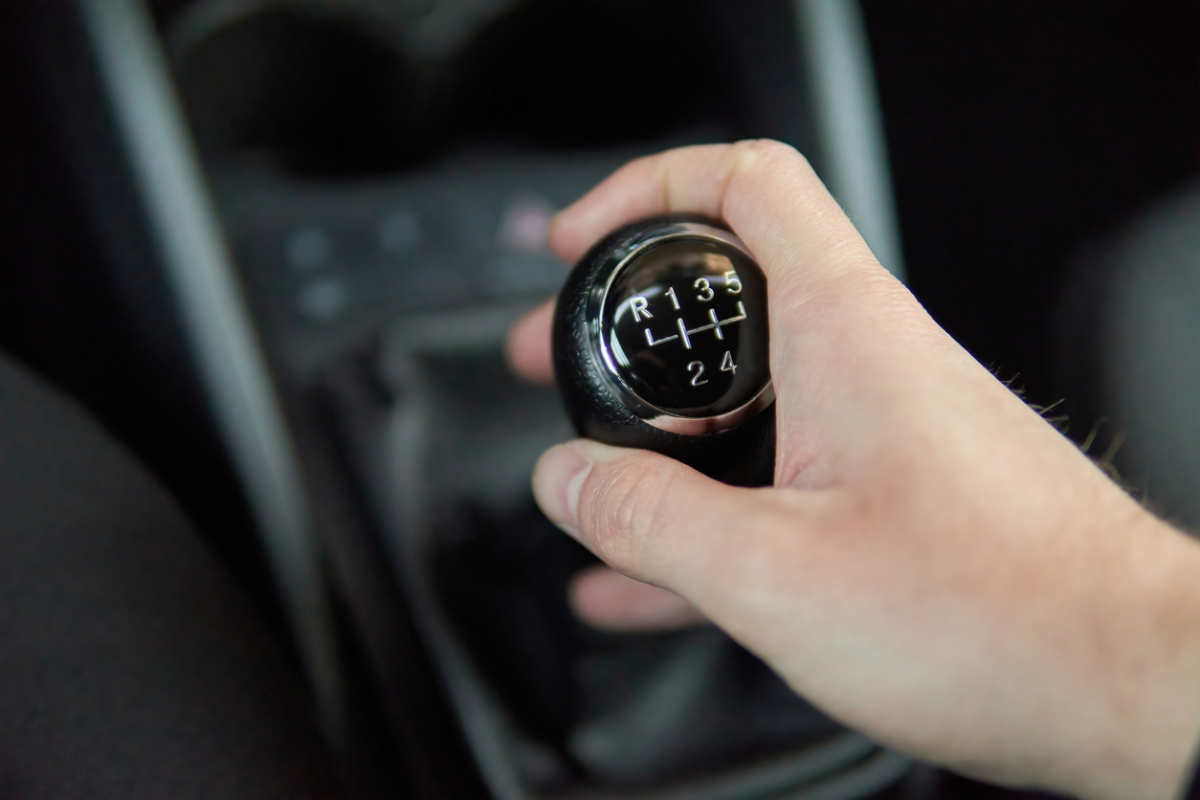
The manual gearbox is edging closer to extinction in Britain's new car market after new figures revealed that almost 92 per cent of vehicles ordered this year are automatic.
According to new analysis from Carwow, just 7.9 per cent of new cars delivered during the first six months of the year were fitted with a manual transmission. That's a dramatic fall from 14 per cent during the same period last year and 21 per cent in 2024.
The pace of change has been striking. In just two years, the share of new cars sold with a manual gearbox has fallen by more than 60 per cent, highlighting how quickly buyer preferences are shifting.
The choice available to motorists is shrinking just as rapidly. Of the 356 new car models currently on sale in Britain, only 72 are still offered with a manual gearbox, meaning only one in five new models gives drivers the option to change gear themselves.
Why are manual gearboxes disappearing?
Several factors are driving the decline of the manual transmission.
Automatic gearboxes have become significantly more refined, offering smoother and faster gear changes than ever before. Advances in transmission technology mean modern automatics deliver improved fuel efficiency and performance while removing the hassle of clutch control in congested traffic.
Cost has also become less of a barrier. A decade ago, choosing an automatic typically added around £3,000 to the price of a new car. Today, that premium has fallen to between £1,000 and £1,500 as production volumes have increased and the technology has become more widespread.
The transition towards hybrid and electric vehicles has further accelerated the trend. Both powertrains are almost exclusively paired with automatic transmissions, meaning many buyers no longer have the option of selecting a manual.
More than half of manufacturers selling cars in Britain have already removed manual gearboxes from their line-ups entirely, offering only automatic models.
Tom Jervis, consumer reporter at Auto Express, says the commercial case for manual gearboxes is becoming increasingly difficult for manufacturers to justify.
"Drivers increasingly favour the convenience of an automatic, particularly in everyday traffic, while the growing popularity of hybrids and electric cars means many buyers no longer have the option of choosing a manual in the first place," he said.
"As manufacturers invest heavily in electric vehicles and new technologies, continuing to develop and certify manual gearboxes for a shrinking share of the market makes less commercial sense."
Industry experts believe the manual gearbox could disappear from many mainstream brands before the end of the decade.
Automatic driving tests continue to rise
The shift towards automatics is also changing the way people learn to drive.
DVSA figures show that more than one in four learner drivers now take their practical driving test in an automatic car. During the 2024/25 financial year, 479,556 of the 1.84 million practical tests were completed in automatics, accounting for 26.1 per cent of all tests.
That compares with 23.4 per cent the previous year, 19.2 per cent in 2022/23 and just 12.7 per cent five years earlier. A decade ago, automatic tests represented only 6.9 per cent of all practical driving tests.
Despite the perception that automatic cars are easier to drive, the data suggests otherwise. The pass rate for automatic-only tests last year was 43.9 per cent, below the overall average pass rate of 48.7 per cent.
An automatic-only licence could cost you more abroad
Passing a driving test in an automatic vehicle comes with an important restriction. Drivers with an automatic-only licence cannot legally drive a manual car, while those who pass in a manual can drive both.
That limitation could prove expensive when hiring a car overseas.
Manual gearboxes remain far more common across much of Europe than they are in Britain. In Italy, manual cars accounted for 48 per cent of new registrations in 2025, while they represented 41 per cent in Spain. France has also been slower to embrace automatics, with around three in ten new cars still fitted with manual transmissions.
Because rental companies often purchase lower-cost models in bulk, manual cars are typically the default option. Travellers requiring an automatic may therefore face higher rental costs, reduced availability or both, particularly during the busy summer holiday season.
Germany has followed a trajectory closer to Britain's, with manual gearboxes now accounting for just 18 per cent of new car registrations.
Drivers travelling to the United States are unlikely to encounter the same issue. Manual cars represented less than one per cent of new vehicle sales there last year, making automatic transmission the overwhelming standard.