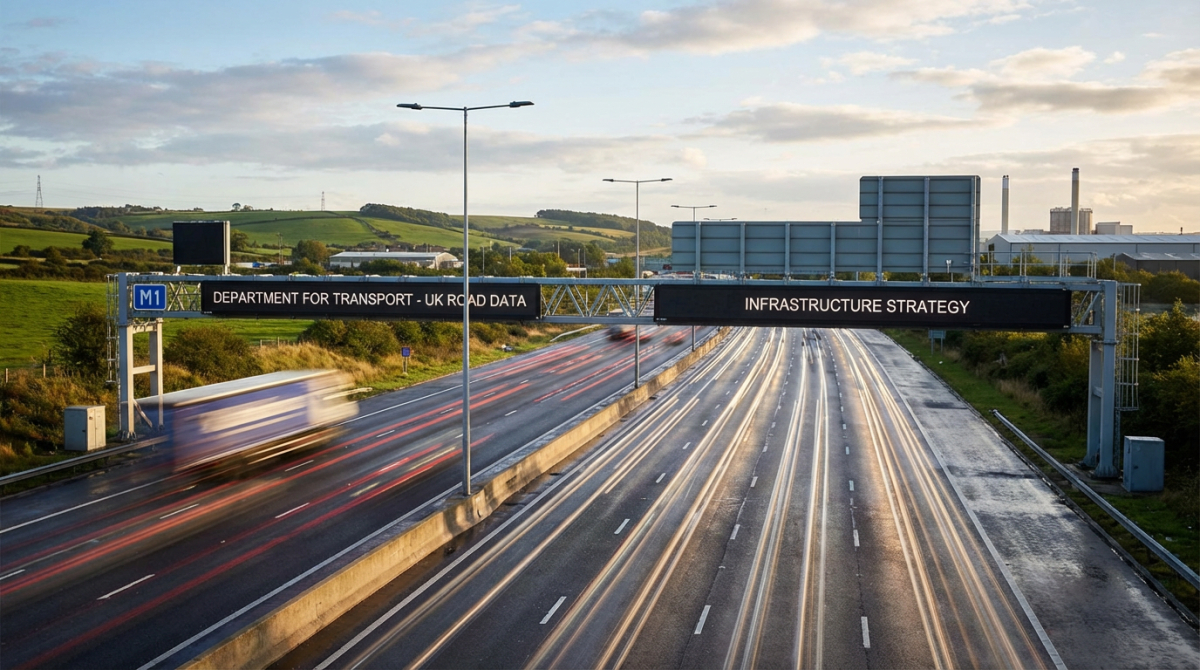

TL;DR: Great Britain's road network now spans a colossal 247,200 miles, but recent data reveals a critical over-reliance on a small fraction of these roads. UK motorways and A-roads handle two-thirds of all traffic, contributing to a staggering £16.8 billion repair backlog for local routes.
Recent figures reveal the total miles of road in Great Britain have reached an astonishing 247,200 miles – a length of tarmac that, if laid end-to-end, could stretch all the way to the moon. Yet, despite this vast network, a critical imbalance has emerged, with UK motorways and A-roads shouldering 65% of all traffic despite making up just 13% of the total distance. This intense pressure on a few key arteries is happening as the nation's roads face a crippling £16.8 billion repair backlog.
The scale of the British road network
The latest Great Britain road network statistics from the Department for Transport confirm the 247,200-mile figure as of the end of last year. But behind that headline number, the reality is that British road network expansion has slowed dramatically. Since 2005, only around 6,000 miles have been added to the network, representing a modest 2.5% increase.
This is a stark contrast to the two decades prior, which saw an 11% surge in road construction. It appears the era of rapid expansion has cooled, placing unprecedented strain on the lanes that already exist.
Why UK motorways do all the heavy lifting
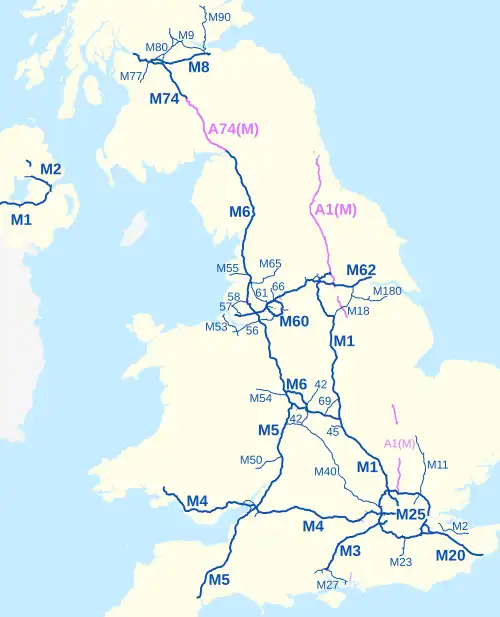
A significant disparity exists between the roads available and the roads drivers actually use. The workhorses of the nation are undoubtedly its motorways and A-roads, which are surprisingly limited in length. The total motorway and A-road length in the UK consists of just 2,300 miles of motorway and 29,700 miles of A-roads.
But here's the catch: these major routes, making up a tiny 13% of the total network, handle a massive 65% of the total distance travelled by vehicles. To put that into perspective, official data shows a single stretch of motorway can carry up to 55 times the volume of traffic as a typical local B-road on any given day. It’s no surprise, then, that congestion has become a daily frustration for millions.
Where is all the tarmac?
The distribution of this road network is heavily skewed towards England, which holds the lion's share with 189,900 miles of road. This includes everything from vital high-speed arteries to quiet residential streets. In comparison, Scotland's network is 37,200 miles long, while Wales has 21,100 miles.
Combined, the road networks of Wales and Scotland account for less than a quarter of the total distance travelled across Great Britain. This density in England helps explain why congestion and debates around new charges and low-traffic neighbourhoods are often most intense in English towns and cities.
A £16.8 billion headache for drivers
For drivers hoping for new routes to ease the burden, the current UK road infrastructure strategy offers little comfort. The government's focus has clearly shifted away from building new roads and towards the monumental task of maintaining and repairing the existing network. This strategy is a direct response to a grim financial reality.
The latest Asphalt Industry Alliance road maintenance report paints a bleak picture, highlighting a £16.8 billion funding gap just to bring local roads in England and Wales back to a reasonable condition. The cost of pothole repairs in England and Wales is a major factor, with over a million potholes estimated to be scarring the country's roads.
Drivers are feeling this not just in their vehicle's suspension but in their wallets too. The crumbling state of the roads beneath our wheels is set to remain a major point of contention for everyone who relies on UK motorways for their daily commute.