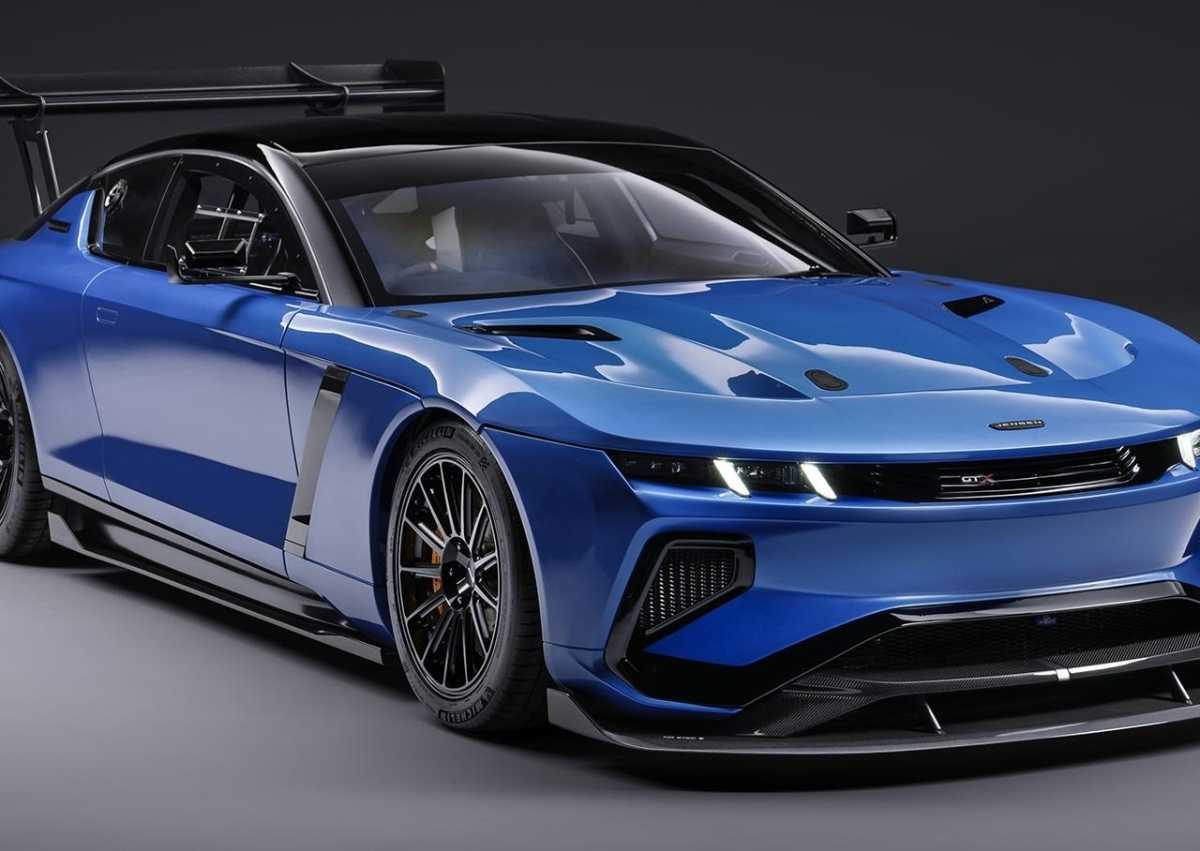
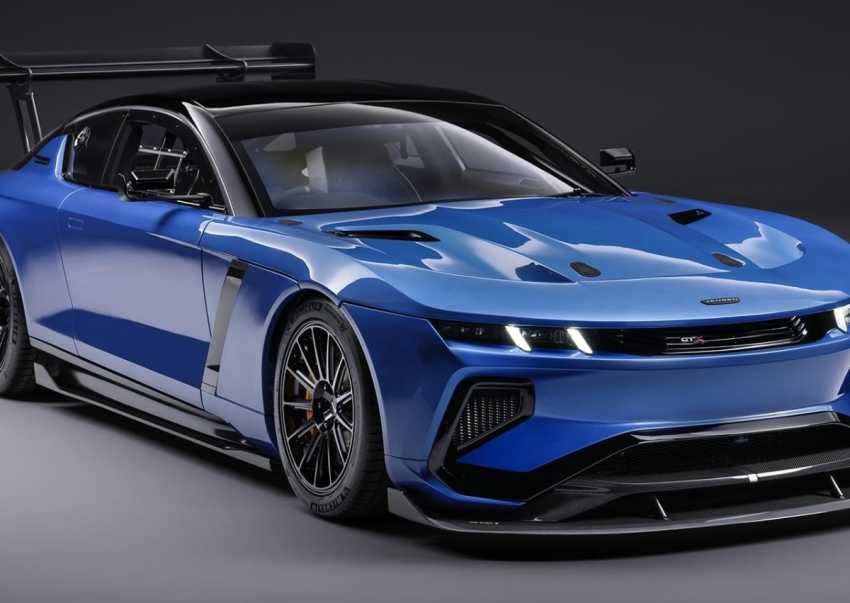
One of Britain's most evocative automotive names is making a comeback – but don't expect a faithful recreation of the Jensen Interceptor that became a British motoring icon in the 1960s and 1970s.
The Jensen Interceptor, hand-built at Jensen Motors' Kelvin Way factory in West Bromwich, near Birmingham, between 1966 and 1976, is one of the most recognisable British grand tourers ever produced.
Its distinctive two-door shooting-brake silhouette, muscular proportions and effortless long-distance ability made it a standout car from an era when the British motor industry was both hugely influential and increasingly troubled.
Now, more than half a century after the original Interceptor arrived, the Jensen name is being revived.
And its first new car is anything but conventional.
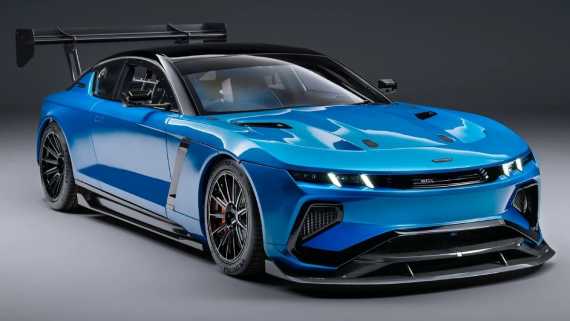
Jensen International, a newly established British manufacturer based in Oxfordshire, has unveiled the Interceptor GTX – a rear-wheel-drive, track-only machine powered by a heavily modified, supercharged V8 producing an extraordinary 960bhp.
It is, in the company's words, intended to deliver the 'ultimate analogue driving experience'.
The GTX is not, however, the beginning of a simple continuation programme. Nor is it a restomod built around an original Jensen chassis.
Instead, it is an entirely new car, developed from the ground up and intended to be hand-built in Britain in extremely limited numbers.
And while the GTX is designed exclusively for the circuit, Jensen International says road-legal models will follow.
A new Interceptor family
The GTX is being presented as a statement of intent from Jensen International – demonstrating the company's engineering capabilities, design direction and network of specialist suppliers.
It will eventually be joined by two road-going models: the GT, a luxurious grand tourer inspired by the original Interceptor, and the GTR, a higher-performance model intended to sit between the GT and the track-focused GTX.
All three cars draw heavily on the proportions and visual presence of the 1966 Interceptor, although the new designs are not intended to replicate the original.
Jensen International has already shown how the GT is expected to look, with the GTX's aggressive aerodynamic package replaced by a cleaner and more elegant grand-touring aesthetic.
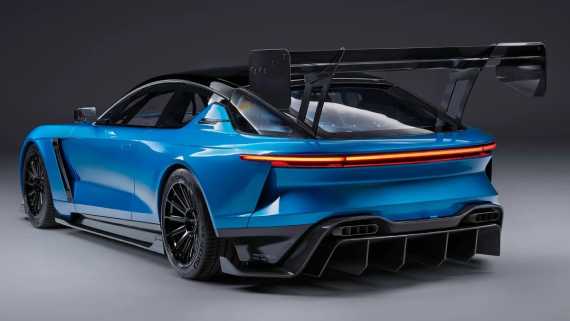
The GTX features heavily flared wheel arches, a low-slung body and an enormous rear wing, while the GT will place greater emphasis on comfort and long-distance usability.
Around 80 per cent of the GTX's exterior design – including major body panels and associated tooling – is expected to be shared with the GT and GTR.
The company says the three cars have been developed as part of a single programme rather than as separate projects.
That means the GTX is effectively the first physical demonstration of what Jensen International intends to become.
Nearly 1,000bhp from a supercharged V8
Under the GTX's bonnet is an engine with a suitably Jensen-like lineage, although it has been extensively re-engineered for modern performance.
The 6.8-litre General Motors V8 is sourced from the Chevrolet Corvette and has been rebuilt by Texas-based performance specialist Late Model Engines.
Among the upgrades are a 2.65-litre supercharger and numerous forged internal components designed to withstand the substantially increased power output.
Jensen International says the engine is capable of producing as much as 1,200bhp, although the GTX will be limited to a still-staggering 960bhp.
Drive is sent exclusively to the rear wheels through a six-speed sequential gearbox.
The forthcoming GT and GTR will offer a broader choice of transmissions, including a traditional H-pattern manual and a fully automatic gearbox.
Built for downforce, not the school run
With almost 1,000bhp available, the GTX needs considerably more than a powerful engine to keep it on the circuit.
Its adjustable rear wing alone is capable of generating more than 350kg of downforce.
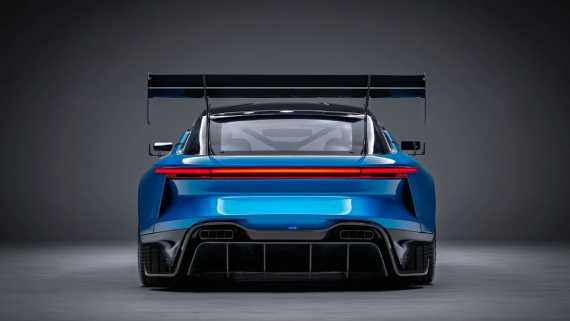
That is supported by a comprehensive aerodynamic package comprising a low front splitter, flat underfloor, large rear diffuser, multiple ducts and vents, and a two-plane aerofoil designed to manage airflow around the car.
The result is a machine that bears little resemblance to the comfortable grand tourer that originally carried the Interceptor badge.
The interior is equally focused.
The GTX has a stripped-back racing cockpit featuring an FIA-approved safety cage, carbon-fibre racing seats, six-point harnesses and an integrated fire-suppression system.
The GT, by contrast, will prioritise luxury, with a more sophisticated cabin finished in premium materials.
It isn't a continuation car
David Duerden, managing director of Jensen International, says the company's intention from the outset was to create something genuinely new rather than reproduce the original car.
"We were determined to create something entirely new that carries the spirit of the Jensen Interceptor forward in a modern, authentic manner," he said.
The original 1966 Interceptor remains an important influence, he explained, but not simply as a source of styling cues.
For Jensen International, the name represents a particular combination of British design, performance and grand-touring ability.
The company therefore has no intention of building a conventional continuation car or recreating an existing Jensen from period components.
Instead, the GTX and the road-going cars have been conceived as modern interpretations of the same philosophy.
Duerden says the GT and GTR will emerge from the same development programme as the GTX, with the majority of their exterior architecture shared between the models.
The GT, in particular, is intended to retain a strong visual connection with the 1966 Interceptor while avoiding the trap of becoming a nostalgia exercise.
How much will the new Jensen Interceptor cost?
The GTX will not come cheap.
Jensen International expects the track-only car to cost between £850,000 and £950,000, putting it firmly into the territory of ultra-exclusive, low-volume performance cars.
Production is currently scheduled to begin in 2028, with numbers expected to remain extremely limited.
The forthcoming GT should be considerably less expensive, although Jensen International has yet to reveal either pricing or a confirmed launch date.
For now, the GTX is the car that matters.
It may carry one of Britain's most famous automotive names, but this new Jensen Interceptor is not an attempt to recreate the past.
It is a statement that the Jensen name intends to have a future.