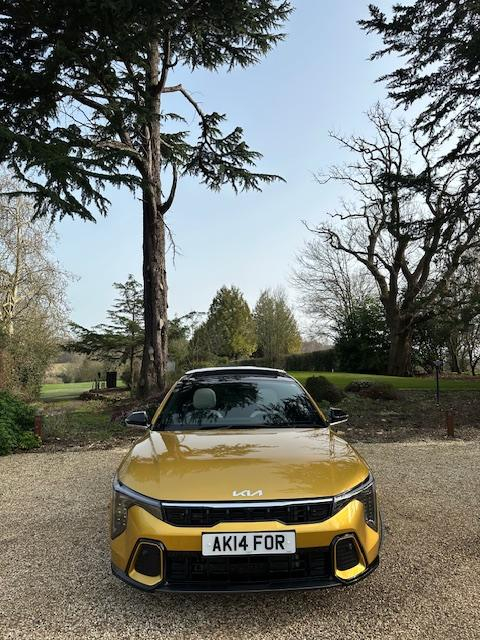
Kia is expanding its powertrain options in the UK with the introduction of the new K4, which complements the fully electric EV4 and the XCeed crossover. Tim Barnes-Clay recently interviewed Daniel Sayles, the Head of Press and Public Relations at Kia UK, to discuss the K4 and Kia's ongoing popularity both in Britain and globally.
Q.) Let’s start with the Kia K4. Please tell us a bit about this car.
A.) Absolutely! The K4 is quite an interesting model. Firstly, it’s a petrol car, which is notable given that few new petrol hatchbacks have been launched in recent years. The K4 is a global vehicle, built in Mexico and sold worldwide. In Europe, we exclusively offer the hatchback variant, while in other markets, it's available as a sedan, or saloon as we call it. Overall, it's a very competent family hatchback that's loaded with technology and comes with all the usual Kia benefits, including our standout warranty.
Q.) Speaking of the warranty, can you explain why Kia’s seven-year warranty is considered revolutionary?
A.) Certainly! Our seven-year, 100,000-mile warranty was groundbreaking when we introduced it across our entire range in 2010. At that time, our brand was still maturing, and this warranty helped build consumer confidence in our engineering and the quality of our cars. Now, it's a household name; when people think of Kia, they immediately associate us with that warranty. It reinforces the quality of our products and shows our confidence in them.
Q.) What’s in store for the K4 later this year?
A.) We have some exciting updates! Later in 2026, we will be introducing a Sportswagon version of the K4, and towards the end of the year, we’ll also launch a full-hybrid powertrain option to align it with many of our other products.
Q.) Kia has become quite a prominent name in the automotive industry. Can you tell us how significant Kia's presence is in the UK and globally?
A.) Absolutely. At the moment, Kia is the second-best-selling brand in the UK. Just last year, we sold over 113,000 cars. Currently, our Sportage, which is a C-segment SUV, holds the title of the best-selling car in the UK. It's hard to go for a drive without spotting another Sportage or a Kia on the road. Our growth has been organic and fruitful over the last 35 years since we began operations in the UK in 1991. We started with one model and now offer a diverse range. We rank highly among global automotive manufacturers, underscoring our position as a major player in the industry.
Q.) Reflecting on the early days, was the Kia Pride the initial model you launched in the UK?
A.) Yes, that's right! The Kia Pride was our first model, with whitewall tyres and all!
Q.) With the competition from emerging Chinese brands in the market, how does Kia view these developments? Does it pose a concern?
A.) We welcome competition! Our focus remains on delivering quality, as we have successfully done for the past 35 years. New brands entering the market only reinforce the industry's dynamic nature. We respect those brands because, in many ways, we were in their position not too long ago. Good luck to them! However, Kia has established a solid network of dealers and a loyal customer base in the UK, which sets us apart. The industry is indeed changing, with both evolutionary and revolutionary elements, as well as governmental shifts impacting market access. Heritage and legacy brands must adapt, and I believe we've been navigating these changes possibly better than others.
Q.) Let’s talk about one of your current models. The Stonic, for instance, is it still a strong contender?
A.) The Stonic has been on the market since around 2017 and remains a versatile B-segment SUV offering great space and a range of powertrains. It provides a petrol equivalent to our new EV2, catering to customer preferences across our entire lineup. Last year, we sold approximately 8,000 units of the Stonic, and the orders for the new model we’re showcasing are exceeding our expectations.
Q.) Looking ahead, if you could gaze into a crystal ball, what does the future hold for Kia?
A.) Global domination! But in all seriousness, Kia has the capability to either maintain its majestic status or grow even further. We have the resources, brand identity, and customer trust to keep progressing in the trajectory we've established since the early '90s. Adaptation is crucial, particularly in light of global electrification and sustainability trends. Our aim is to be the brand consumers can rely on as they navigate changes in mobility - ensuring we remain a dependable choice for sustainable transport.

Q.) Can you tell us about a pivotal moment in Kia’s strategy?
A.) Absolutely. In 2020, our then global president and CEO took to the stage in Korea to unveil a strategy dubbed Plan S. This was a significant turning point for Kia as a brand and as a company. Back then, we were already popular in global markets, delivering products that resonated with consumers. Some might have questioned why we'd alter such a successful formula. However, when you consider the evolution that's taken place since then - electrification, design shifts, changing consumer expectations, and evolving government regulations - it was a necessary and transformative decision. If you think about it, Kia's leadership must have had a sense of foresight, because that strategy has proven to be incredibly insightful.
Q.) How has Kia’s lineup changed since Plan S was introduced?
A.) The transformation is remarkable. When you compare our current lineup with what we had just six years ago, it's entirely different. The brand has undergone an entire makeover. Take the old Kia logo, for example; just picture that on the EV6. It wouldn't resonate the same way, would it? Part of Plan S included a focus on commercial vehicles, and now, in 2026, we're selling our first dedicated electric commercial vehicle, the PV5, which debuted in the UK last November. The interest has been extraordinary - not only from fleet operators but also from various customers. It's been fantastic to experience the acknowledgement we've received, including accolades from every major "Van of the Year" award, culminating in the PV5 being recognised as the “International Van of the Year”.
Q.) What does the future hold for Kia’s commercial vehicles?
A.) We're committed to expanding our offerings. The PV5 has been a tremendous success, and we’re already looking ahead to 2027 when we’ll introduce the PV7, a larger version with specifications tailored to customer needs. Following that, in 2029, we plan to roll out the PV9. This is all part of our global strategy, which is set to thrive as regulations increasingly lean towards zero emissions.
Q.) What has been your personal experience with Kia vehicles? Do you have a favourite model?
A.) I love EVs, I genuinely do. I've had two EV9s and an e-Niro when it first launched. But as a true petrolhead, I have to say the Kia Stinger holds a special place in my heart. It wasn't just about selling volumes; it was about changing perceptions and building brand passion. The Stinger was a fantastic car to drive, and it made a bold statement about Kia's ambitions. If I mention our newer models, the EV6 GT would be my pick. It's our answer to Hyundai's Ioniq 5 N. To draw a comparison: if the Ioniq 5 N is akin to a Porsche 911 GT3 RS, then the EV6 GT is like a Bentley Continental GT. Need I say more?