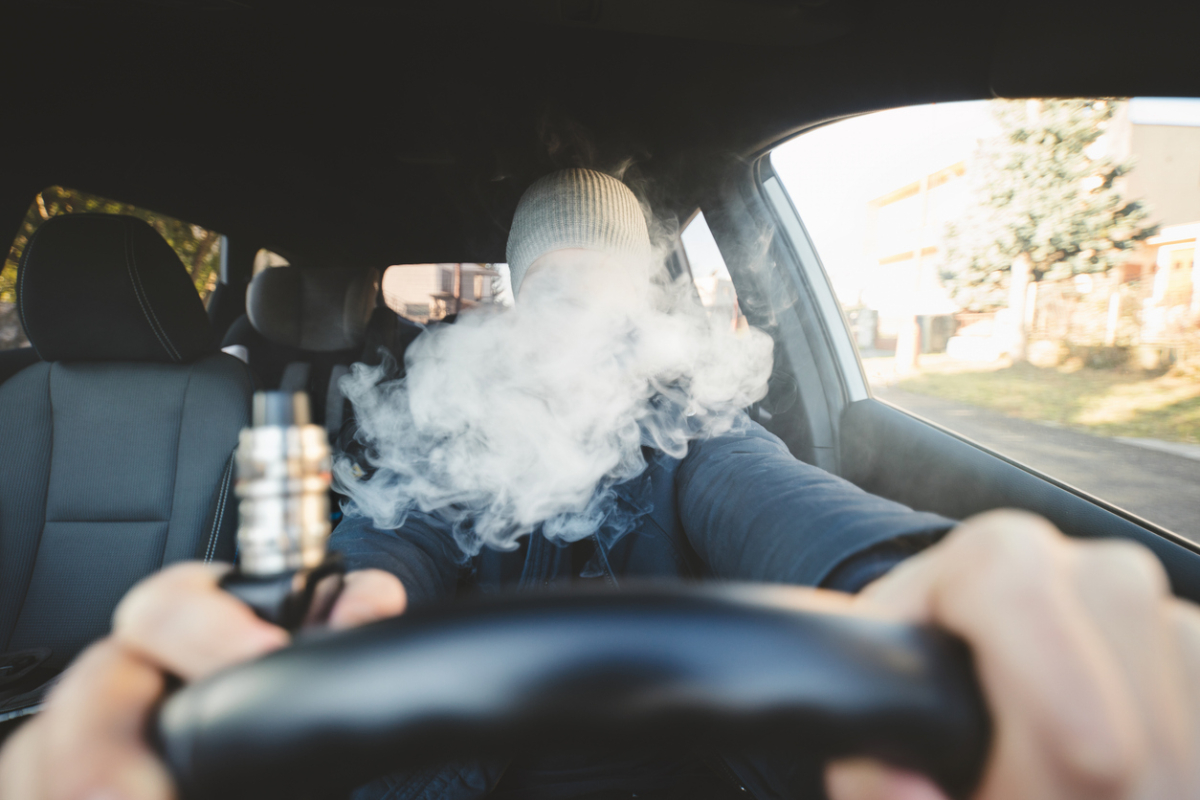
Motorists and commuters across the United Kingdom will soon face strict new regulations regarding the use of electronic cigarettes and heated tobacco products. The Department of Health and Social Care has confirmed that vaping in private vehicles carrying anyone under the age of 18 will be prohibited under forthcoming legislation designed to enhance public health.
The move marks a significant expansion of existing smoke-free laws. Under the new proposals, all indoor environments where traditional smoking is currently illegal will also become vape-free and heated tobacco-free zones. This includes all workplaces, public transport hubs, and hospitality venues, effectively equalising the legal status of vaping with tobacco smoking in professional and enclosed public settings.
Expansion to outdoor areas
Beyond the restrictions inside vehicles and buildings, the government is launching a formal consultation to extend smoking and vaping bans to specific outdoor locations. These targeted areas include children’s playgrounds, school gates, and the immediate perimeters of educational facilities. The primary objective, according to health officials, is to prevent the normalisation of nicotine use among minors and to reduce the intake of secondhand emissions.
The Department of Health and Social Care stated that these measures are essential to protect vulnerable populations, particularly children and those with underlying health conditions, from the potential risks associated with inhaling secondhand vapour. The government maintains that the policy is a cornerstone of its wider strategy to alleviate long-term pressure on the National Health Service (NHS) by preventing respiratory and cardiovascular illnesses.
Health secretary outlines public safety remit
Health Secretary Wes Streeting confirmed the government's position, stating that "No child in a playground or hospital patient should suffer because someone else chooses to smoke.
"Secondhand smoke increases the risk of heart disease and lung cancer and we want to protect children and the sick from harm. Prevention is better than cure, so this Government is taking pressure off the NHS and building a healthier Britain where everyone lives well for longer".
The proposed rules will also apply to the grounds of hospitals and other healthcare facilities. While smoking will be entirely prohibited on hospital estates, the government has indicated that vaping may still be permitted in designated areas for patients and visitors. This distinction is intended to support current smokers who are using electronic cigarettes as a clinical tool to quit tobacco permanently.
Hospitality and private property exemptions
In a move to balance public health goals with economic stability, the government confirmed that certain outdoor spaces will remain exempt from the new restrictions. After discussions with industry representatives, bar and pub gardens, as well as restaurant terraces, will not be covered by the outdoor smoking or vaping ban. Large open public spaces, such as beaches and national parks, are also excluded from the proposals.
Homeowners and tenants will retain the right to smoke or vape within their private residences and private gardens. Business Minister Kate Dearden clarified that the proposals are specifically targeted at protecting families in confined or sensitive areas, rather than placing additional regulatory or financial burdens on the British hospitality sector, which has faced significant challenges in recent years.
Concerns over economic impact and personal freedoms
Despite the government's focus on health, the measures have faced immediate criticism from industry analysts and civil liberties groups. The Institute of Economic Affairs (IEA) described the inclusion of vaping in the ban as a disproportionate response. Christopher Snowdon, head of lifestyle economics at the IEA, argued that there is no scientific basis for treating water-based vapour with the same legal severity as tobacco smoke.
Critics also warned that the ban on vaping in public houses and workplaces could have the unintended consequence of driving former smokers back to traditional cigarettes. They argue that if vapers are forced to share outdoor smoking areas with tobacco users, the incentive to stick with less harmful alternatives may be diminished. There are also concerns regarding the enforcement of bans within private vehicles, which some have described as an over-reach of state authority into private life.
Phased implementation and consultation
According to the Department of Health, the current consultation period is a mandatory step toward the full implementation of the Tobacco and Vapes Bill. This legislation is currently progressing through Parliament and represents one of the most significant shifts in UK public health policy in two decades. The consultation will specifically examine how outdoor boundaries should be demarcated to ensure the rules are both clear for the public and enforceable for local authorities.
Medical bodies have largely welcomed the announcement. The British Heart Foundation stated that protecting children from the visibility and effects of secondhand smoke on their way to school is a vital public health milestone. The charity has called for the urgent implementation of the bill to ensure that no patient or minor is exposed to avoidable harm on public or medical grounds.
The government is expected to publish the findings of the consultation later this year, with a view to setting a formal commencement date for the new restrictions across England and Wales. Similar measures are being considered by the devolved administrations in Scotland and Northern Ireland to ensure a consistent approach to nicotine regulation across the United Kingdom.