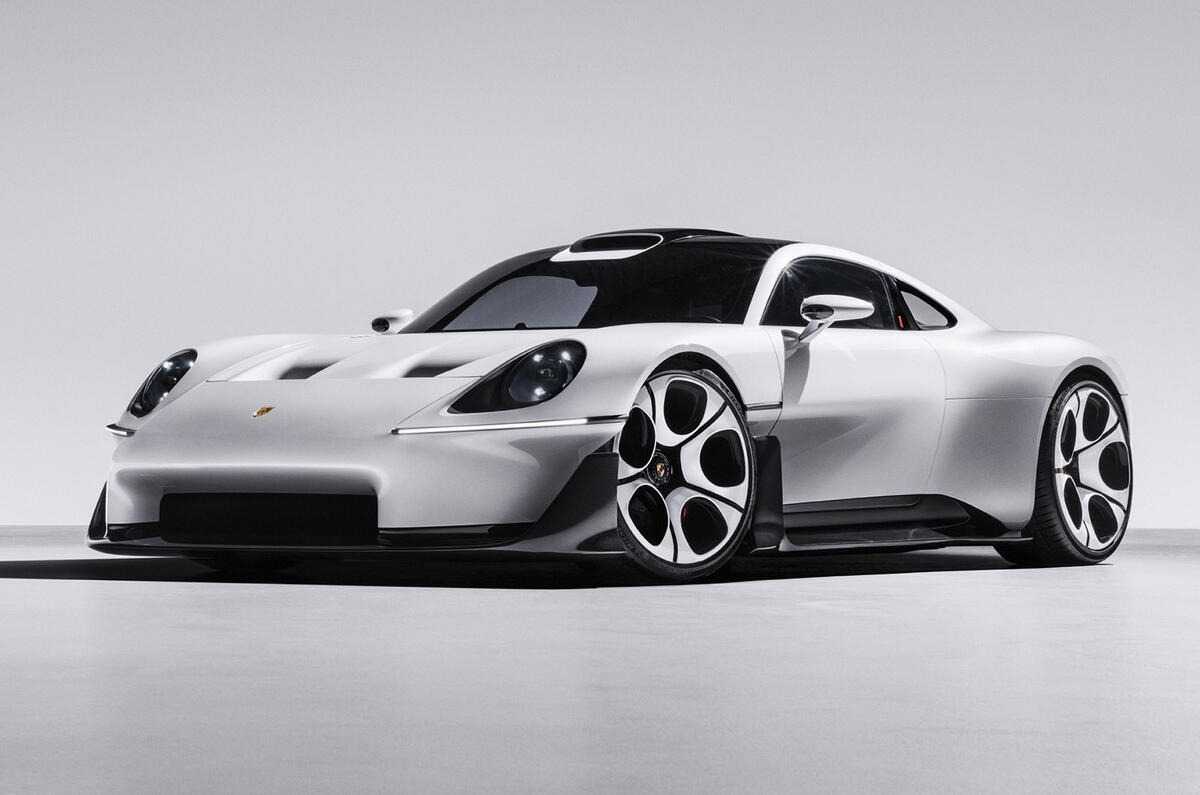
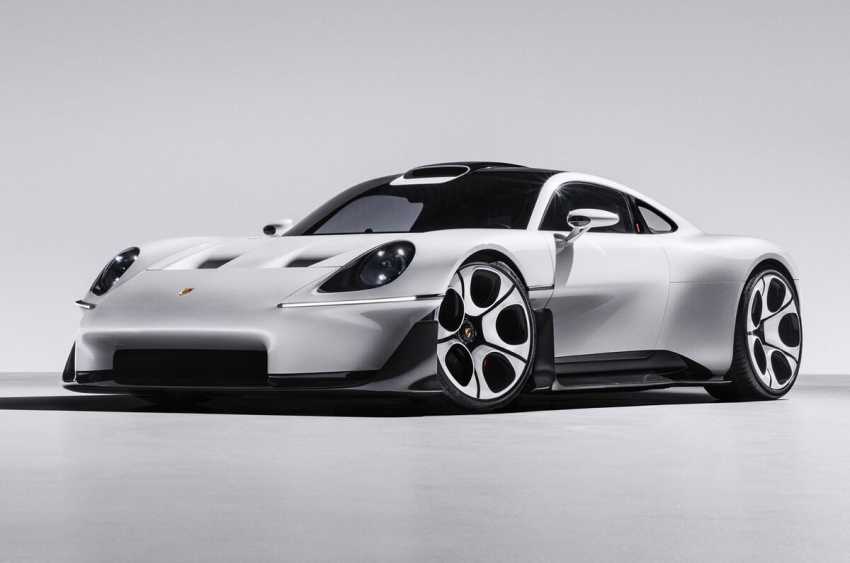
Porsche has pulled the covers off the Mission S in New York, and it matters for two reasons. It shows where the brand’s styling is heading, and it previews a production mid-engined sports car that will sit above the 911 in the range. We haven’t seen or driven that car, and it’s still some way off, so treat everything below as direction of travel rather than a spec sheet.
Porsche Mission S design and styling
This is the first concept from Tobias Sühlmann, who took over as design chief from Michael Mauer in February after a stint running design at McLaren. He says the car came together in just eight months, kicked off by an evening phone call from company boss Michael Leiters, who had a vision for something above the 911.
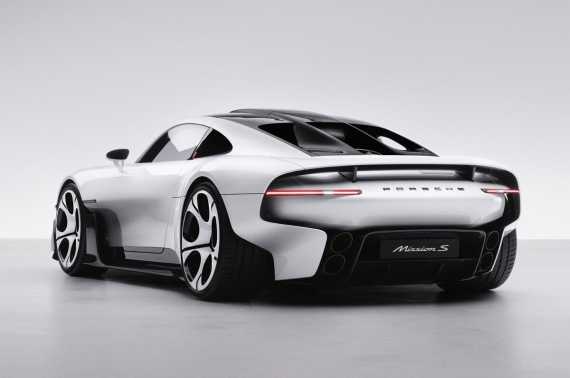
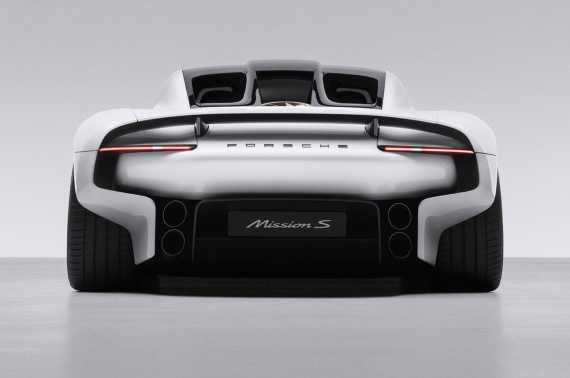
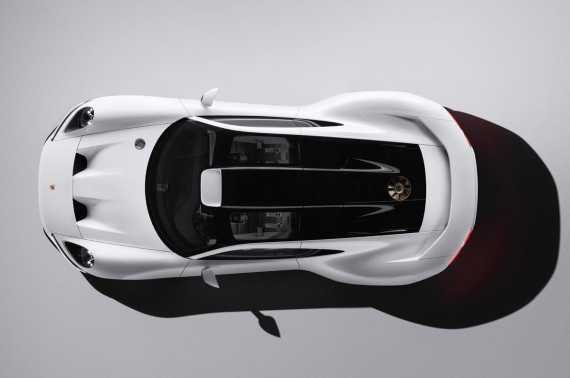
The history lessons are easy to spot. The Carrera GT and the 911 GT1 that inspired it shape the front, with torpedo-style headlights and a big roof-edge air intake. The roofline nods to the 959, the rear sculpting comes from the GT1, and the wheels borrow the telephone-dial look of the 928. Up front, the slim LED daytime running lights follow the pattern set by the Taycan.
There is fresh stuff too, including narrow split rear lights, a retracting rear wing and a big cooling fan above the engine bay. Sühlmann also stresses that the front wings sit higher than the bonnet so a driver can always see where the wheels are. That is a sensible detail for a car meant to be pushed hard.
Porsche Mission S interior
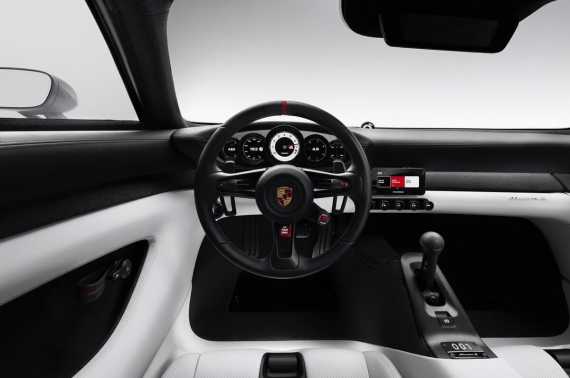
Inside, the show car goes stripped-back and driver-focused, with inspiration from the 550 Spyder and the 356. Five round dials sit behind the steering wheel, an analogue rev counter among them, and their position shifts with the drive mode you pick. There are physical controls and no central touchscreen at all.
Your phone gets a retractable magnetic mount instead, and the seatbelt buckle fixes to the centre console. Expect plenty of this to be softened for production, because touchscreen-free cabins rarely survive contact with safety regulations and customer expectations.
Porsche Mission S engine and platform
Here is the headline news for petrolheads. The production car will ride on a new, flexible platform developed in-house, so it won’t borrow the mid-engined architecture used by Lamborghini and the Audi Nuvolari. It is being engineered for petrol, hybrid and plug-in hybrid power, and Leiters says there is no electric version planned because demand at this end of the market isn’t there.
That is a clear reversal from 2023, when Porsche showed the electric Mission X concept as a possible halo car. That project has been scrapped. Porsche now expects roughly two combustion models for every EV in its line-up over the medium term, and the gap widens at the top of the range.
Engines haven’t been confirmed. A V8 looks the most logical fit, and the huge fan on the concept’s engine cover is inspired by the one on the 917. A flat-eight is another possibility, given that Porsche once experimented with the layout for a 918 Spyder successor that never happened, and tuner Ruf recently built a 1,000bhp version.
Porsche Mission S release date and price
There is no price and no confirmed launch date. The production car is at an early stage while the platform is developed, so any timing you see quoted is an expectation at best.
What we do know is that performance is aimed at the middle ground between the 911 and the 918 Spyder, the last mid-engined Porsche to sit above the 911. Unlike that car, this one will be a regular series-production model, likely built alongside the 911 in Zuffenhausen. Limited-edition variants are expected to follow under the company’s Sportwagenschmiede 35 strategy, which targets more premium, higher-revenue models.
Porsche Mission S pros and cons
Pros
- It will be a proper series-production car, so it should be far easier to buy than a limited-run hypercar.
- The platform is built for petrol, hybrid and plug-in hybrid power, which keeps the engine choice broad.
- The design draws on the Carrera GT, 959 and 928, so it has real heritage behind it.
Cons
- There is no price, no confirmed engine and no launch date.
- The no-touchscreen cabin is unlikely to reach production as shown.
- A car positioned above the 911 will almost certainly cost a great deal more than one.
Is the Porsche Mission S a good idea?
We think it is, and a bold one. Porsche has watched the market for expensive electric sports cars stay stubbornly small and chosen to follow its customers instead of its own earlier ambitions. A mid-engined combustion flagship built on a new platform is exactly what enthusiasts hoped the brand would do, and the concept’s mix of old and new gives me more confidence than a blank-sheet futuristic shape would have.
The risk is the gap between a lovely show car and a car you can actually buy. Until Porsche confirms engines, performance and pricing, the Mission S is an exciting promise. If you were waiting for Porsche to give you a reason to look beyond the 911, this is it, and it’s worth keeping an eye on.