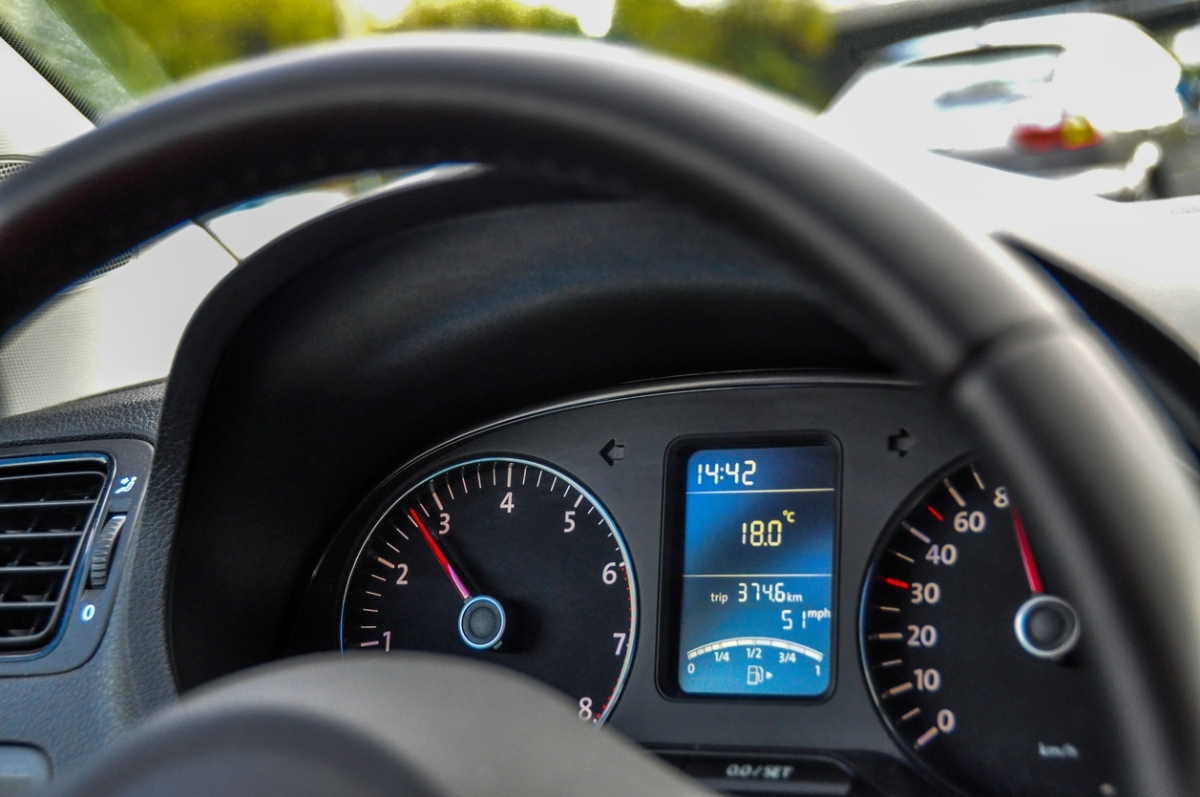
The days when clocking was associated with the criminal underworld of the 1980s and 1990s may seem long gone, but mileage fraud is making a comeback - and increasingly sophisticated technology is making it harder for motorists to spot.
Devices that can remove or conceal tens of thousands of miles from a vehicle's recorded mileage are readily available online. Some are marketed as 'undetectable', allowing unscrupulous sellers to make cars appear less heavily used and potentially increase their resale value.
The technology is also being used by some drivers to conceal mileage from finance and leasing companies, potentially helping them avoid excess-mileage charges.
The problem could become even more widespread from 2028 if the Government goes ahead with plans to charge electric and plug-in hybrid drivers for every mile they travel.
Data from vehicle history-checking company carVertical reveals the 20 car models most frequently flagged for mileage fraud during the first six months of 2026.
At the top of the list is the Nissan Qashqai.
CarVertical's checks suggest that more than one in 10 Qashqais checked had evidence of mileage manipulation.
The Qashqai has now held the unwanted title of Britain's 'most clocked car' for three consecutive years.
Nissan Qashqai remains Britain's most clocked car
The proportion of Qashqais showing signs of mileage tampering has risen sharply.
In 2024, 3.4 per cent of Qashqais checked by carVertical showed evidence of clocking. That rose to 9.7 per cent in 2025.
During the first half of 2026, the figure increased again to 10.8 per cent.
On average, 12,250 miles had been removed from the recorded mileage of affected Qashqais.
With almost three-quarters of a million Qashqais registered in Britain, that rate could equate to tens of thousands of vehicles having had their displayed mileage manipulated.
Matas Buzelis of carVertical said the Qashqai's popularity makes mileage particularly important when buying used.
'Qashqais are hugely popular in Britain and there is a constant supply of them on the used market,' he said.
That means two otherwise similar cars can command very different prices depending on the mileage shown on the odometer.
The 20 cars most affected by mileage fraud
The Nissan Qashqai is not the only popular model attracting the attention of mileage fraudsters.
The Skoda Octavia came second, with 8.2 per cent of vehicles checked showing signs of mileage manipulation. An average of 17,869 miles had been removed.
It was followed by two Audi models: the Q5, at 8.1 per cent, and the A6, at 7.4 per cent.
Audi features particularly heavily in this year's ranking, with six models appearing in the top 20.
The Audi Q7, A5, A3, A4 and TT all recorded significant levels of mileage fraud.
Most clocked car models in 2026 (January to June)
| Car make/model | Percentage of cars clocked | Average mileage removed |
| Nissan Qashqai | 10.8% | 12,250 |
| Skoda Octavia | 8.2% | 17,869 |
| Audi Q5 | 8.1% | 18,452 |
| Audi A6 | 7.4% | 21,511 |
| Land Rover Defender | 7.0% | 51,237 |
| Audi Q7 | 6.2% | 19,412 |
| Audi A5 | 5.9% | 22,482 |
| Audi A3 | 5.5% | 17,995 |
| Land Rover Range Rover | 5.2% | 26,006 |
| Vauxhall Astra | 5.1% | 26,150 |
| Land Rover Discovery | 5.0% | 23,888 |
| Volvo XC90 | 5.0% | 18,382 |
| Volkswagen Golf | 4.7% | 22,185 |
| Audi A4 | 4.6% | 21,266 |
| Audi TT | 4.3% | 15,650 |
| Volkswagen Passat | 4.3% | 31,745 |
| Vauxhall Corsa | 4.3% | 19,294 |
| BMW 3 Series | 3.9% | 14,955 |
| BMW 5 Series | 3.8% | 38,388 |
| Renault Clio | 3.7% | 26,492 |
The figures show that mileage fraud is not confined to older or cheaper vehicles.
Matas Buzelis said Audi's presence in the rankings demonstrated that motorists should not assume mileage manipulation is restricted to budget cars or a particular type of vehicle.
Anyone buying a used Audi, for example, should examine its service history and MOT records carefully and look for unexplained gaps or inconsistencies in mileage.
Land Rover Defender sees huge mileage reductions
The Land Rover Defender is another model that stands out.
CarVertical's data covers both the modern Defender and the older agricultural-style 4x4, which went out of production in early 2016.
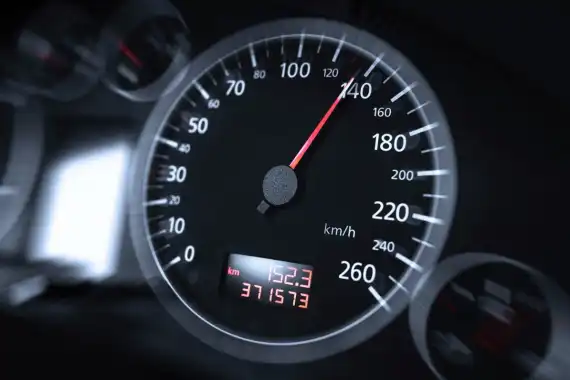
The model recorded a 7 per cent clocking rate in the first six months of 2026, up from 6.4 per cent in 2025 and 3 per cent in 2024.
Older Defenders may be particularly attractive targets because their values have risen since production ended.
The amount of mileage removed from affected Defenders is also striking.
On average, 51,237 miles had been removed from their recorded mileage — the largest reduction among the 20 models identified.
Other vehicles also showed substantial mileage reductions.
The BMW 5 Series had an average of 38,388 miles removed from affected vehicles, while the Volkswagen Passat had 31,745 miles wiped from its recorded history.
The Range Rover, Land Rover Discovery, Volvo XC90, Vauxhall Astra and Vauxhall Corsa also appeared in the rankings for the second consecutive year.
CarVertical said the repeated appearance of the same models suggested that mileage fraud remains a persistent problem in parts of the used-car market.
Why clocking is becoming harder to detect
The resurgence in mileage fraud has been helped by the availability of sophisticated electronic devices.
Cheap 'mileage blockers', sometimes called 'mileage freezers', can prevent a vehicle from recording miles while it is being driven.
Unlike traditional clocking, where mileage is physically wound back, these devices can interfere with the recording of mileage in real time.
Some can affect not only the odometer but also other electronic systems within the vehicle, including the engine control unit.
That can make tampering considerably harder to detect.
Online sellers often attempt to exploit legal loopholes by advertising these devices as being intended for 'off-road' or 'research' use.
Some nevertheless promote them using claims such as 'untraceable' or 'undetectable'.
Prices typically range from around £200 to £900, depending on the vehicle and the type of device.
The technology creates a particular problem for used-car buyers because a vehicle can appear to have a perfectly credible mileage history.
Vehicle data specialists have warned that a car fitted with a mileage blocker could retain a full service history while showing mileage figures that are lower than the distance it has actually travelled.
It can also avoid obvious inconsistencies in MOT records because the mileage is being prevented from increasing rather than being reduced afterwards.
That makes the fraud potentially much harder to spot.
Could pay-per-mile EV tax make clocking worse?
The problem could become even more significant if the Government introduces its proposed electric vehicle mileage charge.
In the Autumn Budget last year, Chancellor Rachel Reeves announced plans for a new system under which electric vehicle drivers would pay 3p per mile from April 2028.
Drivers of plug-in hybrid vehicles would pay 1.5p per mile.
The proposed system is designed to replace some of the tax revenue lost as motorists move away from petrol and diesel vehicles.
Drivers would declare their expected annual mileage and pay accordingly, with MOT tests used to verify mileage and determine whether additional payments or credits are due.
But mileage-blocking technology could undermine the system.
A driver using one of these devices could potentially suppress the mileage recorded between MOT tests, reducing the apparent distance travelled.
Steve Gooding, director of the RAC Foundation, has warned that the proposal could create a new incentive for unscrupulous motorists to manipulate the mileage of battery-powered cars.
It could also create a fresh problem for people buying second-hand electric vehicles.
A car with artificially low recorded mileage could appear cheaper to run and less heavily used than it really is.
Why are mileage-blocking devices legal?
One of the biggest problems is the legal grey area surrounding mileage manipulation.
Under UK law, altering a vehicle's mileage is not, in itself, illegal.
The offence arises when a vehicle is sold without disclosing a known discrepancy, particularly where the seller is acting dishonestly for financial gain.
That distinction means a trader can potentially face prosecution for selling a clocked vehicle, while the person who originally altered the mileage may be much harder to pursue.
The Government last considered the issue in 2016 as part of a consultation on roadworthiness testing.
The then transport minister John Hayes acknowledged concerns over mileage-adjustment devices and the fact that the act of altering mileage itself was not illegal.
The Department for Transport subsequently said it would consider whether further measures were necessary.
However, consumer groups and industry bodies have continued to raise concerns.
Jon Clay, identification director at HPI, said the issue remained a 'grey area' in UK law.
He said the key problem was that selling a vehicle with an incorrect mileage was only an offence where the discrepancy was not disclosed, and proving that could be difficult.
A legitimate dealer could even unknowingly sell a clocked vehicle and become liable, while the individual who altered the mileage could remain beyond the reach of prosecutors.
For motorists buying a used car, the message is clear: a low mileage figure should never be taken at face value.
Checking MOT records, servicing paperwork and the vehicle's wider history can help identify inconsistencies - but as mileage-blocking technology becomes more sophisticated, even apparently complete records may not tell the full story.