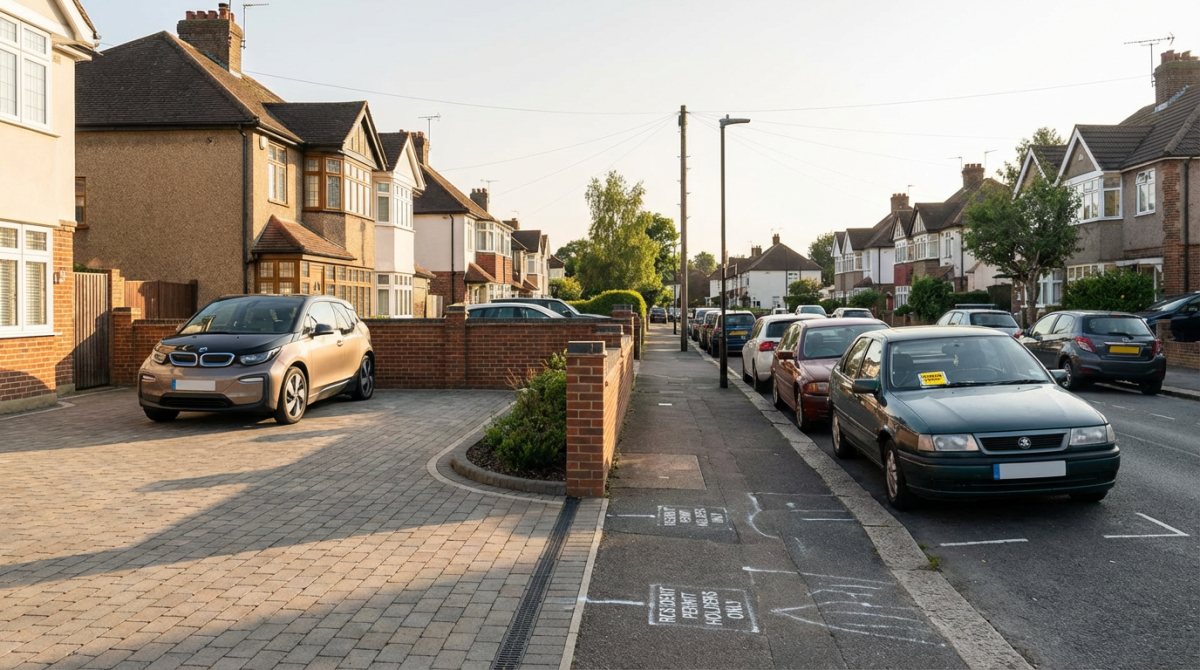
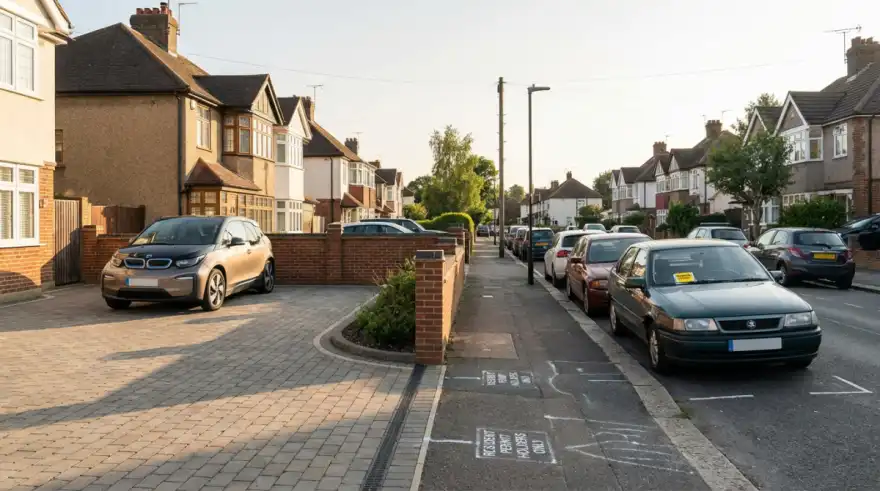
New data reveals a growing “driveway divide” in the UK, with drivers who rely on on-street parking paying an average of £1,939 more over 10 years. Higher insurance premiums and rising council permit fees are driving the gap, turning a simple parking space into a serious financial advantage.
Key Facts
- £1,939: The average extra cost over 10 years for households without a driveway.
- 75%: Drop in parking spaces in new London flats since 2016.
- £5,375: Potential 10-year insurance premium difference in high-risk areas like Preston (PR1).
- £100: Additional annual diesel surcharge from some UK councils.
Driveway divide revealed: The hidden cost of parking on the street
For millions of UK drivers, not having a driveway is no longer just a minor inconvenience, it’s becoming a long-term financial penalty.
New research highlights a “driveway divide”, showing that households without off-street parking are paying nearly £2,000 more over a decade. And it’s not down to one single cost. It’s the combination of rising insurance premiums, increasing parking permit fees, and limited availability of spaces.
If you’ve ever circled your street looking for a space after work, you’ll know the frustration. Now there’s a price tag attached to it too.
What it really means for your wallet
The cost difference can be dramatic depending on where you live.
In some areas, like East Devon (EX8), drivers parking on the road could pay over £2,000 more per year compared to neighbours with a driveway. Over time, that’s the kind of money that could go towards a new car or significantly offset your overall car running costs.
In Preston (PR1), the gap is driven heavily by insurance. Drivers without off-street parking could pay an extra £5,375 over 10 years just in premiums, purely because their car is parked on the street.
It’s a clear reminder that where (and how) you park is now a major factor in the true cost of owning a car.
Why street parking pushes insurance up
From an insurer’s perspective, it comes down to risk.
Cars left on the road are more exposed to:
- Passing traffic damage (like clipped mirrors or scrapes)
- Theft and vandalism
- Hit-and-run incidents
All of this feeds into higher premiums. Insurers use real claims data, and unfortunately, kerbside parking tends to come out worse.
Fewer spaces, more pressure
At the same time, parking itself is becoming harder to come by, especially in cities.
In London, parking provision in new developments has dropped by 75% since 2016. Some new-build flats now offer just one space for every six homes.
With around 78% of London households lacking a driveway, competition for on-street parking is intense. And even if you pay for a permit, there’s no guarantee you’ll actually get a space near your home.
It’s a growing issue that reflects wider changes in urban planning and the push to reduce car dependency, but for drivers, it often feels like paying more for less.
The biggest impact hits hardest
One of the more concerning aspects of the driveway divide is who it affects most.
Areas with the highest insurance increases for on-street parking – including parts of Birmingham, Hull and Oldham – often overlap with regions already facing economic challenges.
On top of that, some councils are introducing extra charges for diesel vehicles, adding up to £100 per year to parking permits.
Why a driveway is now a financial asset
A driveway used to be a “nice to have”. Now, it’s increasingly a money-saving asset.
Between insurance savings, lower permit costs, and reduced hassle, having off-street parking can make a noticeable difference to your long-term motoring expenses.
If you’re planning a move or reviewing your household budget, it’s worth factoring in, because as this data shows, where you park could cost you thousands.