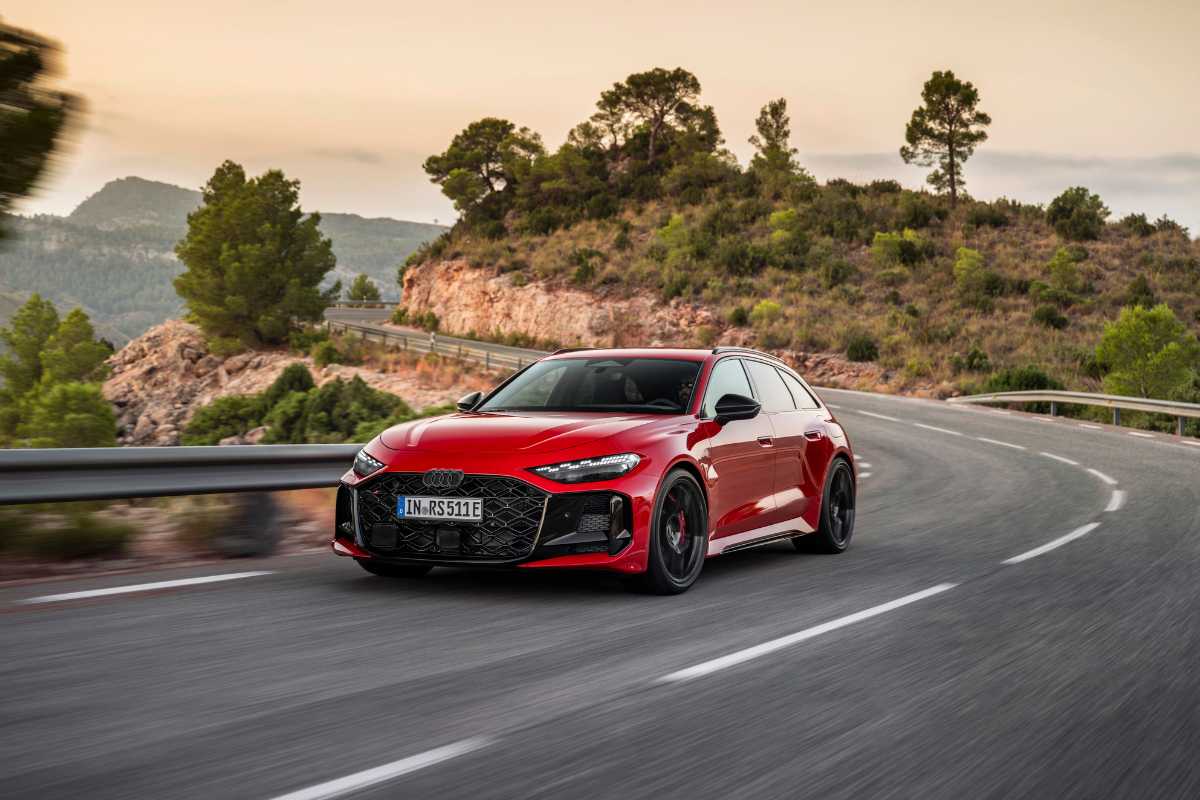
TL;DR: Audi has revealed the all‑new RS5 plug‑in hybrid, combining a twin‑turbo V6 with electric power for 630bhp, up to 50 miles of electric‑only range and sharply reduced emissions ahead of tough Euro 7 rules.
Audi officially unveils new 2026 RS5 PHEV
Audi has officially unveiled the 2026 RS5 PHEV, a new plug‑in hybrid performance flagship that replaces the outgoing RS4 and sits at the top of the new A5 line‑up. Designed to meet upcoming Euro 7 emissions regulations, it blends a high‑revving 2.9‑litre twin‑turbo petrol V6 with a powerful electric motor to deliver super‑saloon performance with significantly lower CO2 and fuel consumption. The RS5 is the first plug‑in hybrid model in Audi Sport’s mid‑sized executive range and forms a key part of the brand’s shift towards electrified performance.
The transition to a hybrid drivetrain follows Audi’s revised naming convention, which now uses odd numbers for its internal combustion and hybrid vehicles. In the UK, the RS5 will be offered in both Avant estate and fastback saloon body styles, the latter returning to the British market for the first time since 2006.
Order books are expected to open shortly, with the first UK deliveries scheduled for June 2026 and customer cars arriving in the summer. The RS5 PHEV will rival electrified performance models such as the BMW M3 and Mercedes‑AMG C63, both of which have also moved away from pure combustion engines.
Key specs at a glance
- 2.9‑litre twin‑turbo V6 with modified Miller cycle technology
- Plug‑in hybrid system with 22kWh usable‑capacity battery
- Combined output: 630bhp and estimated 850Nm (manufacturer figure)
- 0–62mph in 3.6 seconds (claimed)
- Electric‑only range of around 50 miles
- Avant estate and fastback saloon body styles
- UK prices from £89,400, rising beyond £100,000 for top trims and options
Powertrain and performance: V6 meets plug‑in hybrid
At the heart of the new RS5 is a 2.9‑litre twin‑turbocharged V6 petrol engine operating on a modified Miller cycle, paired with a single 174bhp electric motor integrated into the eight‑speed automatic gearbox and a 22kWh usable‑capacity battery pack. The Miller cycle keeps the intake valves open for longer and uses a shorter compression stroke, helping to boost efficiency and cut emissions without sacrificing power.
In total, the system develops up to 630bhp and a huge 850Nm of torque, sent to all four wheels via Audi’s quattro‑based all‑wheel‑drive system. Water‑cooled variable‑geometry turbochargers are used to reduce lag and improve response across the rev range, while the electric motor fills in any gaps with instant torque at low speeds. Audi quotes a 0–62mph time of 3.6 seconds for the RS5 Avant, despite a kerb weight of around 2,370kg, with the electric assistance significantly improving mid‑range punch in real‑world driving.
Audi quotes an electric‑only range of approximately 50 miles, meaning many daily commutes can be completed without using the engine at all. When the battery is depleted, the RS5 operates as a conventional hybrid, intelligently blending combustion and electric power to maintain performance while keeping fuel consumption in check.
Advanced chassis and handling systems
Under the skin, the RS5 PHEV uses adaptive suspension, active roll stabilisation and advanced torque vectoring to keep all that power under control. The chassis electronics constantly monitor grip, steering angle and driver inputs to send power where it can be used most effectively.
New for this generation is Audi’s Dynamic Torque Control system, designed to mitigate the understeer that previous RS4 and RS5 models were sometimes criticised for. An electromechanical torque‑vectoring rear differential can shuffle torque between the rear wheels within milliseconds, while a newly developed locking centre differential is able to send up to 100 per cent of available drive to the rear axle when required.
A rear‑biased set‑up gives the car a more playful character, with a dedicated RS Torque Rear mode allowing controlled oversteer on track and echoing the drift‑style modes seen in rivals from BMW M and Mercedes‑AMG. Stopping power comes from 420mm front and 400mm rear steel brake discs as standard, with an optional carbon‑ceramic brake package that cuts unsprung weight by around 30kg. The car sits wider and lower than the standard A5 and can be specified with 20‑inch or 21‑inch alloy wheels.
Ceramic brakes, RS‑specific steering calibration and optional performance tyres will be available for buyers who plan to use their RS5 on circuit days as well as on the road.
Interior, tech and everyday usability
Inside, the RS5 PHEV follows the latest Audi design language with a minimalist dashboard, large central touchscreen and a fully digital instrument cluster. RS‑specific displays show hybrid system information such as energy flow, battery status and EV range, alongside traditional performance data like boost pressure and lap timing.
Practicality should remain similar to the regular A5 Avant and fastback saloon, although the additional hybrid hardware may slightly reduce boot capacity. However, the ability to travel up to 50 miles in near‑silence on electric power, combined with lower fuel bills and emissions, makes the RS5 PHEV a more compelling daily driver than earlier V8‑ and V6‑powered RS models.
UK pricing, trims, tax and company‑car appeal
Audi expects the 2026 RS5 PHEV range to start at £89,400 in the UK. The line‑up is structured in three tiers: the entry‑level RS5, a mid‑spec Carbon Black model with extra carbon‑fibre exterior detailing priced from around £95,400, and the range‑topping Performance Vorsprung variant at £107,400. Well‑specced cars are likely to push comfortably beyond £100,000 once options and on‑the‑road charges are factored in, placing the RS5 squarely against high‑end versions of the BMW M3 and Mercedes‑AMG C63, as well as more niche performance EVs.
The Performance Vorsprung adds additional technology and raises the top speed from the standard, electronically limited 155mph to 177mph. Thanks to its plug‑in hybrid powertrain, WLTP‑tested CO2 figures and 50‑mile zero‑emission range, the RS5 PHEV should qualify for a relatively favourable Benefit‑in‑Kind (BiK) band compared with older, pure‑petrol RS models. For company‑car drivers and fleet operators, that means potentially significant monthly tax savings while still enjoying supercar‑rivaling performance.
Official order books are due to open shortly, with first customer deliveries on track for summer 2026.
Why the RS5 PHEV matters
The 2026 RS5 PHEV is more than just another fast Audi; it signals how Audi Sport plans to navigate tightening emissions rules without abandoning its performance roots. By combining a highly efficient 2.9‑litre V6, a usable electric range and sophisticated chassis systems such as Dynamic Torque Control and RS Torque Rear, it aims to deliver both everyday usability and track‑day pace.
For keen drivers, the real test will be how it feels from behind the wheel and whether the added weight of the hybrid system can be masked by the clever electronics. But on paper at least, the RS5 PHEV looks set to be one of the most versatile and technologically advanced RS models yet, and a pivotal step in Audi Sport’s broader move towards electrified performance.