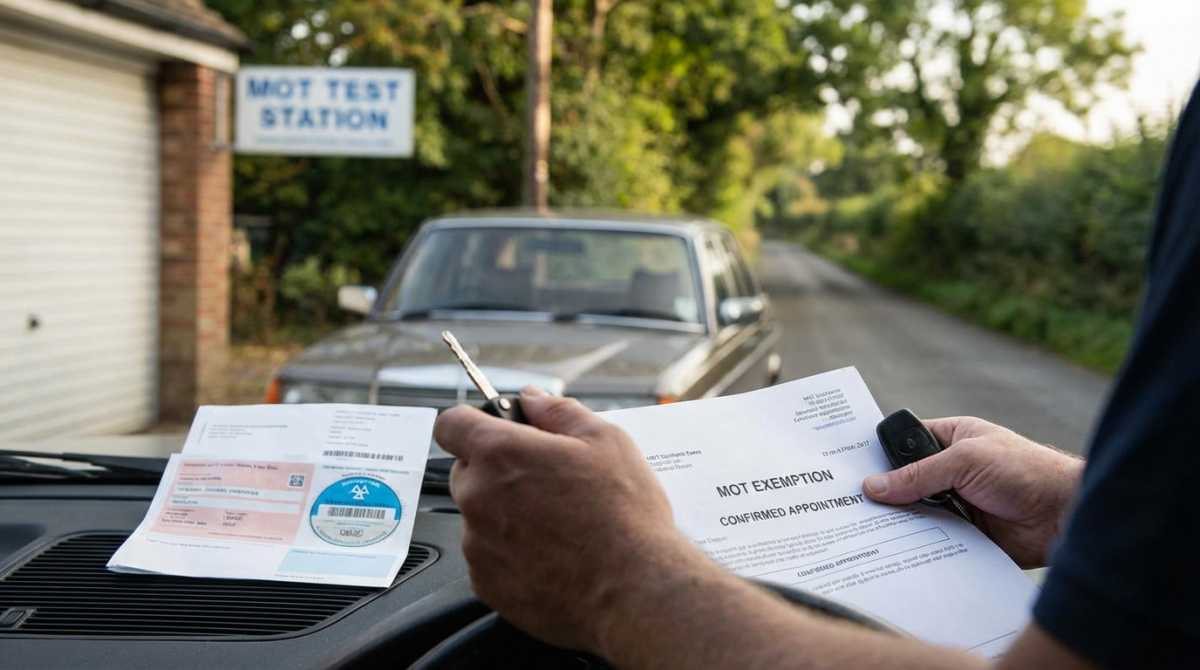
TL;DR: In short, no, you cannot tax a car without a valid MOT in the UK. The DVLA's online system automatically checks for a current MOT pass certificate before allowing you to pay for vehicle tax. The only legal exception is when driving directly to a pre-booked MOT test, but even then, your car must be insured.
Key Facts
- £1,000 is the maximum fine for being caught driving a vehicle on a public road without a valid MOT certificate.
- 40 years is the age a vehicle must reach to be considered a 'historic vehicle', which may make it exempt from needing an MOT.
- 3 years is how long a brand-new car can be driven in the UK before it requires its very first MOT test.
- 1 month (minus a day) is the maximum period before your MOT expires that you can have it tested, allowing you to keep the same renewal date for the following year.
- 8 January 1985 is the cut-off for vehicles to become MOT exempt as of 1 April 2025, under the rolling 40-year rule.
Can you tax a car without an MOT? The £1,000 mistake UK drivers make
It’s a scenario that causes a familiar knot in the stomach for thousands of UK drivers: you receive your V11 reminder from the DVLA, head online to sort your car tax, and are met with a blunt refusal. The reason? Your MOT expired a few days ago. Or perhaps you're a classic car enthusiast looking to bring a beloved project back to life. The critical question remains the same: can you tax a car without an MOT?
The simple answer is no. For the overwhelming majority of drivers, a valid MOT certificate is a non-negotiable legal requirement for taxing your vehicle. Here at Regit, we’ve guided countless drivers through the maze of UK road legality, and the interconnected relationship between your MOT, tax, and insurance is one of the most important things to get right. Getting it wrong can be a costly mistake.
In this complete guide, we’ll explain exactly why this rule is in place, explore the few specific exceptions the DVLA permits, and, most importantly, detail what this all means for your safety and your wallet.
Find out if your vehicle has a valid tax status now but using Regit's free car tax checker.
Why the DVLA system instantly blocks your car tax renewal
Not so long ago, taxing your car involved a trip to the Post Office with a folder full of paperwork: your physical MOT certificate, a paper insurance cover note, and your V5C logbook. Today, the entire process is digital, streamlined, and brutally efficient.
When you visit the GOV.UK vehicle tax service and enter your car's registration number, the system performs an instantaneous digital handshake with the national MOT database. This database is managed by the Driver and Vehicle Standards Agency (DVSA). If the DVSA's records don't show a valid, current MOT pass certificate linked to your registration, the option to proceed and pay for your tax is simply disabled. You can’t get past it.
Check if your vehicle has a valid MOT here using Regit's free MOT checker.
This automated check is a deliberate and crucial part of the UK's car tax rules. It's designed to act as a digital gatekeeper, ensuring that any vehicle being used on public roads meets the minimum safety and environmental standards set out in law.
Based on our internal Regit data, over 30% of cars fail their MOT at the first attempt. These failures are often for surprisingly simple issues like worn tyres, blown bulbs, or ineffective windscreen wipers. This makes the automated DVLA tax renewal check a vital safeguard that keeps potentially dangerous vehicles off the road.
What this means for drivers is that there's no way to 'forget' or bypass the MOT requirement when it's time to tax your car. The system is built to enforce the law automatically.
The legal loophole: Driving to an MOT test without tax or an MOT
Many drivers find themselves in what feels like a classic 'Catch-22' situation. You can't tax your car without an MOT, but you can't legally drive your untaxed car on the road to get an MOT. So, what are you supposed to do? Is a tow truck your only option?
Thankfully, the law provides a single, very specific exemption for this exact scenario. You are legally permitted to drive an untaxed and un-MOT’d vehicle on a public road for one reason and one reason only: you are driving it directly to a pre-booked MOT appointment at a test centre.
This is the crucial part: the appointment must be 'pre-booked'. You can't just decide to drive to a local garage on the off-chance they can fit you in. If you are stopped by the police, or your vehicle is flagged by an Automatic Number Plate Recognition (ANPR) camera, you must be able to provide proof of your appointment. This could be a confirmation email, a text message, or an entry in the garage's booking system.
It's also absolutely critical to understand that even when driving to a pre-booked MOT test, your car must be insured. Driving without insurance carries severe penalties, including six points on your licence and an unlimited fine. As experts often note, the MOT and tax exemption for this journey is narrow, but the insurance requirement is absolute.
MOT exemption: The 4 times you can tax a car without a test
While the 'no MOT, no tax' rule is iron-clad for most, there are a few important scenarios where you can tax a vehicle without a current MOT certificate. These MOT exemption rules are worth knowing.
1. Vehicles under three years old
In the UK, a brand-new car does not need its first MOT test until the third anniversary of its first registration. During these initial three years, the DVLA's system recognises the vehicle's age and will allow you to complete your DVLA tax renewal online without an MOT record being present. The good news for drivers of new cars is that this simplifies the first two tax renewals considerably.
2. Historic (Classic) vehicles
If your vehicle is old enough to be classified as 'historic', it may be exempt from needing an MOT altogether. Under current car tax rules UK, a vehicle becomes MOT exempt when it reaches 40 years of age. From 1 April 2025, for example, vehicles that were first built or registered before 8 January 1985 will become eligible. Even if your historic vehicle is exempt, you must still go through the process of taxing it each year, but the cost will be £0. You also need to declare it as MOT exempt. It's the owner's responsibility to ensure the vehicle is kept in a roadworthy condition.
3. Specific MOT-exempt vehicle categories
Certain types of vehicles are exempt from MOT testing by their very nature. This is a niche category that includes some agricultural tractors, electric goods vehicles registered before March 2015, and particular types of trailers. This won't apply to the vast majority of UK car drivers.
4. Driving to a pre-booked MOT test
As we covered above, this isn't a true exemption from the MOT itself, but rather a temporary legal allowance to move the vehicle for the sole purpose of getting it tested. This is the most common and practical 'exception' that drivers will use.
The real cost of no MOT: £1,000 fines and voided insurance
Choosing to ignore the MOT requirement or hoping you won't get caught is a significant financial gamble. The consequences go far beyond a simple administrative issue.
First, there's the direct penalty. If you are caught driving on a public road without a valid MOT, you can be fined up to £1,000. With ANPR cameras now fitted to police cars and gantries across the country, your chances of being flagged automatically are higher than ever.
However, the far greater financial danger lies buried in the small print of your car insurance policy. At Regit, our team has reviewed dozens of insurance documents, and almost every single one contains a clause stating that your cover is only valid if your vehicle is maintained in a 'roadworthy condition'. The most common legal definition of 'roadworthy' is having a valid MOT certificate.
What this means for drivers is that if you have an accident while your MOT has expired, your insurer could argue that your policy was invalid at the time of the incident. They may refuse to pay out for any damage to your car or, even worse, for any third-party claims. This could leave you personally liable for tens of thousands of pounds in repairs, medical bills, and legal fees.
MOT expired? Your step-by-step plan to get legal again
If you've just realised your MOT and tax have both expired, don't panic. Here is the clear, step-by-step legal timeline you should follow to get back on the road without risking a fine.
Step 1: Get the car off the public road.
As soon as the MOT expires, your car is technically illegal if it's parked on a public road. You must move it onto private land, such as a driveway, a private car park, or a garage.
Step 2: Immediately SORN your car.
If you can't get an MOT straight away, you must declare the vehicle as SORN (Statutory Off Road Notification). To SORN a car is to formally inform the DVLA that it is not being used or kept on public roads. This is a critical step, as it stops the system from automatically issuing a fine for having an untaxed vehicle.
Step 3: Book your MOT test.
Find a local, reputable garage and book an MOT slot. Make sure you get written proof of the booking, like an email or text message, which you must have with you before you start the engine to drive there.
Step 4: Pass the test and pay your tax.
Once your car passes its MOT, the garage will upload the pass certificate to the DVSA database. This update is usually instantaneous. You can then go online to the GOV.UK portal, often on your smartphone in the garage's waiting room, and pay your vehicle tax immediately. Your car will be fully legal to drive home.
A long MOT vs no MOT: How it affects your car's value
Staying on top of your MOT and tax isn't just about avoiding fines; it's also about protecting your car's value. When browsing used car platforms like Auto Trader or Cinch, you'll notice that cars with a long MOT (10 months or more) often command a higher price compared to identical models with a certificate that's about to expire.
A long MOT gives a potential buyer peace of mind. It's a sign that the car has recently been inspected and met minimum safety standards. Conversely, a seller advertising a car with no MOT, often with the phrase 'it will pass first time, no problem', should be treated with caution. As automotive experts, we advise buyers to be extremely wary of such claims. The cost of potential repairs for common MOT failure points like brakes, suspension, or emissions can quickly turn a supposed bargain into a very expensive problem, on top of the £1,000 fine if you're caught driving it illegally.
For sellers, getting a fresh 12-month MOT is one of the smartest and most cost-effective ways to make your car more attractive and secure a better price.
The 13-month MOT trick: A savvy driver's guide to saving time
The good news for petrol, diesel, and EV drivers alike is that the modern digital system is faster and more efficient than ever. Gone are the days of waiting for paperwork to be processed. In our experience, you can have your car pass its MOT at 10:00 AM and have it fully taxed and legal by 10:05 AM using just your smartphone. Your options just got better.
To really stay ahead of the game and reduce stress, we recommend a simple but effective strategy: the '13-month MOT'. You are allowed to have your car tested up to one month (minus one day) before your current MOT certificate expires while keeping the same renewal date. For example, if your MOT expires on 15th June, you can have it tested any time from 16th May onwards. If it passes on, say, 20th May, your new MOT will still be valid until 15th June of the following year.
This simple trick gives you a valuable buffer zone. If your car fails, you have up to a month to get the repairs done without the car ever becoming illegal or you having to SORN it. It’s the best way to manage your MOT without the last-minute panic.
You can also receive reminders when your car's MOT is due to expire using Regit's handy digital garage. Just add your vehicle's reg to your account and receive reminders so you can stay road legal.
In summary, you absolutely cannot tax a car without a valid MOT. But the path to getting legal is clear and straightforward. Use the SORN process if your car will be off the road for any period, and always ensure your MOT test is pre-booked before you drive to the garage. By being proactive, you can easily avoid the hefty fines, insurance nightmares, and stress that come with an expired MOT.
Your Next Steps:
1. Check your vehicle's current MOT and tax status using Regit's free MOT check.
2. If your MOT has expired, book a test immediately at a trusted local garage.
3. As soon as you have the pass certificate, log on to the DVLA's service to pay your car tax.