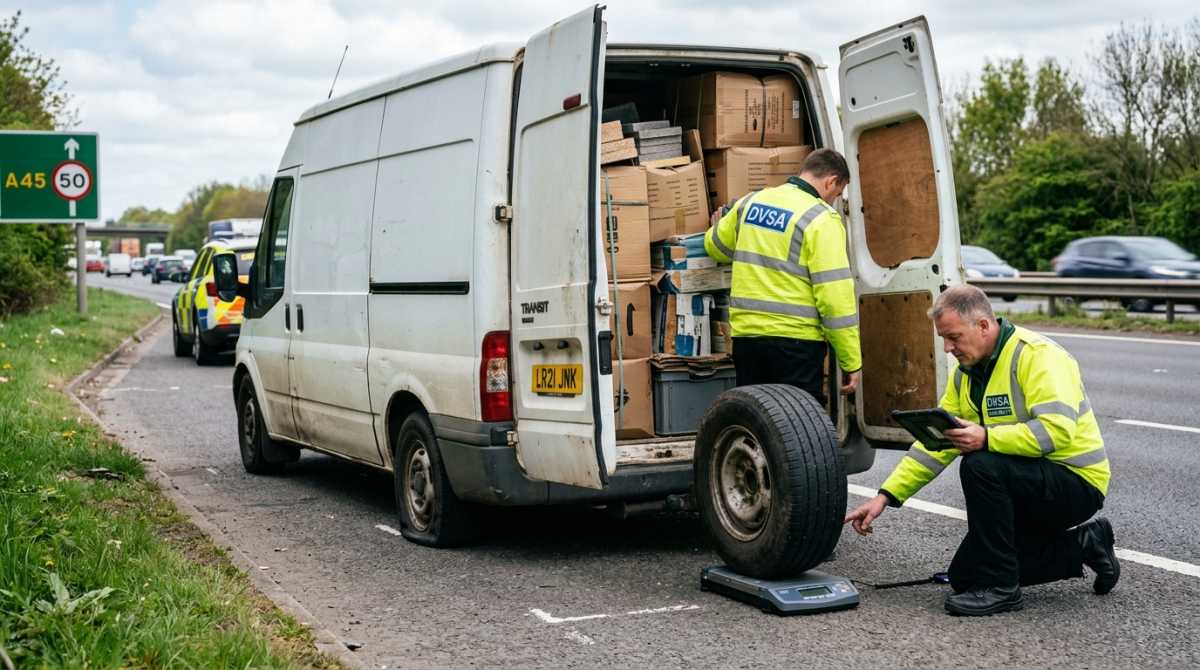
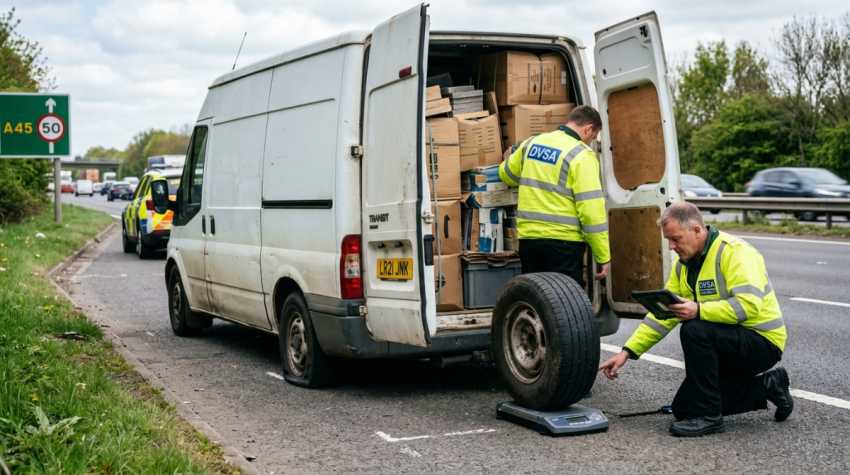
TL;DR: Overloading a van can affect braking, handling, tyre performance, suspension and fuel consumption. In the UK, the DVSA can issue graduated penalties of £100, £200 or £300 for excess weight, depending on how much the vehicle is overloaded. Serious cases can result in prosecution, while an overloaded van may be prohibited from continuing its journey until the excess weight is removed or redistributed.
It can be tempting to fit one more pallet, another bag of materials or a few extra tools into your van, particularly when you're trying to complete a job without making another trip. But exceeding your van's maximum permitted weight can create safety problems, increase wear and tear and result in penalties.
Knowing your van's weight limits and understanding how to load it correctly can help you stay safe, legal and avoid unnecessary costs.
Why Is Overloading a Van Dangerous?
A van is designed to operate within specific weight limits. These limits cover the vehicle itself as well as the people, fuel and goods being carried.
When a van exceeds its permitted weight, it can affect the way the vehicle behaves on the road. Overloading can increase stopping distances, affect steering and handling, place additional strain on tyres, brakes and suspension, and make the vehicle less stable.
The risk can become greater when the weight isn't distributed properly. A van could be below its overall maximum weight but still exceed the permitted weight on one of its axles.
For commercial drivers, keeping within the manufacturer's weight limits isn't just about avoiding a fine. It is an important part of maintaining control of the vehicle and protecting other road users.
How Does Overloading Affect Stopping Distance?
An overloaded van can take longer to stop, particularly during emergency braking.
The additional mass gives the vehicle more momentum, while the braking system, tyres and suspension are designed to operate within specific limits. This can make emergency stops more difficult and increase the distance needed to come to a halt.
Overloading can also affect how a van responds when braking, particularly if the load is unevenly distributed.
This is why staying within your van's maximum permitted weight is an important part of commercial vehicle safety.
How Does Overloading Affect Steering and Stability?
An overloaded van can be more difficult to control.
Carrying too much weight, particularly high up or towards one end of the vehicle, can alter its centre of gravity and affect how it behaves around corners or during sudden manoeuvres.
An uneven load can also place too much weight over one axle. This can affect steering, braking and the vehicle's stability.
GOV.UK guidance recommends loading goods evenly and placing heavier items towards the bottom of the vehicle, while staying within the permitted weight for each axle.
How Can Overloading Damage a Van?
The consequences of overloading aren't limited to safety. Carrying more weight than your van is designed for can increase wear and tear on several components.
Tyres
Excess weight puts additional stress on your tyres. This can increase heat build-up and wear and may increase the risk of tyre failure.
Tyres should always be correctly inflated for the load being carried and should never be expected to support more weight than they are designed for.
Brakes
A heavier vehicle places greater demands on its braking system. Over time, this can contribute to increased brake wear and affect braking performance.
Suspension
Your van's suspension is designed to support a specific maximum load. Regularly carrying excessive weight can place additional stress on springs, dampers and other suspension components.
Engine and Transmission
An overloaded van also has to work harder to move its additional weight. This can increase the demands placed on the engine and transmission and may contribute to additional wear over time.
Can Overloading Increase Fuel Consumption?
Yes. Carrying additional weight can increase fuel consumption because the vehicle needs more energy to accelerate and maintain speed.
However, the exact effect varies depending on the van, how much additional weight it is carrying, driving conditions and driving style. There isn't a single percentage increase that applies to every overloaded van.
For businesses using vans regularly, keeping unnecessary weight out of the vehicle can therefore help reduce running costs as well as keeping the vehicle within its legal limits.
What Are the Fines for Overloading a Van?
If the DVSA finds that your van is overweight during a roadside check, you can receive a graduated fixed penalty.
The current DVSA penalty bands for excess weight are:
| Amount overweight | Graduated penalty |
|---|---|
| Less than 10% | £100 |
| 10% to less than 15% | £200 |
| 15% or more | £300 |
DVSA guidance also provides for a 5% enforcement leeway before a fixed penalty or prohibition is normally issued, although this does not apply in the same way where the relevant weight has been exceeded by 1 tonne or more.
The amount of any penalty depends on the circumstances and the weight involved. Serious cases can be referred for prosecution rather than being dealt with by a fixed penalty.
Can You Be Prosecuted for Overloading a Van?
Yes. Serious cases of overloading can result in court proceedings.
DVSA guidance states that an overload of 30% or more would normally be considered too serious for a fixed penalty and would result in a court summons.
However, being 30% overweight does not automatically mean you have committed dangerous driving. Other offences may be considered where the way a vehicle has been loaded creates a significant road-safety risk.
If a driver is convicted of dangerous driving, the maximum penalty is two years' imprisonment, an unlimited fine and obligatory disqualification.
The precise offence and penalty will depend on the circumstances and what the driver is prosecuted and convicted for.
Can an Overloaded Van Be Taken Off the Road?
Yes. The DVSA can issue an immediate prohibition if a vehicle is found to have a serious defect or safety issue, including certain overloading offences.
An overloaded vehicle may be prevented from continuing its journey until the excess weight has been removed or the load has been redistributed.
In some circumstances, the vehicle can be immobilised or directed to a nearby location where the load can be corrected.
This means an overloaded van can cause more than a financial penalty. If you're using the vehicle for work, being unable to continue your journey could also cause delays and additional costs.
Understanding Your Van's Weight Limits
One of the easiest ways to avoid an overloaded van is to understand the different weight limits that apply to your vehicle.
Maximum Permitted Weight
Your van has a maximum permitted weight, sometimes referred to as its design gross weight or maximum authorised mass (MAM).
This is the maximum weight the vehicle is permitted to reach when fully loaded. It includes the van, driver and passengers, fuel and everything being carried.
You can find the relevant information on your van's VIN or weight plate.
Axle Weight
Your van also has maximum permitted weights for its individual axles.
This is important because you can be within the vehicle's overall weight limit but still exceed the permitted weight on the front or rear axle.
For example, placing a particularly heavy load towards the rear of a van could put too much weight over the rear axle even if the total weight of the vehicle remains within its overall limit.
Always check both the total vehicle weight and the individual axle limits.
How Do You Calculate Your Van's Payload?
Payload is the amount of weight your van can carry within its permitted weight limit.
The figure shown by the manufacturer can depend on how the vehicle's unladen weight has been calculated, so don't assume that the advertised payload represents the amount of goods you can add regardless of who and what is already inside the van.
Your available payload needs to account for everything being carried, including:
- The driver
- Passengers
- Fuel
- Tools and equipment
- Materials
- Goods or other cargo
If you regularly carry heavy equipment or materials, weighing the vehicle and its load is a much safer way of checking that you're within the permitted limits than relying on estimates.
How to Avoid Overloading a Van
Staying within your van's weight limits doesn't have to be complicated. A few simple checks can help.
1. Check Your Weight Plate
Find your van's VIN or weight plate and check the maximum permitted vehicle weight and individual axle limits.
Don't rely solely on the payload figure in a brochure, particularly if your van has been modified or fitted with additional equipment.
2. Weigh Your Load
If you're unsure how much your van or cargo weighs, use a suitable public weighbridge.
This can be particularly useful for businesses carrying materials, tools or equipment where the weight can vary from one journey to the next.
3. Distribute Weight Properly
Place heavier items low down and distribute the load as evenly as possible.
Avoid putting too much weight towards the front or rear of the van, and make sure neither axle exceeds its permitted limit.
4. Secure Your Load
Weight isn't the only consideration when loading a van. Your cargo should also be secured so that it cannot move around during the journey.
A load that shifts while you're driving can affect the vehicle's balance and make it harder to control.
5. Don't Assume You Have Extra Capacity
If you've already got passengers, tools, equipment and fuel in the van, some of your available payload has already been used.
Before adding another heavy item, consider the total weight you're carrying rather than just the weight of the new cargo.
Do Businesses Have Responsibility for Overloaded Vans?
Overloading isn't solely a driver's responsibility.
Businesses and self-employed van operators have responsibilities for ensuring their vehicles are safe to use and that drivers understand and follow the relevant rules.
For businesses operating commercial vehicles, having sensible loading procedures can help reduce the risk of vehicles being overloaded and prevent avoidable disruption.
Where weight limits are exceeded, both the circumstances of the operator and the driver can be relevant to enforcement and prosecution.
What Happens If You Are Stopped With an Overloaded Van?
If the DVSA or police stop your van for a roadside check, they can assess its weight and condition.
Depending on the circumstances, an overweight vehicle can result in:
- A graduated fixed penalty
- A prohibition preventing the vehicle from continuing
- The load being required to be redistributed or removed
- The vehicle being immobilised
- A court summons in serious cases
- Further prosecution where other offences are involved
The consequences depend on the extent and circumstances of the overload.
How Much Can My Van Legally Carry?
There isn't one universal payload limit for vans. The amount you can legally carry depends on the specific vehicle and its permitted weight limits.
Before loading your van, check:
- The maximum permitted vehicle weight
- The front axle limit
- The rear axle limit
- The weight of the van itself
- The weight of the driver and passengers
- The fuel and equipment being carried
- The weight of your cargo
If you're unsure, a weighbridge can give you a much more accurate answer than estimating the weight of your load.
Conclusion: Stay Within Your Van's Weight Limits
Overloading a van can affect braking, handling, tyres, suspension and fuel consumption, while serious excess weight can result in DVSA penalties, a prohibition or prosecution.
The simplest way to avoid the problem is to know your van's maximum permitted weight and axle limits, consider everything already being carried and distribute heavy loads carefully.
If you're regularly carrying materials, tools or other heavy goods, weighing your van can provide a much more reliable way of checking that you're operating within the legal limits.
Staying within your van's weight limits helps protect your vehicle, your licence, your business and other road users.
For more advice on vans, motoring and commercial vehicle ownership, stay up-to-date with Regit.