A third of British drivers feel anxious, and, in some cases, downright frightened about parking.
That is according to research published earlier this year by Korean car maker Kia, which found that one in three Britons consider bay parking the most difficult driving manoeuvre. Almost two-thirds also believe that parking spaces are simply not wide enough for today's larger cars.
A separate study by Fiat, published several months earlier, found that 44 per cent of UK motorists experience what it dubbed 'parallel-o-phobia', a rather tongue-in-cheek term for the fear of parallel parking.
For drivers who find parking stressful, there is some good news. Car makers are developing increasingly sophisticated technology designed to take much of the difficulty out of the process.
These systems go considerably further than the automated parking functions introduced on premium cars over the past decade. Those systems could steer a vehicle into a suitable space, but drivers were generally still responsible for controlling the accelerator and brake.
The latest technology is much more ambitious.
Manufacturers, particularly in China, are developing vehicles capable of performing complex manoeuvres almost entirely by themselves. Some can rotate within their own footprint, while others can locate parking spaces, navigate multi-storey car parks and even return to collect their owners.
Here are five technologies that could fundamentally change the way we park.
1. Denza Toe-Out Rotation
Denza is one of the latest Chinese automotive brands to establish itself in the international market, although it is owned by a company familiar to many motorists: BYD.
Positioned as BYD's luxury, technology-focused marque, Denza is aimed firmly at the premium end of the market. Its debut model, the Z9GT shooting brake, costs around £105,000.
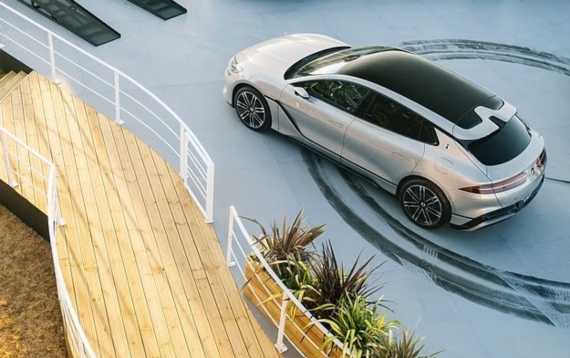
The sleek electric estate is exceptionally powerful, capable of rapid charging and packed with advanced driver-assistance technology. But one of its most intriguing features is a parking system that allows the car to perform an unusual sideways manoeuvre.
The Z9GT produces 1,140bhp and has an electric motor powering each wheel. Because those motors can be controlled independently, individual wheels can rotate at different speeds and, crucially, in different directions.
The result is a vehicle that can effectively rotate around its own axis, making it considerably easier to manoeuvre in confined spaces.
Denza calls the system Toe-Out Rotation.
The technology can identify a parallel parking space only marginally longer than the Z9GT itself, despite the car measuring around 5.2 metres from nose to tail.
The vehicle first steers its front end into the space while the rear remains protruding into the road. Once Toe-Out Rotation is activated, the wheels execute a carefully coordinated manoeuvre that shifts the rear of the car sideways.
The effect is rather like a car performing a sideways moonwalk, allowing it to slide neatly into a space that would be extremely difficult for a conventional vehicle to enter.
2. Yangwang Tank Turn
If Denza's technology sounds impressive, BYD's Yangwang brand takes the concept even further.
Yangwang is BYD's ultra-premium marque, focused primarily on high-end SUVs. Its flagship U8 is a particularly imposing machine, measuring approximately 5.3 metres long, 2 metres wide and 2 metres tall.
It also weighs around 3.5 tonnes before passengers or luggage are added.
Fortunately for owners, the U8 comes with technology designed to make manoeuvring such a large vehicle considerably easier.
Like the Denza Z9GT, the U8 has independently controlled motors driving each wheel. This allows it to perform a manoeuvre known as Tank Turn.
By rotating the wheels in opposing directions, the vehicle can pivot around a central point and effectively turn within its own footprint.
For a driver faced with a tight supermarket car park, that could be particularly useful.
Rather than attempting to position the SUV at an awkward angle before reversing into a bay, the driver can approach the space, position the vehicle perpendicular to it and activate Tank Turn.
The U8 can then pivot through roughly 90 degrees, allowing the driver to reverse directly into the parking bay.
It is an impressive demonstration of what independently controlled electric motors can achieve.
There is, however, one unanswered question: quite how quickly repeated tank turns might consume a set of tyres.
Denza uses similar technology on some of its own vehicles, although it calls the manoeuvre Compass Turn.
3. Mercedes Intelligent Park Pilot airport valet
Chinese manufacturers may be pushing the boundaries of automated parking, but Mercedes-Benz is also developing technology that could make the traditional airport car park a thing of the past.
Its Intelligent Park Pilot system has been developed in partnership with Bosch and has received approval from Germany's Federal Motor Transport Authority.
For now, however, there is a significant limitation: it only operates at one location.
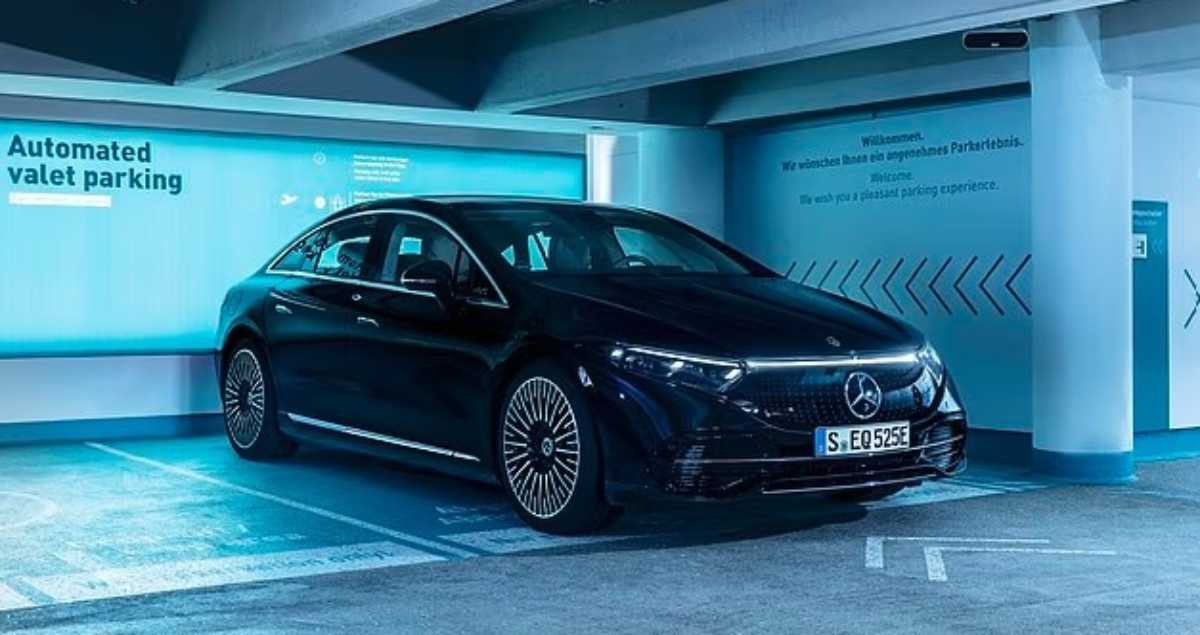
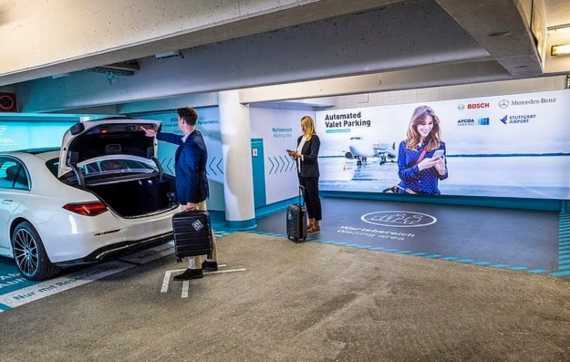
The system is available at Stuttgart Airport, where it enables compatible Mercedes vehicles to park themselves in a designated area without a driver behind the wheel.
The process is relatively straightforward.
A driver arrives at the dedicated valet parking level, unloads their passengers and luggage, and then leaves the vehicle. Using the Mercedes smartphone app, they can instruct the car to drive to a pre-booked parking space.
The vehicle then navigates the car park, finds its assigned bay and parks itself.
When the driver returns, they can summon the car using the app. The Mercedes then drives itself back to a designated collection point.
The technology works because the parking facility itself has been equipped with sensors capable of detecting obstacles and communicating with the vehicle.
At present, Stuttgart Airport's P6 car park is the only location where the system is approved and installed.
Compatible Mercedes models include the S-Class, E-Class, EQS, EQS SUV, EQE and EQE SUV.
The vehicles can navigate ramps and move between floors without anyone sitting in the driver's seat, a significant step beyond conventional self-parking systems.
4. Huawei Parking Lot to Parking Lot
Mercedes is not the only manufacturer exploring the idea of cars that can effectively park themselves at the airport.
Chinese technology giant Huawei has developed its own Airport Valet Parking system, which is currently operating at Shenzhen Bao'an International Airport.
The principle is similar. Drivers can drop off passengers and luggage before instructing the vehicle to drive itself to a parking space. When they return, the car can be summoned back to a designated collection point.
Huawei, however, has taken the concept considerably further with a feature called Parking Lot to Parking Lot, or Park-to-Park.
As the name suggests, the system is designed to allow a vehicle to drive itself between parking locations.
Huawei's Qiankun ADS intelligent-driving network covers more than one million parking facilities in China. This means drivers can potentially instruct a compatible vehicle to leave one car park and navigate to another, even when the journey involves a significant distance.
There is an important distinction from Mercedes' airport valet system: the driver must remain inside the vehicle and be prepared to take control when required.
Nevertheless, the system is designed to handle much of the journey autonomously.
It can leave a parking bay, including underground car parks, navigate urban roads and motorways, and use Huawei's Navigation Cruise Assist technology to follow a route with minimal driver intervention.
Once it reaches its destination, the vehicle can enter another car park, locate an available space and park itself.
The system also incorporates machine learning, allowing it to improve its routing and parking behaviour based on places the driver visits regularly.
In other words, the car is not simply learning how to park. It is learning where its owner goes and how to get there.
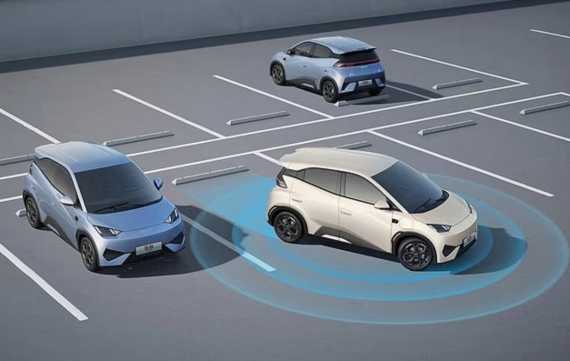
5. BYD God's Eye and Intelligent Parking
BYD is also pushing advanced parking technology into a much broader range of vehicles through its God's Eye intelligent-driving system.
The technology builds on the company's existing advanced driver-assistance systems and combines cameras, radar and ultrasonic sensors to monitor the vehicle's surroundings. Higher-specification versions also incorporate LiDAR.
Together, these sensors allow the car to construct a detailed picture of its environment and perform increasingly sophisticated driving functions where conditions allow.
Among them is Intelligent Parking, which can perform complex parking manoeuvres without requiring the driver to control every stage of the process.
The system can also support valet-style parking, bringing BYD closer to the capabilities already demonstrated by Mercedes and Huawei.
God's Eye has quickly become one of the more sophisticated driver-assistance systems available in mass-market vehicles, particularly given BYD's enormous global sales volumes.
The company has even demonstrated considerable confidence in its automated parking technology by pledging to cover damage caused during autonomous parking if a collision occurs while the system is operating.
Is parking about to become a thing of the past?
For generations of motorists, parking has been one of the least enjoyable parts of driving.
It requires precision, spatial awareness and patience, and becomes considerably more difficult when parking bays are narrow and modern vehicles continue to grow in size.
The latest technology suggests that manufacturers are beginning to tackle the problem from a completely different direction.
Instead of simply making parking easier for the driver, they are increasingly trying to remove the driver from the process altogether.
From EVs capable of rotating almost on the spot to cars that can navigate entire car parks without a driver, the technology is advancing rapidly.
There are still obvious limitations. Some systems are restricted to specific vehicles or locations, while others require the driver to remain ready to take control.
But as autonomous-driving technology develops, the humble parking manoeuvre could become one of the first parts of driving that motorists routinely hand over to their cars.
For anyone who has ever spent five minutes trying to squeeze into a parallel parking space while a queue of traffic waits impatiently behind them, that may be very welcome news indeed.