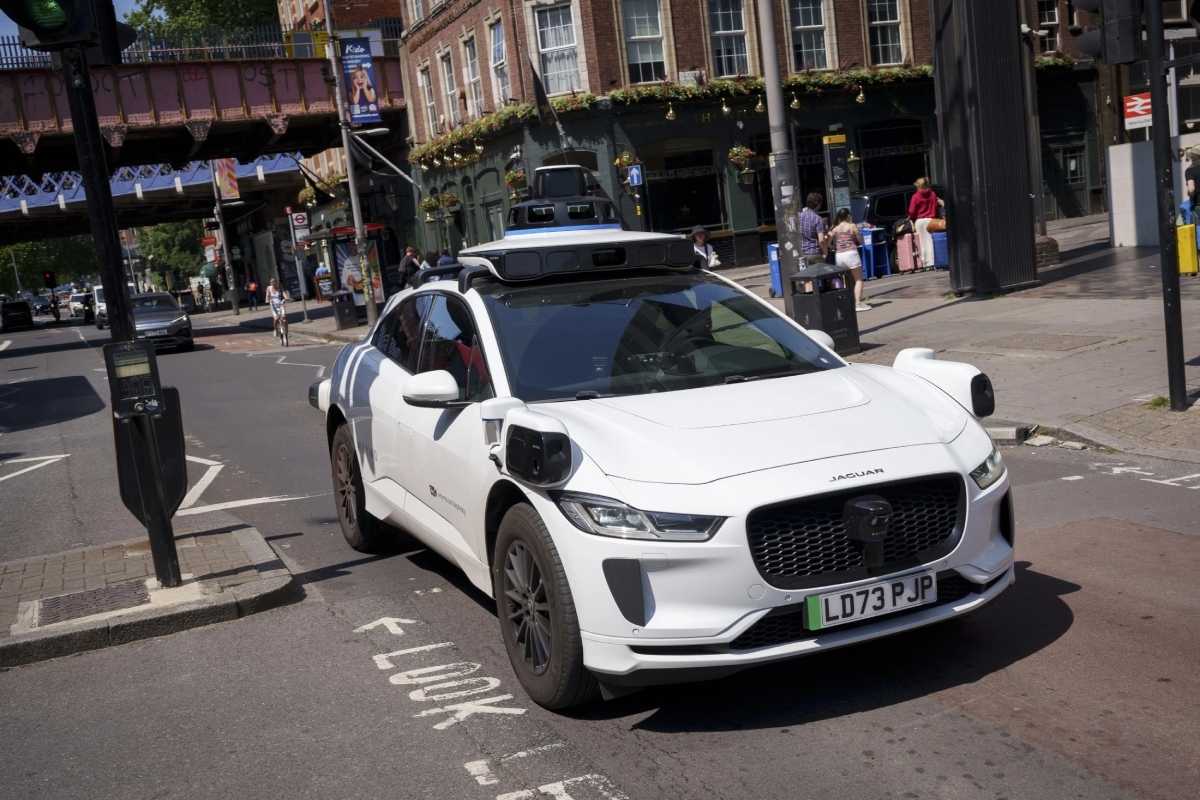
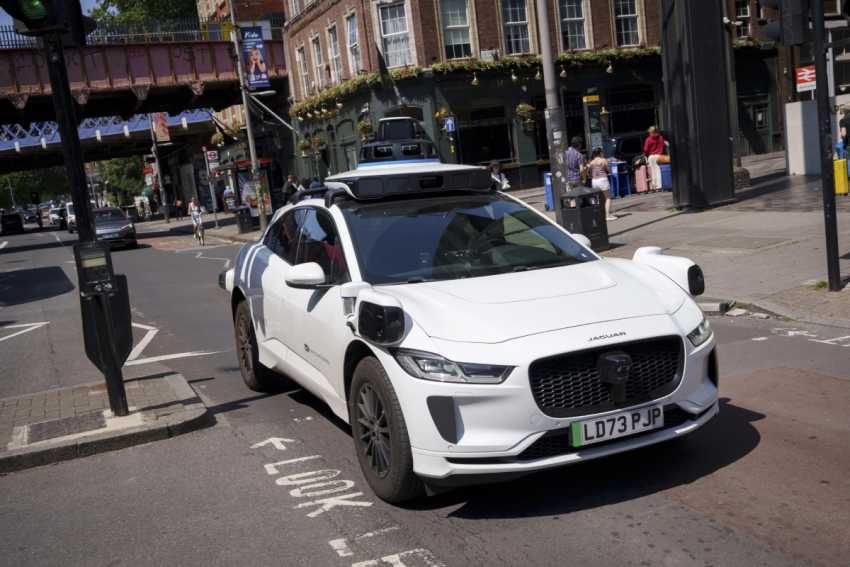
Self-driving robotaxis are now available to the public in London, marking an important step for autonomous driving technology in the UK. However, motorists should be clear about what is actually launching today, because these vehicles are not operating without a human driver on board.
From September 3, Uber customers requesting an UberX, Uber Electric or Uber Comfort journey in London may be matched with a Wayve-powered autonomous vehicle at no additional cost.
The cars are all-electric Ford Mustang Mach-E models fitted with Wayve's autonomous driving technology, including its AI Driver and a range of sensors designed to interpret the road environment.
Crucially, the service is initially supervised. A trained private-hire driver licensed by Transport for London (TfL) will be in the vehicle and able to take control if required.
That makes today's launch a significant development, but it is not yet the arrival of fully driverless taxis on London's roads.
How do London's self-driving robotaxis work?
For passengers, the booking process remains largely unchanged. Journeys are requested through the Uber app, with eligible customers potentially being offered a Wayve-powered autonomous vehicle.
Passengers can accept the autonomous ride or switch to a conventional vehicle before the car arrives.
Once inside, the autonomous system controls the vehicle during the journey, with the human operator supervising the trip and able to intervene when necessary.
Uber says the vehicles can travel throughout London, with airports excluded from the initial service.
The rollout will also be relatively small at first. That matters because this is not a situation where thousands of autonomous taxis are suddenly being introduced across the capital.
The number of vehicles is expected to increase over time, depending on demand and the development of the regulatory framework.
For passengers, the practical points are:
- There is no additional charge for being matched with an autonomous vehicle.
- A trained, TfL-licensed private hire driver remains in the vehicle.
- Passengers can opt for a conventional ride instead.
- Journeys are booked through the existing Uber app.
- The initial service excludes airports.
Why does this matter to ordinary motorists?
The significance of the launch extends beyond people who use Uber.
London presents a particularly demanding environment for automated driving systems. Its roads combine buses, cyclists, pedestrians, motorbikes, parked vehicles, roadworks, traffic lights and constantly changing traffic conditions.
If autonomous vehicles can operate reliably in these circumstances, it could provide useful evidence about how the technology performs in one of Britain's busiest and most complicated urban environments.
But motorists should avoid assuming that the technology has suddenly made London's roads safer or that human driving is about to disappear.
Autonomous driving systems still have to deal with situations that are difficult even for experienced drivers. Human supervision remains part of this initial service precisely because the technology is not being treated as infallible.
The launch therefore represents a real-world trial at scale, rather than the end of the development process.
What does this mean for UK self-driving car laws?
The timing is significant because the UK's legal framework for automated vehicles is developing alongside the technology.
The government has been working towards a system that allows properly approved automated driving systems to operate while establishing responsibilities for manufacturers, operators and users.
That distinction is important for motorists. Today's Uber and Wayve service should not be interpreted as permission for privately owned cars to operate autonomously wherever their owners choose.
The technology, vehicle, service and operating arrangements must meet the relevant legal and regulatory requirements.
For drivers, the bigger question is what happens as autonomous vehicles become more widespread.
If robotaxis prove reliable and commercially viable, they could eventually influence how people travel around cities, potentially changing demand for private car ownership, taxis and traditional private hire vehicles.
There are also questions about employment, insurance, road capacity and who is responsible when an automated system makes a mistake. Those issues deserve scrutiny as the technology develops rather than being left until autonomous vehicles become commonplace.
Should drivers be worried about self-driving cars?
There is no immediate reason for most UK drivers to change their behaviour because of today's launch.
If you encounter one of the autonomous vehicles, it should be treated like any other road user. Do not assume that the vehicle will always behave exactly as a human driver would, and do not deliberately test its reactions.
The same basic principles apply as when driving around any other vehicle:
- Keep a safe following distance.
- Allow vehicles to merge where appropriate.
- Be particularly careful around cyclists and pedestrians.
- Follow temporary road signs and traffic restrictions.
- Never rely on assumptions about what another vehicle's technology can or cannot detect.
For buyers considering an electric or autonomous-capable vehicle, today's announcement is also a reminder that driver assistance and autonomous driving are not the same thing.
Many cars already offer features such as adaptive cruise control, lane keeping assistance and automated parking. These systems can reduce the workload for a driver, but they do not necessarily make the vehicle autonomous.
The level of automation matters, as does where and under what conditions the system is legally permitted to operate.
London is a test of more than technology
Wayve, the British company behind the AI driving system, has been developing its technology on London's roads since 2018. Its partnership with Uber gives the system an opportunity to operate with members of the public rather than solely in controlled testing environments.
That makes today's launch worth watching closely.
The government has described autonomous vehicles as a major opportunity for the UK's technology and transport sectors. There may well be economic benefits if British-developed systems can be deployed successfully at home and overseas.
But motorists are entitled to ask harder questions alongside the excitement.
How safe are these vehicles compared with human drivers? How will responsibility be determined after a collision? What happens to private hire drivers if autonomous fleets expand substantially? Will robotaxis reduce congestion or simply add more vehicles to already busy roads? And will the benefits be available outside London?
Those questions will become increasingly important as the number of autonomous vehicles grows.
Conclusion
The arrival of self-driving robotaxis in London is an important moment for UK motoring, but the reality is more measured than some of the headlines suggest.
Passengers can now experience an autonomous Uber journey, but a trained human driver remains on board and able to intervene. The initial fleet is small, airport journeys are excluded and passengers can choose a conventional vehicle instead.
For everyone else on London's roads, little changes today. The real significance lies in what happens next.
If Wayve and Uber can demonstrate that autonomous vehicles can operate safely and consistently on London's complex roads, the case for wider deployment becomes stronger. If problems emerge, regulators will need to respond.
For motorists, the sensible approach is neither to dismiss the technology nor accept every claim about its potential at face value. Autonomous driving is moving from testing towards everyday use, and the evidence gathered on London's roads should help determine how quickly, and under what conditions, that transition continues.