Peugeot E-T16 brings the 205 T16 into the electric age
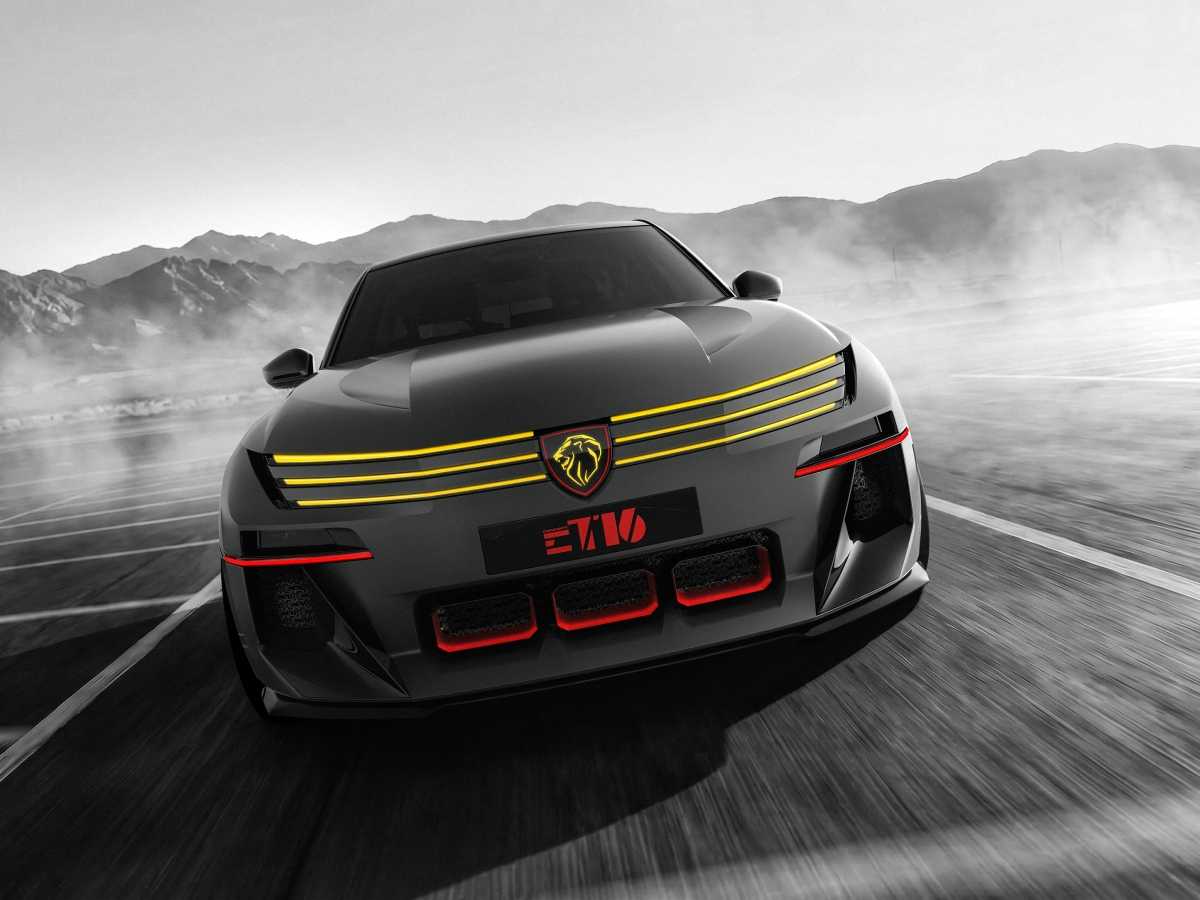
Peugeot has brought one of its most famous performance cars into the electric era, revealing the E-T16 Concept as a modern tribute to the legendary 205 T16 rally car.
Developed with Peugeot Sport, the radical electric hyperhatch celebrates 40 years since the original 205 T16 helped Peugeot secure back-to-back World Rally Championship drivers' titles in 1985 and 1986. The new concept swaps the original's turbocharged petrol engine for three electric motors and a combined 816bhp.
The headline figures are extraordinary. Peugeot claims the E-T16 can accelerate from 0-62mph in 2.5 seconds and reach 186mph from a standstill in just 16 seconds. Its stated top speed is 192mph.
That makes it the most powerful Peugeot ever conceived, according to the manufacturer, putting the concept firmly into supercar territory.
There is a catch, though. The E-T16 remains a concept, with no confirmed production date, UK price or guarantee that it will reach showrooms. Peugeot has demonstrated that the technology is feasible, but turning an extreme engineering exercise into a car customers can buy is a different challenge.
Peugeot E-T16 performance and electric powertrain
The E-T16 uses three electric motors, with one driving the front axle and two powering the rear wheels. Together, they produce 816bhp and provide all-wheel drive.
A torque-vectoring system adjusts how power is distributed between the wheels, helping the car manage its considerable output. Peugeot claims the E-T16 has a power-to-weight ratio of less than 2kg per horsepower, an impressive target even by exotic performance-car standards.
The hardware is designed for sustained performance, too. Peugeot says its motorsport-derived battery cooling system channels heat away through the sides of the battery cells, helping prevent the power reductions that can affect electric cars during repeated hard driving.
According to Peugeot, the E-T16 can complete three consecutive laps of Germany's Nürburgring Nordschleife without reducing its power output. That's a useful engineering ambition for a car intended to evoke rally and circuit performance, although the claim remains the manufacturer's until independently demonstrated.
Drivers would have several powertrain settings to choose from, including a dedicated track mode and a custom setting that allows adjustments to power delivery, suspension and torque distribution.
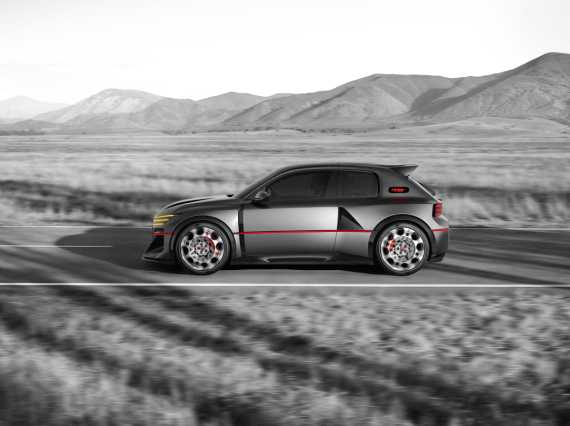
The rally-inspired details are just as serious. Four 380mm brake discs handle stopping duties, while a vertically mounted hydraulic handbrake brings a distinctly old-school motorsport touch to an otherwise futuristic electric car.
Peugeot E-T16 design and interior
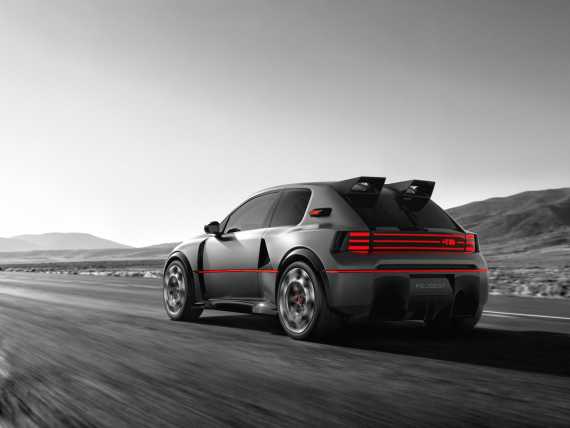
The styling takes the original 205 T16's muscular proportions and turns them up several notches.
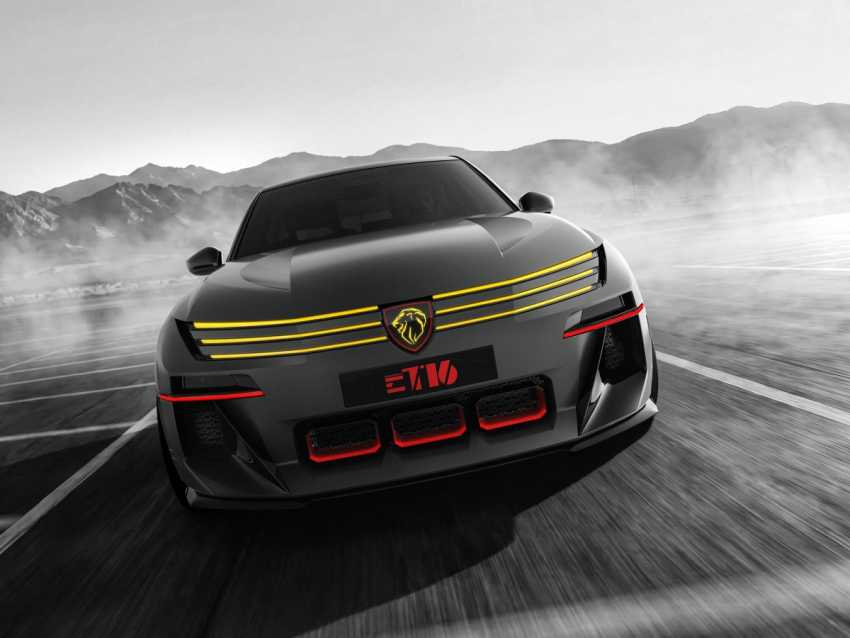
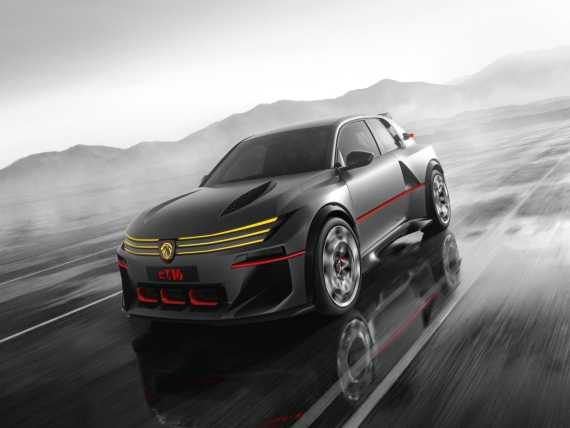
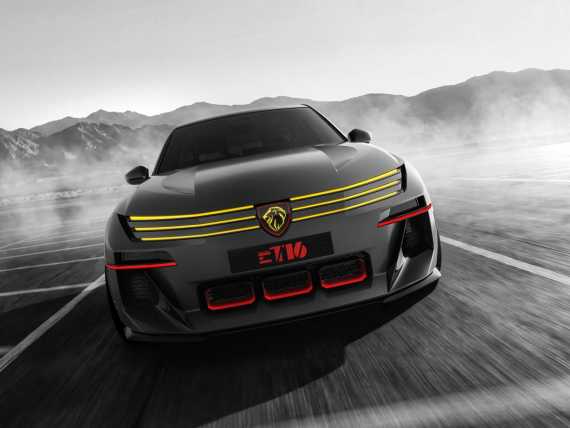
Wide wheel arches, huge air intakes, an aggressively sculpted bonnet and a prominent rear wing give the E-T16 a purposeful stance. Matte Winchester Grey paintwork recalls the original rally car, while red lighting details provide a modern interpretation of its signature pinstripe.
Peugeot has also retained a dramatic feature of the original car's design. The entire rear section lifts to expose the mechanical components beneath, although the new car's hardware consists of electric motors and suspension components instead of a turbocharged petrol engine.
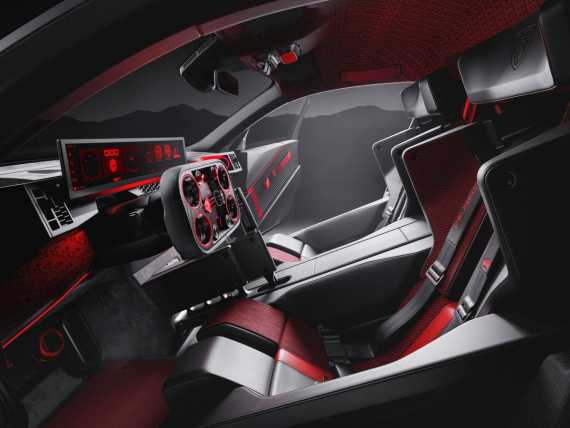
Inside, the cabin combines motorsport-inspired materials with Peugeot's vision for future electric interiors. Carbon fibre, anodised aluminium and technical fabrics feature alongside deeply sculpted bucket seats mounted in carbon-fibre shells.
A large, curved 21-inch display dominates the dashboard, while red detailing across the cabin reinforces the concept's competition-car theme.
The most unusual feature is Peugeot's Hypersquare steering control. Its compact, rectangular design replaces the familiar circular steering wheel and works with steer-by-wire technology, using electronic signals to control the steering instead of a conventional mechanical connection.
Peugeot is exploring the system for future models, so the E-T16 offers a glimpse of how the brand could change the driving environment in its next generation of cars.
Peugeot E-T16 range and charging
An 85kWh battery and 800-volt electrical architecture underpin the concept's performance claims.
Peugeot quotes a range of up to 248 miles on the WLTP test cycle and says the battery can charge from 10 to 80 per cent in under 15 minutes when connected to a sufficiently powerful charger.
Those are ambitious figures for an electric car with this level of performance. The battery's cooling system is particularly important because repeated high-power acceleration and fast charging both generate heat, which needs to be managed carefully.
The claimed range also deserves some perspective. A car designed to deliver 816bhp will use its battery quickly when driven hard, so the official figure tells you little about how far the E-T16 might travel during enthusiastic driving.
Even so, the combination of rapid charging, all-wheel drive and sustained performance suggests Peugeot wants to show that an electric performance car can offer more than one spectacular acceleration run.
Will the Peugeot E-T16 go into production?
Peugeot has left the door open to a production version, with the company's leadership indicating that the concept's technology is feasible and expressing interest in building it.
That is encouraging, but there is no confirmed launch date, production specification or UK pricing. The E-T16 should therefore be treated as a demonstration of Peugeot's engineering ambitions, not an upcoming showroom model.
Renault has already shown how a historic performance badge can return in electric form. Its Renault 5 Turbo 3E has been developed as a limited-production electric performance car, providing a useful example of how a radical concept can progress towards a customer car.
Peugeot could follow a similar route, although no equivalent production commitment has been confirmed for the E-T16.
The concept also points towards the future of the smaller Peugeot E-208, particularly through its lighting design and Hypersquare interface. That doesn't mean the next E-208 will inherit the E-T16's three-motor powertrain or supercar performance, but some of the design ideas could filter into more attainable models.
Peugeot E-T16 verdict
The E-T16 is exactly the sort of concept a performance-car brand should be building. It takes a recognisable piece of motorsport history and gives it a credible electric engineering story, with battery cooling and sustained track performance adding substance to the headline power figure.
Our favourite detail is the hydraulic handbrake. It shows that Peugeot understands the appeal of the original 205 T16 goes beyond acceleration figures and aggressive styling. Character matters, even when the engine has disappeared.
The big question is whether Peugeot will build it. An 816bhp electric hyperhatch would be a spectacular flagship, but its eventual price, weight, real-world range and availability would determine whether it could become a serious proposition for buyers.
For now, the E-T16 is a tantalising statement of intent. I'd love to see it reach production, but Peugeot still has to turn its remarkable concept into a car people can actually order.