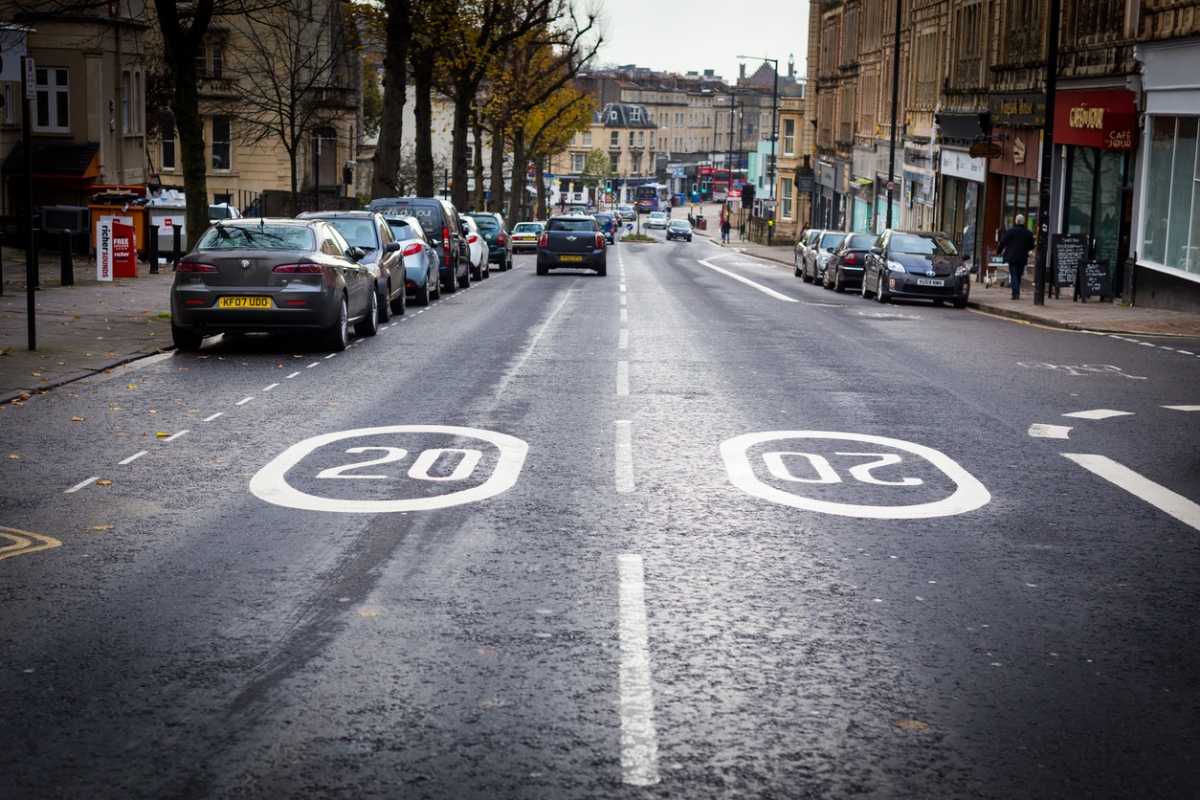
The 20mph limit is one of the most divisive changes on Britain’s roads, and new figures show just how much councils have spent on it. Freedom of Information requests by Confused.com reveal that councils spent at least £41.9m introducing 20mph limits over the last three financial years. Spending is speeding up, too, with £16.7m in 2025-26, the highest yearly total of the three.
Some of that money has already been undone. At least 174 roads have been put back to a higher limit, which means councils paid to lower the limit and will now pay again to raise it.
Which councils have spent the most on 20mph limits?
Hertfordshire tops the list by a long way, followed by Oxfordshire and Cornwall. Wales accounts for four of the top ten, while London has two boroughs in the list.
| Council | Spent on 20mph, 2023-24 2025-26 |
| Hertfordshire | £4.64m |
| Oxfordshire | £3.03m |
| Cornwall | £2.66m |
| Neath Port Talbot | £2.13m |
| Aberdeenshire | £2.11m |
| Cardiff | £2.6m |
| Swansea | £1.89m |
| Flintshire | £1.80m |
| Redbridge | £1.29m |
| Newham | £1.25m |
Which councils are reversing 20mph limits?
Almost all the reversals are in Wales, where 20mph became the default on most roads in built-up areas in September 2023 and sparked a huge public backlash. Flintshire has put 47 roads back to 30mph, despite spending almost £1.8m on its scheme. The Isle of Anglesey has reversed 27 roads and Newport 21.
Outside Wales, reversals are rare so far. Perth and Kinross has raised the limit again on eight roads, and Southampton on four.
Where could 20mph limits come in next?
More areas are lining up new schemes. Greenwich has moved to a formal consultation on a borough-wide 20mph limit on its own roads, with A-roads and Transport for London red routes keeping their current limits. Wokingham is asking residents about a mix of 20mph and 30mph limits across its town centre, villages and rural roads, and Bristol has proposed 20mph limits on around 90 more streets.
How it works depends on where you live. Wales has a national default, Scotland is rolling limits out council by council under a national plan, and England leaves the decision to individual councils. In Northern Ireland, 20mph limits are mostly outside schools for now, although a consultation on wider use ran earlier this year.
Are you more likely to get a speeding ticket?
This is the part of the data that affects every driver. Police forces issued 7.5 million notices of intended prosecution for speeding over the three years, up 14% across the period, according to Confused.com’s findings.
Some forces saw much bigger jumps. West Midlands Police went from 34,887 notices to 162,591, and North Wales Police from 11,980 to 46,285. If you’re caught, the minimum penalty is a £100 fine and three points on your licence, although first-time offenders are often offered a speed awareness course instead.
Drivers aren’t entirely innocent. In Confused.com’s survey of 2,000 motorists, 74% admitted to breaking the speed limit. Just over half said 20mph made sense near schools and homes but not on main roads, and around a quarter felt the limits had been rolled out too widely.
Our verdict
The money spent on reversals is the clearest sign that blanket 20mph limits went too far, especially in Wales. Lower limits outside schools and on residential streets have strong public backing and clear safety benefits, but putting main roads at 20mph and then paying to undo it is a poor use of council money.
Councils planning new schemes should target the roads where people live and children walk to school, and leave main routes alone unless there’s a clear safety record behind the change. Until then, the safest assumption for drivers is that the limit you knew may have changed, and enforcement is rising, so keep an eye on the signs.