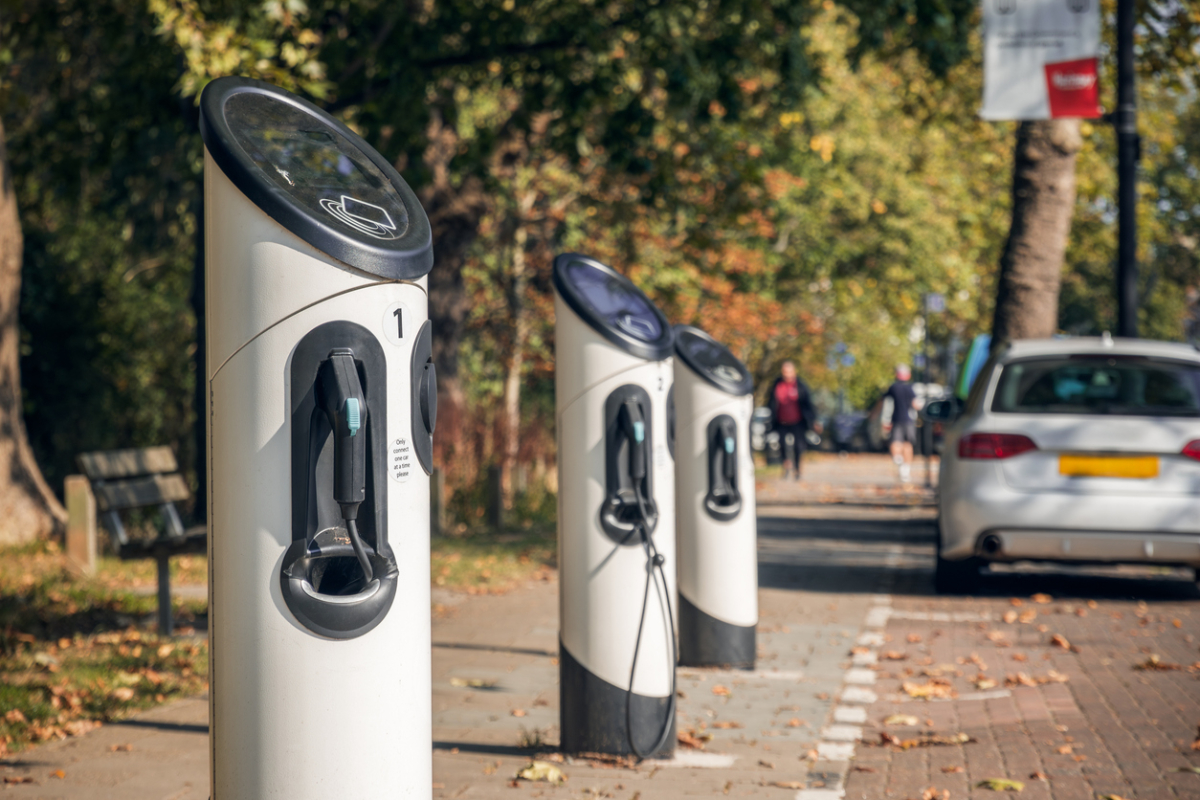
Britain’s transition to electric vehicles, once trumpeted as the cornerstone of its Net Zero ambitions, appears to be losing charge fast. New data shows the rollout of public charging points has actually gone into reverse, raising serious doubts about whether the government’s green agenda is more rhetoric than reality.
According to industry group Zapmap, only 13,469 chargers were installed last year, a steep decline from 19,834 in 2024 and 16,602 in 2023. That’s not progress; it’s a retreat. And with just 370 new chargers added in November, the country now risks installing fewer charging points in 2025 than in any year since before the pandemic.
A Stalled Revolution
This slowdown comes at the worst possible time. The government is pressing ahead with its ban on the sale of new petrol and diesel cars by 2030, yet it’s failing to provide the infrastructure to make the shift practical. While ministers talk about cleaner cities and sustainable travel, the groundwork for that vision, a reliable nationwide charging network, remains patchy and unequal.
In fact, the much-discussed “North-South divide” in EV access is becoming even more pronounced. Zapmap data reveals Westminster alone has more public charging points than Manchester, Liverpool, Leeds, Sheffield, and Newcastle combined. That’s not just unfair, it’s emblematic of a policy approach that prioritises press releases over practical solutions.
Vicky Read, chief executive of Charge UK, bluntly admitted that the rollout of on-street EV chargers was “slower than we would have liked in 2025" due to government funding delays and spiralling installation costs. Without decisive support to reduce those costs and rebalance regional investment, large parts of the country will remain stranded on the road to electrification.
The Economics Don’t Add Up
Meanwhile, the car industry is being forced to absorb the fallout. Despite £5 billion in manufacturer subsidies, EV sales are still missing government targets. Last year, battery-driven cars made up just 23.4% of the market, falling short of the 28% benchmark ministers set for 2025.
Manufacturers are taking an average £11,000 loss per vehicle to boost uptake, a figure the Society of Motor Manufacturers and Traders (SMMT) warns is “unsustainable.”
While UK carmakers are expected to march toward an 80% EV market share by 2030, other countries, including EU members, have already scaled back their timelines. The pace of Britain’s targets might look ambitious on paper, but with falling charger installations and faltering consumer demand, it increasingly looks reckless instead.
Layered on top of this is a puzzling new policy: a pay-per-mile tax on electric vehicles introduced by Chancellor Rachel Reeves, 3p per mile for EVs and 1.5p for hybrids. At a time when the government should be encouraging adoption, it’s effectively punishing progress. The move suggests that the Treasury’s hunger for lost fuel duty revenue outweighs its commitment to green transport.
The Big Question: Commitment or Complacency?
So, how serious is the UK government about its electric vehicle transition? The numbers tell a troubling story. Charging infrastructure is stalling. Regional inequality is deepening. Industry is footing the bill for missed targets. And new taxes are being levied on the very drivers leading the change.
Britain’s EV revolution is not just slowing, it’s sputtering. Unless the government shifts from slogans to strategy, the road to Net Zero will remain blocked by its own short-termism.