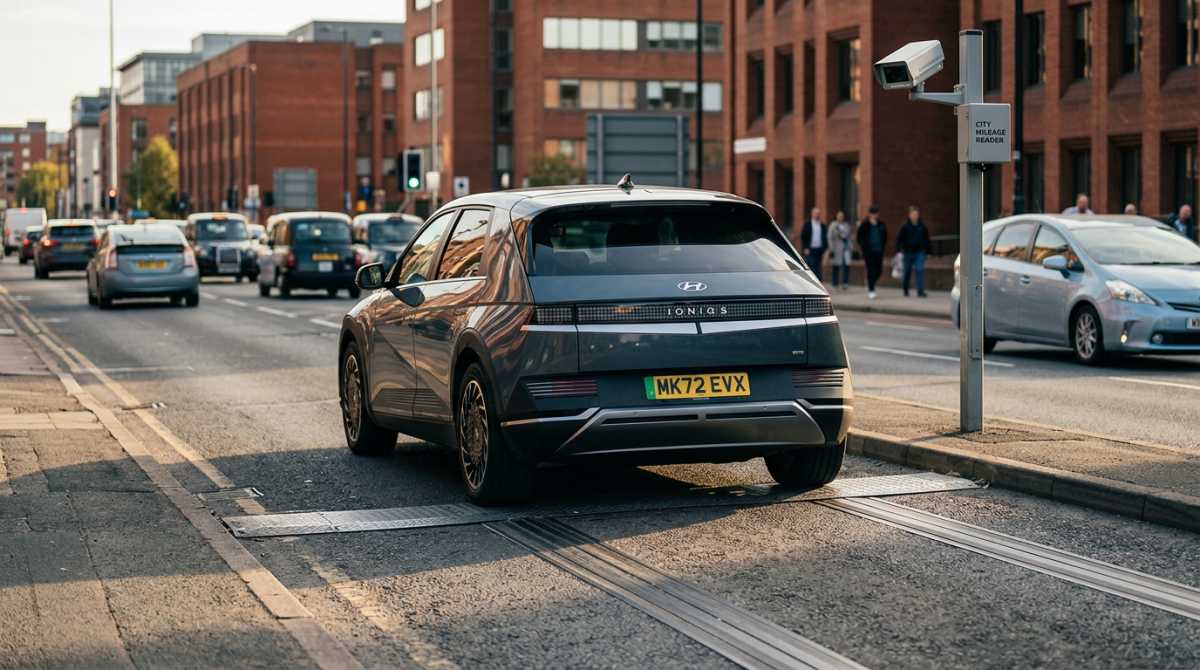
TL;DR
The UK government has confirmed a new pay-per-mile tax on electric cars starting in April 2028. The move, designed to replace lost fuel duty revenue, means the average EV driver is set to pay an extra £218 per year, raising concerns about fairness and a new 'postcode penalty'.
Key Facts
- April 2028: The confirmed start date for the new pay-per-mile tax on all electric and hybrid vehicles.
- £218: The estimated annual cost for the average UK EV driver under the new tax system, based on typical mileage.
- 3p per mile: The tax rate for pure battery electric vehicles, with plug-in hybrids facing a lower rate of 1.5p per mile.
- 440,000: The number of potential EV sales that industry experts warn could be lost as a direct result of the new tax.
UK Scraps EV Tax Break: Drivers Face New £218 Pay-Per-Mile Levy
A major shift in UK motoring policy has been confirmed, with Chancellor Rachel Reeves drawing a clear line under the era of tax-free electric driving. As of April 2028, a new pay-per-mile tax on electric cars will be introduced, a move set to plug a forecast £1 billion gap in public finances as fuel duty revenues decline.
For drivers, this signals a significant change in the cost of running an electric car UK. The new system means the tax-free ride is officially over, and the financial implications are now becoming clear.
How the New EV Tax Works
The Treasury has outlined a two-tier system for the new electric vehicle excise duty (eVED). Drivers of pure battery electric vehicles (BEVs) will be charged 3p for every mile they drive. Owners of plug-in hybrid vehicles (PHEVs) will face a lower rate of 1.5p per mile, though they will continue to pay fuel duty on petrol or diesel used.
While these figures may seem small, the annual cost quickly adds up. Based on average UK mileage, this new tax will cost the typical EV driver an additional £218 per year. It's a new, unavoidable running cost that future and current EV owners must now factor into their budgets.
An EV Postcode Penalty Emerges
One of the most significant criticisms of the flat-rate tax is the creation of a clear 'EV postcode penalty UK'. Analysis shows a stark difference in the financial impact based on a driver's location and reliance on their car.
A driver in central London, with access to extensive public transport, might see their annual bill come in at around £116. In sharp contrast, a driver in a more rural area like Stirling or Norfolk, where a car is a necessity for commuting and daily life, could see their bill soar well above £200.
This disparity punishes drivers in areas with fewer transport alternatives, effectively creating a tax on living outside of major metropolitan hubs. For many, driving isn't a choice but a lifeline, and this policy will hit them hardest.
Experts Warn of Damage to EV Adoption
The timing of the Rachel Reeves EV tax has drawn criticism from industry bodies. With fuel duty for petrol and diesel cars remaining frozen, experts argue the new levy unfairly penalises those who made the early switch to green technology.
Tanya Sinclair of Electric Vehicles UK noted that it makes the case for switching to an EV harder to justify as the running cost benefits are eroded. The concern is that this move could stall the UK's progress towards its net-zero targets.
Indeed, recent projections warn that the introduction of this pay-per-mile tax could result in 440,000 fewer EV sales. It also raises questions of fairness: is it right that a nurse in a used Nissan Leaf pays the same 3p per mile as a company director in a brand-new £100,000 Porsche Taycan?
What this means for drivers is that the decision to buy an electric car is no longer just about range and charging. Your annual mileage has just become a critical factor, as the taxman will be watching every mile.