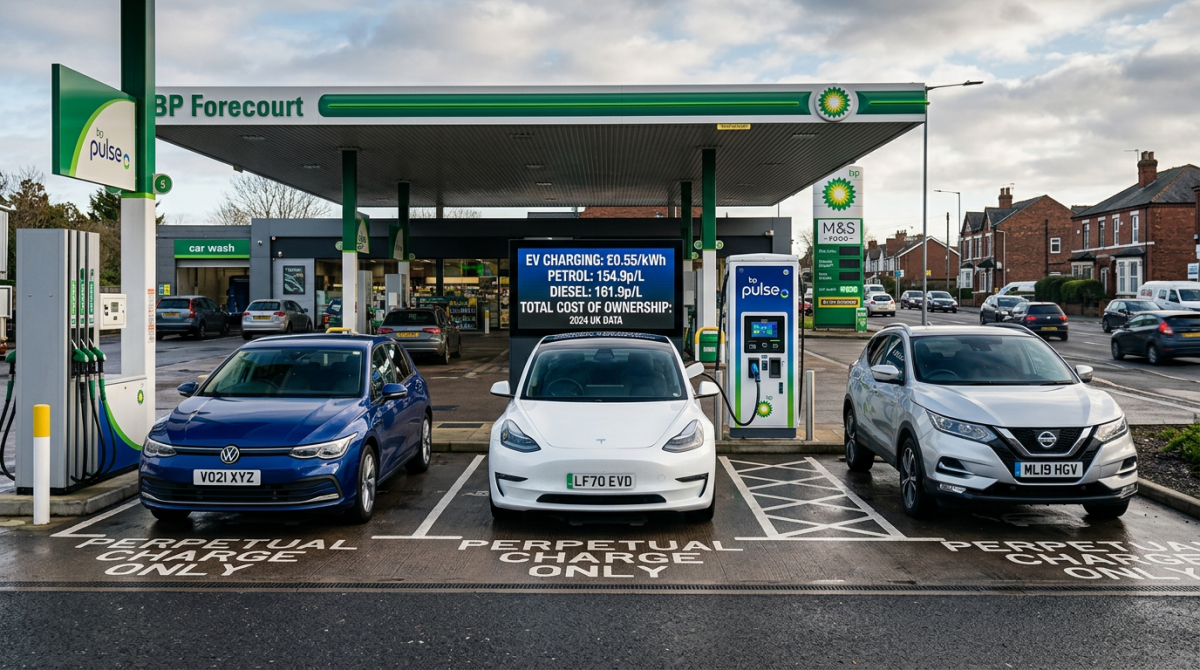
TL;DR: The EV vs petrol car running costs comparison for UK drivers in 2026 depends on how you buy, where you charge and how far you drive. If you can charge at home, an EV can still be cheaper to run, but if you rely on public charging or don’t have a driveway, a petrol car may be the more cost-effective option overall. A home-charged EV can cost as little as around £4.20 for a full 60kWh charge on an off-peak tariff, while the same charge on a standard tariff can be about £14.40.
You can use Regit's petrol vs electric fuel saver comparison tool to see how much you could save by switching to an EV.
Key Facts
- Ofgem has set the electricity price cap at an average of 26.11p/kWh for standard variable tariffs from 1 July to 30 September 2026.
- New EVs first registered on or after 1 April 2025 now pay VED, with a £10 first-year rate and a £200 annual rate from year two.
- EVs with a list price above £50,000 also pay the Expensive Car Supplement.
- For EVs registered 11 April 2017 - 31 March 2025, the standard annual VED rate is £200.
- Home charging remains far cheaper than public rapid charging, but the exact saving depends on tariff, mileage and efficiency.
Petrol vs electric cost difference in 2026
The cheapest car to run in the UK is not always the same car to buy. For many drivers, the real answer depends on access to home charging, annual mileage and whether the vehicle is bought, financed or leased. Petrol cars can still make sense for drivers without off-street parking because public EV charging can push costs up quickly.
If you can charge at home, though, an EV is often the lower-cost option over time. A smart overnight tariff can make a big difference to the total cost of ownership, especially for drivers who cover a high number of miles each year. That means the old “petrol is always cheaper” argument no longer holds for every driver.
Why home charging matters
Home charging is one of the biggest reasons EVs can still undercut petrol cars on running costs. With the current electricity cap at 26.11p per kWh, charging at home remains far more predictable than using public rapid chargers. Drivers with a driveway and a home charger can usually control costs much more effectively than those relying on the public network.
For example, charging a 60kWh battery at 26.11p per kWh would cost about £15.67. On a cheaper off-peak tariff of 7p per kWh, the same charge would cost about £4.20. But once public charging enters the picture, especially for fast top-ups, the cost advantage shrinks fast.
July 2026 electricity price cap update
Ofgem has set the electricity price cap at 26.11p/kWh for standard variable tariffs from 1 July to 30 September 2026. For EV owners, this means charging a 60kWh battery at home costs about £15.67 on the standard cap. However, switching to a smart overnight off-peak tariff (around 7p/kWh) drops that same charge to just £4.20 - making Home charging 4x cheaper than the cap rate.
Petrol car ownership costs
Petrol cars still have an advantage for some UK drivers because they often cost less upfront and are easier to live with if you have no charging access. They also avoid the uncertainty that can come with EV charging prices and route planning. For buyers who keep cars for a long time, petrol can still be the straightforward choice.
That said, petrol is not automatically the cheapest option once fuel, tax, servicing and depreciation are included. The overall cost depends heavily on the model and how you use it. Drivers doing mostly short journeys or low annual mileage may find petrol still stacks up well, but the gap is not as clear-cut as it once was.
EV leasing vs buying outright cost comparison
For drivers considering a new electric car, leasing can be a smart way to reduce financial risk. EV depreciation remains one of the biggest cost factors, so leasing shifts that risk to the finance provider. That is why many drivers now look at EV leasing as a better-value route than buying outright.
This matters especially for models like the Skoda Enyaq, where lease pricing can look far more attractive than outright ownership once depreciation is factored in. However, exact savings vary by trim, mileage allowance and contract length.
EV tax changes in 2026
One of the biggest changes for electric car owners is that the free road tax benefit is no longer available for new EVs. From 1 April 2025, new electric cars started paying VED, which means the tax gap between petrol and electric cars has narrowed.
For 2026 buyers, the important point is that EVs are no longer tax-free, and higher-value models may also be hit by the Expensive Car Supplement if the list price is over £50,000. That makes total ownership cost more important than ever when comparing EVs with petrol alternatives.
Public charging vs petrol fuel costs
Public charging is still the area where EV ownership can become expensive. Rapid charging is convenient, but it usually costs far more than home charging and can make the running-cost comparison with petrol much closer. For drivers without a driveway, this is the biggest reason petrol can still be the more budget-friendly option.
As a result, the cheapest choice in 2026 often comes down to one question: can you charge at home? If the answer is yes, an EV is still likely to win on running costs. If the answer is no, petrol may remain the safer choice for everyday affordability.
Which is cheaper in 2026: petrol or EV?
For UK drivers, the answer is now more nuanced than ever. EVs can still be cheaper to run, but only when charging is done at home or on a favourable tariff. Petrol cars remain attractive for drivers who want lower upfront costs, no charging hassle and more predictable day-to-day use.
The best choice depends on your circumstances rather than a single headline figure. If you have off-street parking, drive regularly and want lower fuel costs, an EV may still be the stronger long-term option. If you rely on public charging or want the simplest ownership experience, petrol may still be the better fit.
Find out exactly how much you could save by switching to an EV using Regit's petrol vs electric fuel saver comparison tool.
FAQs
Are EVs still cheaper to run than petrol cars in 2026?
Yes, often — but mainly if you can charge at home and use a cheaper electricity tariff.
Is petrol still cheaper for drivers without a driveway?
Often, yes, because public charging can remove much of the EV running-cost advantage.
Do electric cars still pay road tax?
Yes. New EVs registered from 1 April 2025 now pay VED, and some higher-value models also pay the Expensive Car Supplement.
Is leasing better than buying an EV?
It can be, because leasing helps reduce the impact of depreciation.