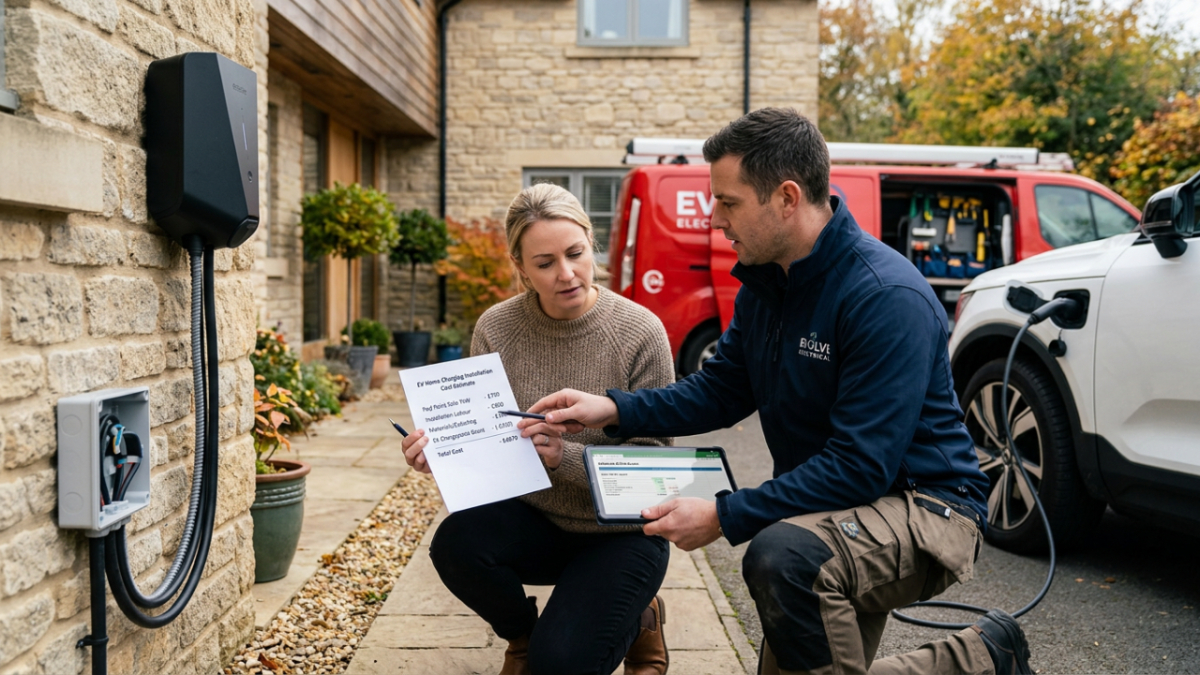
TL;DR: The typical cost of a home EV charger installation in the UK is around £800 to £1,200, including the charger and professional fitting. Eligible renters and flat owners can claim up to £500 through the Electric Vehicle Chargepoint Grant, and workplaces can access support through the Workplace Charging Scheme.
Key Facts
- The typical cost of installing a home EV charge point in the UK is between £800 and £1,200, including the wallbox unit and professional installation by a certified electrician.
- Eligible renters, flat owners, and landlords can claim up to £500 through the Electric Vehicle Chargepoint Grant.
- EV-specific “Time of Use” tariffs can offer off-peak rates as low as ~6.7p/kWh, with 7p/kWh widely available.
- A full 60kWh charge at 7p/kWh costs about £4.20, dropping the price of a full charge under £5.
- The standard electricity price cap average for 1 April–30 June 2026 is 24.67p per kWh.
- Most home charger installations pay for themselves within 12–18 months when compared with public charging or petrol costs.
If you’re thinking about switching to electric, one of the first questions is simple: how much does a home charge point cost, and is it worth it? In the UK, the answer is increasingly encouraging, because home charging is still the cheapest and most convenient way to power an EV for most drivers.
For many households, the upfront cost is manageable, the running costs can be very low, and the savings add up quickly if you charge overnight on the right tariff. That makes a home EV charger one of the most practical EV upgrades you can make in 2026.
How much does a home EV charge point cost in 2026?
For most UK drivers, installing a home charger is the most convenient and cost-effective way to power an electric car.
According to RAC data, the typical cost of installing a home charge point in the UK currently sits between £800 and £1,200. This figure usually includes:
- The physical hardware (the “wallbox”)
- Professional installation by a certified electrician
But what influences where your quote lands within that range?
Factors that affect your EV charger installation cost
Tethered vs. Untethered Units
A tethered unit comes with a permanently attached cable, offering convenience. It typically adds £50–£100 to the price compared with an untethered unit, where you use your car’s own cable.
Cable Length Requirements
Standard installations budget for 5–10 metres of cabling. If your consumer unit (fuse box) is at the back of your property and your parking space is at the front, you’ll likely pay more for extra cable and additional labour.
Smart Features and Functionality
Higher-end units that integrate with solar panels, offer advanced energy analytics, or provide smart home connectivity usually push the price closer to the £1,200 mark. These features can deliver long-term savings and convenience, making the initial outlay worthwhile for some drivers.
Home charging point grants: Can you still save pounds in 2026?
Good news for many UK drivers: government support for home charging point installation is still available, though the criteria have become more focused.
From 1 April 2026, there are five chargepoint grant schemes available until 31 March 2027, with updated grant rates. The household grant can now provide up to £500 per socket for eligible renters, flat owners, and landlords.
Who is eligible for the up to £500 Electric Vehicle Chargepoint Grant in 2026?
Renters and Flat Owners
If you live in a flat or a rented residential property with dedicated off-street parking, you can claim up to £500. This is a significant win for urban drivers.
Landlords
Owners of residential or commercial properties can apply for support to install chargers for their tenants, making properties more attractive to the growing EV market.
Workplaces
The Workplace Charging Scheme (WCS) offers up to £500 per socket for up to 40 sockets, extended until 31 March 2027. This applies to businesses, charities, and public sector organisations in England, Wales, Scotland, and Northern Ireland, and must use an OZEV-approved installer.
Impact on property value and your electric car’s resale value
At Regit, we often hear drivers ask if installing a home charge point adds value to their property. Our data suggests that a pre-installed EV charger is rapidly becoming an “expected” feature for modern home buyers, much like high-speed fibre broadband.
Having a 7.4kW charger already in place can make your property significantly more attractive to the over 1 million EV drivers currently on UK roads, potentially speeding up a sale or even adding a small premium.
Furthermore, owning a home charger allows you to maintain your car’s battery health better. By primarily using slower, gentler AC charging rather than constant rapid DC bursts, you can help preserve the battery’s longevity. This “battery health” is a key factor in protecting the resale value of your electric car in the long term.
Official data and the future outlook for EV charging
The Department for Transport (DfT) and Zapmap report that public charging infrastructure is growing at a strong rate across the UK.
Zapmap’s Q1 2026 statistics show:
- 119,080 public EV chargers across 46,107 locations
- 3,028 new chargers installed in the quarter
- 13% year-on-year growth in the number of chargers
- Highest growth in ultra-rapid charging, now at 12,921 chargers (39% more than March 2025)
- 46 additional charging hubs in Q1 2026, bringing the total to 1,037
However, demand for charging is growing even faster. ChargePoint network data indicates that session volume grew by 34% in a single year, outpacing new port growth.
What this means for drivers like you: investing in a home charge point today guarantees your own “fuel” supply. This shields you from potential queues at public chargers and the higher premium of public networks, offering peace of mind and consistent savings.
Final Verdict: Is a home charge point worth the investment?
If you have a driveway or a dedicated off-street parking space, the answer is a resounding yes.
While the initial £800–£1,200 outlay for a home EV charger installation in the UK feels significant, the ability to charge for as little as 7p/kWh overnight means the unit often pays for itself within the first 12–18 months of ownership.
This is especially true when compared to constantly relying on public chargers or the ever-fluctuating cost of petrol. It’s an investment that offers both convenience and substantial long-term financial relief.
Next steps for UK drivers
Check Grant Eligibility
Visit GOV.UK to see if you qualify for up to £500 through the Electric Vehicle Chargepoint Grant for renters or flat owners. This could significantly reduce your initial outlay.
Shop Around
Always get at least three quotes for installation to ensure you’re getting a fair price and that your chosen installer maintains the £800–£1,200 average.
Audit Your Energy
Switch to an EV-specific electricity tariff before your charger is installed to maximise your savings from day one. Good news for petrol car owners considering the switch: your options for affordable charging are expanding.
At Regit, we’re here to help UK drivers make smarter, safer, and more cost-effective choices about their vehicles. Whether you’re checking car history, MOT data, recalls, or planning your switch to electric, we’ve got the data and guidance you need.