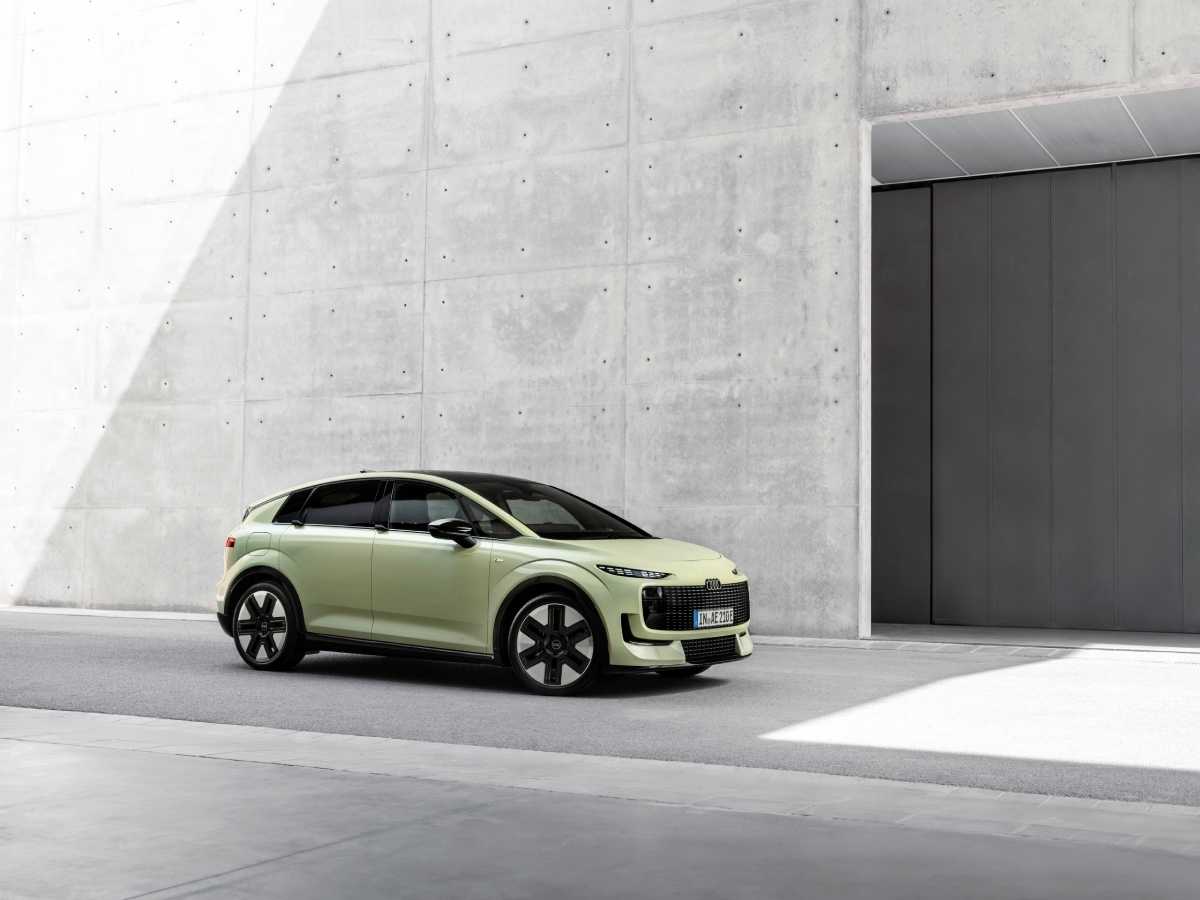
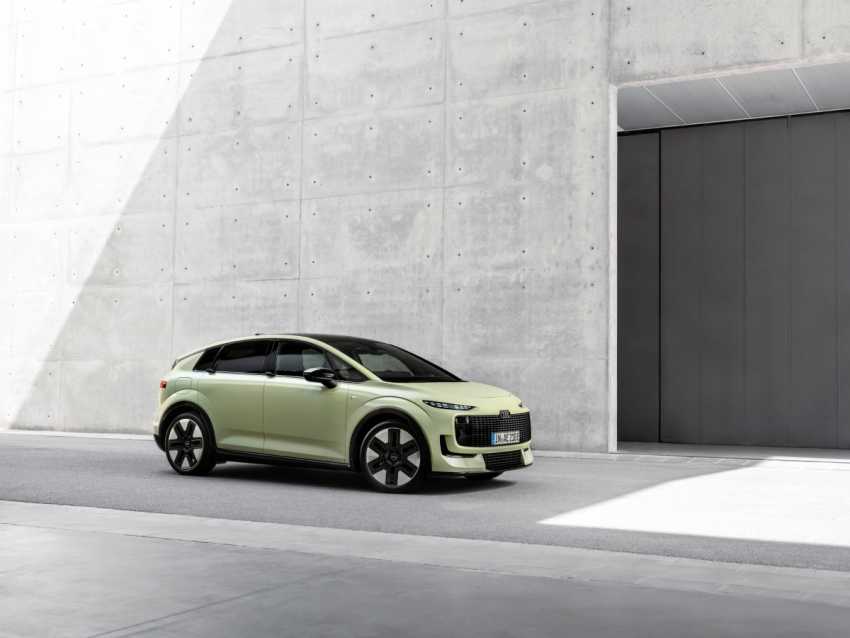
The new Audi A2 E-tron could be one of the most efficient EVs in its class
Audi is bringing the A2 name back, but this time its famously unconventional supermini returns as an electric family hatchback with a very different mission.
The new Audi A2 E-tron is due to go on sale in the UK next month, with deliveries expected early next year. Prices start at £32,200, making it Audi's most affordable electric car and only slightly more expensive than the petrol A3.
The key selling point is efficiency. Depending on the battery, the A2 E-tron will offer between 260 and around 400 miles of official WLTP range.
That puts the new Audi in an interesting position for drivers who want an EV that can cope with longer journeys without moving into a much larger and more expensive SUV.
But the headline range is only part of the story. For UK motorists, battery size, charging speed, real-world efficiency and the eventual cost after government support will all matter.
How much will the Audi A2 E-tron cost?
The entry-level A2 E-tron is priced from £32,200 in the UK.
That is significant because the car replaces the discontinued Audi A1 and Q2 in Audi's range, while also undercutting many larger electric SUVs.
The entry model is expected to qualify for the UK's Electric Car Grant, potentially reducing the effective starting price by £1,500 to £30,700, although buyers should check the final eligibility and specification before relying on the discount.
The range will include several battery and motor combinations:
- 52kWh battery: up to 260 miles WLTP
- 61kWh battery: up to 310 miles WLTP
- 84kWh battery: up to around 400 miles WLTP
- Power outputs range from 168bhp to 322bhp
- The most powerful version can reach 62mph in 5.7 seconds
The top versions are expected to cost in the mid-£40,000s, so the long-range A2 is considerably less of a budget proposition.
For buyers, that creates an important choice. The smaller battery could be sufficient for predominantly urban and commuting use, while the 84kWh model could appeal to drivers regularly covering long motorway distances.
What is the Audi A2 E-tron's real-world range likely to be?
Audi has concentrated heavily on aerodynamic efficiency.
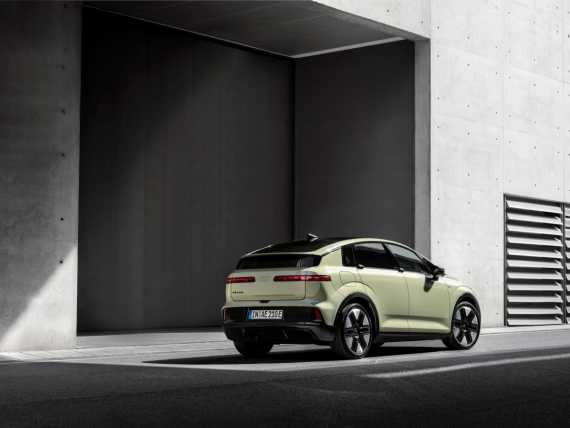
The car has a rounded body inspired by the original A2, a largely enclosed underside, specially designed aerodynamic wheels and measures to reduce turbulence around the wheel arches.
Audi claims a drag coefficient of 0.24, helping the car use less energy at higher speeds.
The company quotes average efficiency of around 4.2 miles per kWh, although, as with all WLTP figures, drivers should expect real-world results to vary.
Cold weather, motorway speeds, heavy loads, heating and air conditioning can all reduce an EV's range. This is particularly relevant in Britain, where winter temperatures and wet conditions can make a noticeable difference to consumption.
The larger 84kWh battery therefore makes most sense for drivers who genuinely need its additional range rather than simply want the biggest number on the specification sheet.
How quickly can the A2 E-tron charge?
The A2 E-tron uses Volkswagen Group's MEB electric vehicle platform, shared with models including the Volkswagen ID.3, Skoda Elroq and Audi Q4 E-tron.
Depending on the version, the platform supports charging at up to 183kW, although the smaller batteries are limited to 105kW.
That distinction matters because peak charging speed is not the same as charging time in everyday use. An EV's charging curve, battery temperature and state of charge all influence how much power it can actually accept.
The smaller LFP batteries are intended to offer consistent performance, including in colder temperatures and at low states of charge. The larger battery uses NMC chemistry.
For drivers who mainly charge at home overnight, maximum rapid-charging speed may be less important. For regular motorway users, however, the ability to recover a useful amount of range during a short stop becomes much more significant.
Is the new A2 practical enough for UK families?
Although it carries the A2 badge, the new car is substantially larger than the original 1990s supermini.
It measures around 4.3 metres long, with a 2,770mm wheelbase. Boot capacity is 396 litres with the rear seats in place, slightly ahead of both the Volkswagen ID.3 and Audi A3.
That should make it a more credible option as a family car than the original A2's size might suggest.
Inside, Audi has also taken a different approach to controls. The dashboard uses a large 12.3-inch touchscreen alongside an 11.9-inch driver's display, while physical controls are retained for many functions around the steering wheel.
That will be worth watching. Audi and other manufacturers have increasingly moved towards touch-sensitive controls, despite concerns about usability while driving. The A2 uses a mixture of rollers, buttons and haptic controls, while Audi says the controls have been positioned with everyday driving in mind.
For motorists, the important question is whether those controls can be operated quickly and safely without taking attention away from the road.
Should UK drivers consider the Audi A2 E-tron?
The new A2 E-tron looks like a serious attempt to make efficiency, rather than simply battery size, the defining feature of an electric car.
Its starting price is relatively accessible for an Audi EV, while the larger battery could offer close to 400 miles of official range without requiring buyers to move into a large SUV.
However, the £32,200 starting price and the expected mid-£40,000 cost of the longest-range versions represent very different buying propositions. The Electric Car Grant could also change the calculation for eligible versions.
For buyers, the sensible approach will be to choose the battery around their actual driving needs rather than paying thousands of pounds for range they rarely use.
The A2 E-tron will be competing with cars such as the Volvo EX30, Mini Aceman and Cupra Born, so its success will ultimately depend on more than range figures. Running costs, insurance, charging convenience, equipment and how well the car performs in Britain's less-than-ideal weather will all matter.
The return of the A2 is therefore interesting for a wider reason. At a time when many new EVs are getting larger, heavier and more expensive, Audi is betting that clever aerodynamics and efficient technology can deliver long-distance ability in a comparatively compact package. UK drivers will find out whether that approach works when the first cars arrive on British roads.