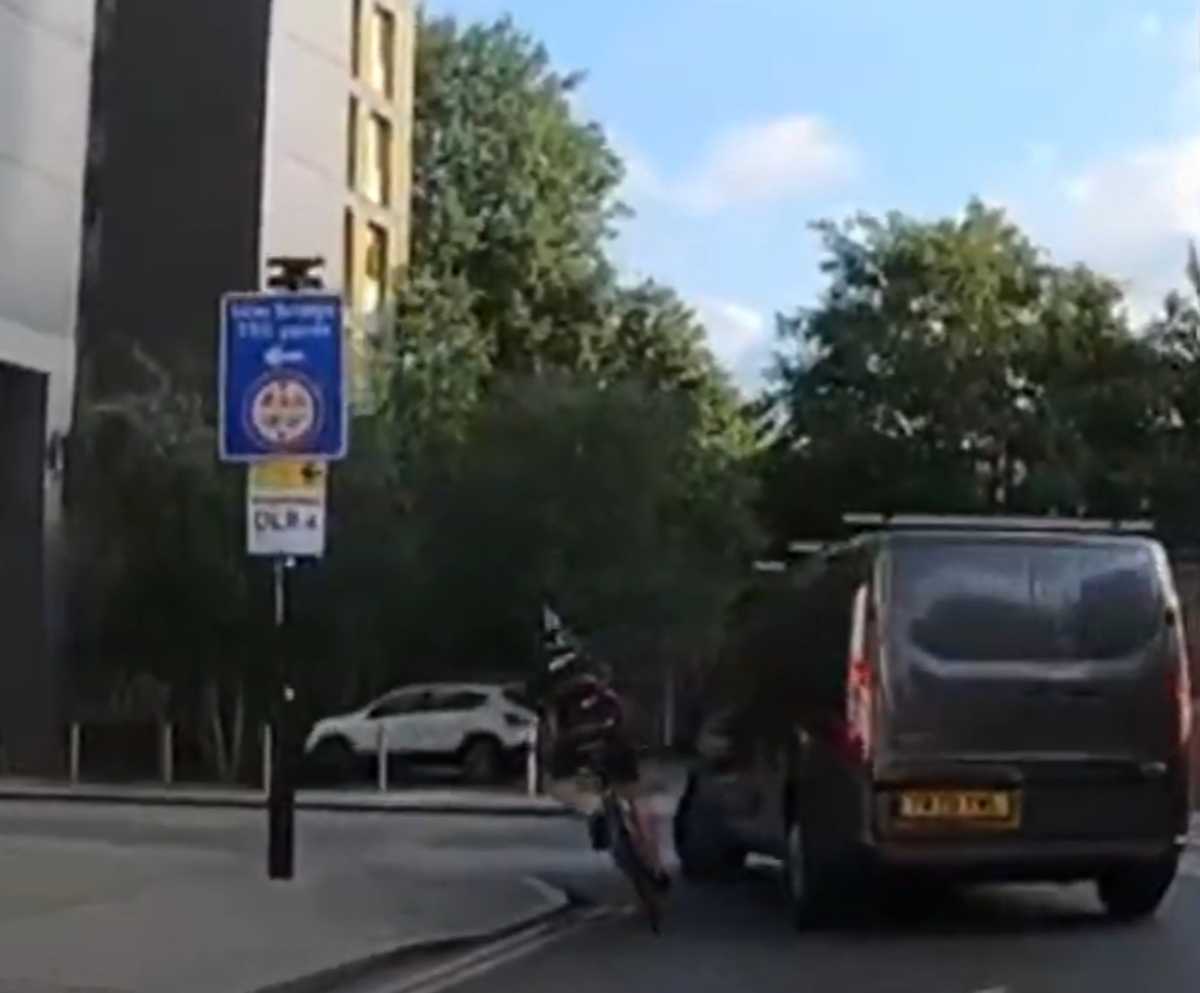
Few things divide drivers and cyclists like a crash caught on camera, and this one has been dividing them for more than three years. The footage was filmed by another cyclist and shows a van turning left at a junction in London as a man on a bike comes up on its inside.
Sky News first published the clip in July 2023, but it keeps resurfacing on social media, and the comments always fill up with the same argument. Take a look, then read on.
The case against the van driver
The driver’s critics point straight to the Highway Code changes of January 2022. Rule H1 brought in a hierarchy of road users, which says the people driving the vehicles that can do the most harm carry the greatest responsibility. A van driver sits well above a cyclist on that ladder.
Rule H3 goes further. It tells drivers not to cut across cyclists going ahead when turning into or out of a junction, just as they wouldn’t turn across another car, and to wait for a safe gap if needed. Long-standing advice also tells drivers to check their mirrors and watch for cyclists coming up on the left before turning. If the driver didn’t look or didn’t indicate, many argue the case is closed.
The case against the cyclist
The cyclist’s critics say he rode straight into a situation the Highway Code warns cyclists about. The rules for cyclists at junctions tell riders to watch for vehicles turning in front of them, and not to ride on the inside of vehicles that are signalling or slowing down to turn left.
A van approaching a T-junction and slowing down is a clear sign it might turn, they argue, and a cyclist who keeps going up the inside is taking a risk he didn’t need to take. Some commenters also say the driver could reasonably have assumed nobody would pass on that side.
Is the Highway Code the law?
Both sides tend to quote the Highway Code as if it settles things, but most of the rules involved here use the word “should”, not “must”. Breaking a “should” rule isn’t an offence in itself.
The rules still count after a crash, though. Courts and insurers use the Highway Code as evidence of how people ought to behave, and blame can be split between both parties, with each side’s claim reduced to match their share.
Where we stand
On the rules alone, we think the van driver carries more of the blame, because H3 is clear that drivers shouldn’t turn across a cyclist going ahead. If the van was indicating and slowing, however, the cyclist should have held back, and we’d expect an insurer to hold him partly responsible.
Whatever you decide, the lesson for both sides is the same. Drivers should check their left mirror before every turn, and cyclists should hang back when a vehicle ahead is slowing for a left-hand junction.
So who do you think was in the wrong, the van driver, the cyclist or both? Let us know in the comments below.